
Reformer Pilates for Stress and Sleep: Session Planning for Calm
What role can Reformer Pilates play in coping with stress and poor sleep? Session timing and an evening routine.
If you feel tired yet cannot sleep at night and wake up unrested, you are not alone. The busy pace of modern life, screen time and constant notifications keep the mind on alert all day. Exercise is known as one of the best habits for supporting sleep, but not every type of exercise gives everyone the same result. Very high-tempo training can keep some people mentally lively in the evening, while slow, controlled, breath-based work may make it easier to settle.
Reformer Pilates is closer to the second group. In this article we look at the relationship between stress, sleep and the Reformer, session timing that might help, and how you can build your evening routine. The article is informational; chronic sleep problems require a physician's evaluation. Our Beytepe Reformer studio has not opened yet; founding membership pre-registration is open.
The loop between stress and sleep
Under stress the body keeps the sympathetic nervous system active. Heart rate rises, muscles tense and thoughts speed up. This makes falling asleep harder. Poor sleep in turn lowers stress tolerance the next day and the loop feeds itself. One way to break this loop is to add regular movement that releases tension during the day and makes it easier to settle at night.
How can Reformer Pilates support sleep?
- Rhythmic breath and movement gather the mind's attention in the body.
- A controlled tempo does not overstimulate the nervous system.
- Muscle tension, especially in the neck, shoulders and lower back, may ease.
- Regular sessions give the day structure and routine.
- Moderate physical tiredness may make falling asleep easier.
These effects are not guaranteed and vary from person to person. Research generally shows that regular physical activity is positively related to sleep quality, but results specific to Reformer Pilates are not yet fully settled in detail. The best approach is to observe your own body and find the timing that suits you.
Session timing: morning, midday or evening?
| Timing | Possible advantage | What to watch for |
|---|---|---|
| Morning | Regular start to the day, energy through the day | Muscles stiffer in the morning; warm up well |
| Lunch break | Breaking up work stress | Limited time; prepare without rushing |
| After work | Releasing the day's tension | Avoid very intense tempo |
| Late night | Relaxation in calm sessions | Risk of arousal if too close to bedtime |
Some people sleep easily after evening exercise while others struggle to fall asleep. Finishing at least two or three hours before bed is a safe rule for most people. But it is an individual matter; in the first weeks you can note your sleep quality to find your own pattern.
Calming elements within a session
In Reformer classes the calming effect comes from slow transitions, a consistent rhythm and breath-focused cueing. Stretching and spine movements in the final sections slow the body down. Asking the instructor for a flowing session rather than an intense tempo can be useful in the evening. In private Reformer sessions it is possible to shape the structure to your goal.
Evening routine: from class to bed
- Drink water and eat something light after the session.
- Reduce screen light; put the phone away in the final hour.
- Take a warm shower or do a short stretch.
- Keep the bedroom cool, dark and quiet.
- Do five minutes of slow breathing before bed.
The Mobility & Stretching and Deep Stretch Yoga classes at the club can also be part of a regular recovery routine. Your personal health status matters; if you have cardiovascular or blood pressure concerns, always consult your physician before changing your exercise routine.
Recognizing stress in the day: the body's signals
Stress does not always appear as a mental feeling; in many people it shows up first in the body. A clenched jaw, shoulders rising toward the ears, shallow breathing, a tight stomach and cold hands are common signs. If you build the habit of noticing these signals during a Reformer session, it becomes easier to catch yourself during the day before tension builds up. This awareness can also help the transition to sleep, because tension accumulated through the day does not dissolve suddenly in the evening.
Learning to release within a session
Learning to relax unneeded areas while working muscles on the Reformer both increases efficiency and relaxes the mind. Keeping the face, jaw and hands soft during a leg movement is a sign of saving energy. Instructors often remind you to use only the necessary muscles. This principle starts to change the habit of accumulating tension throughout the day.
- Keep the face soft; unclench the jaw and let the tongue rest from the palate.
- Leave the hands relaxed rather than making fists.
- Let the shoulders drop a little lower with each exhale.
- Keep the breath flowing even in the hard part of the movement.
- Allow a quiet pause of a few breaths at the end of the session.
How do you monitor sleep quality?
The simplest way to know whether your sleep is changing is to keep a few weeks of notes. Each morning record the time you went to bed and woke, the number of night awakenings and a one-to-five score for how you feel. Comparing these notes on session days and non-session days shows you your own pattern. If you use a tracker, treat the data as a general trend rather than an exact measurement.
| Item to note | Why it matters |
|---|---|
| Bed and wake time | Seeing regularity |
| Session time | Understanding the effect of timing |
| Caffeine and dinner time | Other factors affecting sleep |
| Morning energy score | Tracking subjective improvement |
How to adjust sessions in busy periods
In periods such as exams, project deadlines or a heavy work week, energy drops and stress rises. In such weeks lowering the intensity is often more sustainable than dropping sessions. Lightening the springs, slowing the tempo and keeping the session short preserve regularity without overtaxing the body. If needed you can speak to your instructor and ask for a gentle session plan for that week. The key is not to disconnect completely and to keep the habit alive.
Signs of a sleep problem and when to seek an expert
Weeks-long insomnia, excessive daytime sleepiness, snoring with breathing pauses or a restless feeling in the legs require a physician's evaluation. Exercise is supportive but does not replace an underlying sleep disorder. If there is also a depressed mood or intense anxiety, seeking professional support is important.
As a reminder, the suggestions in this article are general information and do not replace personal medical advice. If you have particular conditions such as a health issue, medication or pregnancy, talk to your physician before starting and inform your instructor. Listening to your body is the safest approach so that the movement you do to calm down does not itself become a source of stress.
Reformer alongside other calming practices
Considered together with yoga, mobility and breath work, Reformer Pilates can provide a strong balance. Adding a yoga or mobility class and a nature walk to two or three weekly Reformer sessions offers variety for both muscles and the nervous system. A calm walk around Eymir Lake can also contribute to winding down before evening.
Setting expectations correctly
Exercise alone does not fix sleep miraculously. Caffeine timing, screen habits, regular sleep and wake times and daylight matter at least as much as movement. Think of the Reformer as part of this whole. Even if you do not see a clear change in the first two weeks, continuing regularly and going to bed at the same time raises the chance of results.
- Go to bed and wake at the same time; avoid big shifts at weekends too.
- Reduce caffeine in the afternoon.
- Get daylight outdoors when possible.
- Avoid heavy, late meals in the evening.
- Keep a sleep diary to track your pattern.
Finally, it is important not to chase sleep like a performance metric. Worrying too much about sleep can make it even harder. See sessions as an enjoyable, sustainable routine; results usually arrive as a by-product of this relaxed attitude.
Will evening Reformer disturb my sleep?
It varies by person. Slow, flowing sessions can be calming for many; intense sessions may stimulate some. Finishing two to three hours before bed is a good start.
Is Reformer or yoga better for stress?
Both can help. The Reformer emphasizes strength and control, while yoga emphasizes flexibility and calm. Doing them together is a balanced option.
Is Reformer enough for my insomnia?
No; insomnia with an underlying cause needs a physician's evaluation. The Reformer is a supportive movement practice.
How soon will I notice an effect?
Some people notice sleeping more easily within a few weeks; this is not a guarantee. Regular attendance and sleep hygiene matter.
Can I combine it with mobility or yoga classes?
If your health allows, light stretching or a Mobility & Stretching class after the session can be part of your recovery routine. Pay attention to hydration and rest, and consult your physician if you have concerns.
The link between stress and sleep is complex, but slow, conscious and regular movement can help balance it. Reformer Pilates can be a gentle yet effective path in that search for balance. You can contact us for founding membership pre-registration.
Related posts
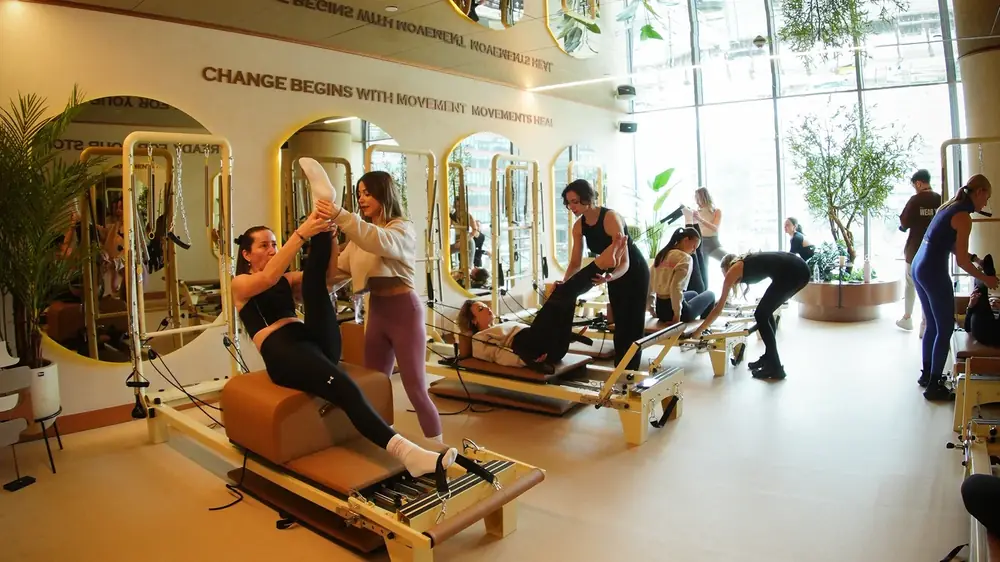
Reformer Pilates Levels: What Changes at Beginner, Intermediate and Advanced?
We explain Reformer Pilates levels through spring resistance, movement speed and repertoire complexity, and when to move up to the next level.
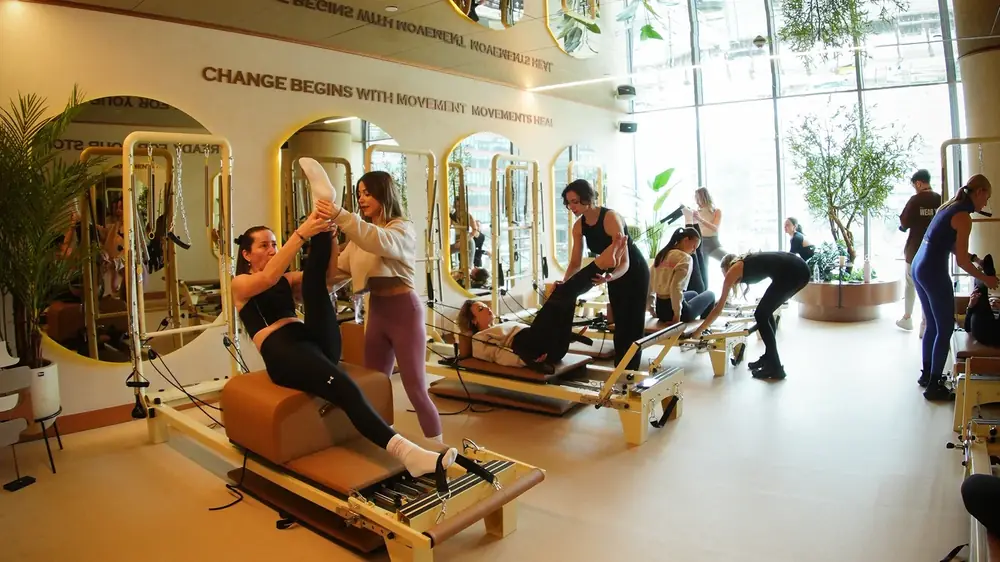
Reformer Pilates During Pregnancy: A Safe Practice Guide by Trimester
Reformer pilates during pregnancy can be adapted for all three trimesters. We cover movement choices, what to avoid and how to prepare.
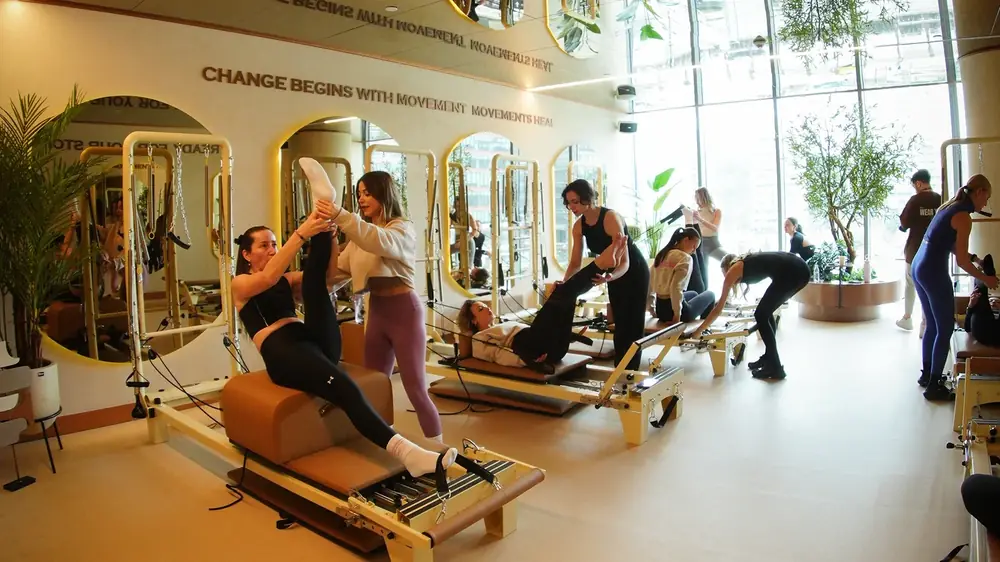
Reformer Pilates for Scoliosis: An 8-Week Approach to Spinal Symmetry
With adjustable springs and one-sided work, Reformer Pilates supports muscular balance around a scoliotic spine. We look at an 8-week staged framework.
