
Reformer Pilates Levels: What Changes at Beginner, Intermediate and Advanced?
We explain Reformer Pilates levels through spring resistance, movement speed and repertoire complexity, and when to move up to the next level.
From the very first session, the question that occupies members most is usually the same: "What level am I, and when should I progress?" Almost everyone who starts Reformer Pilates asks it. Yet Reformer Pilates levels are not a single line; they are a spectrum in which several variables change together, such as spring resistance, movement speed, balance demand and the complexity of the repertoire. In this article we explain in detail how torso, arm and leg coordination develops across beginner, intermediate and advanced levels, which criteria determine the move to the next level, and how this progress is tracked at O'Wellness Beytepe.
What determines your level?
In Reformer Pilates, your level is not determined by "how many springs you pull". In fact, advanced levels often use less spring resistance because controlling the movement becomes harder. The four main axes that define level are:
- Support surface: Progressing from lying and well-supported positions to standing, single-leg work or balance without the platform's support.
- Speed and flow: At the start each movement is performed separately and with control; at advanced level movements merge into an uninterrupted flow.
- Number of joints and complexity: Moving from single-joint exercises to multi-joint combinations involving rotation and extension.
- Direction of spring resistance: At advanced level a lighter spring is deliberately chosen for some exercises because control becomes more demanding.
Beginner level: learning the basic language
The goal of the beginner level is to make the six core principles of Pilates (centring, control, precision, breath, concentration and flow) tangible on the reformer. At this stage movements are done lying on the back or seated, using stable support surfaces.
Typical beginner exercises
- Footwork: A leg-pressing series against the footbar while lying on the back; leg alignment and breathing rhythm are established here.
- Hundred: The fundamental exercise for core activation and breath coordination.
- Simple strap series: Controlled pulling and lengthening movements of the arms.
At this stage the instructor focuses on a neutral spine, breath timing and basic alignment. On average the basic movement language settles after 6-10 sessions, though this varies from person to person. Previous sporting background, flexibility and session frequency directly affect the pace of progress.
Intermediate level: balance and flow come in
At intermediate level the support surface shrinks; movements begin to be done seated, kneeling or on one leg. Transitions become smoother and short combinations synchronised with the breath are learned.
Typical intermediate exercises
- Short box series: Seated trunk flexion, extension and rotation.
- Kneeling arm series: Arm work in a kneeling position while the core stays stable.
- Long stretch: Pushing the carriage from a plank position for core and shoulder girdle endurance.
- Single-leg footwork and bridge variations: Unilateral stability and asymmetry work.
The general criterion for moving to this level is being able to complete the beginner exercises with correct alignment, without holding the breath and without the carriage jolting. The instructor makes this assessment by observing during sessions; there is no fixed session-count rule.
Advanced level: complex combinations and minimal support
The advanced level includes balance without the platform's support, single-leg and single-arm combinations and fast transitions. Because control gets harder, spring resistance is usually reduced; some standing balance exercises, for example, are performed with the lightest spring.
Typical advanced exercises
- Elephant and stomach massage combinations: Combine hip and spinal mobility in a way that demands high control.
- Standing balance work on the carriage: Whole-body stability with minimal support.
- Flowing repertoire sequences: Linking several movements seamlessly with the breath.
Comparing the levels
| Criterion | Beginner | Intermediate | Advanced |
|---|---|---|---|
| Support surface | Lying, seated | Kneeling, single leg | Standing, balance without platform support |
| Movement speed | Slow, separate | Moderate, partly flowing | Fast, continuous flow |
| Spring resistance | Medium-heavy (for support) | Variable | Matched to the movement, sometimes light |
| Focus | Alignment, breath | Balance, coordination | Flow, complex control |
The effect of age and sporting background
The pace of progress depends not only on Pilates experience but also on a person's overall movement history. Members with a background in dance, swimming or yoga often start with an advantage in body awareness and balance, which can speed up the move to intermediate. For members who have been inactive for a long time or have a history of chronic pain, staying longer at the foundation level is necessary for safe and sustainable progress. For members over 50, pace also varies individually; age alone is not a barrier, what matters is joint health and muscle strength. Learning about this background in the first meeting helps the instructor set the right tempo for the programme.
Group class or one-to-one: does it matter for level?
In group classes levels are set in advance, so members join the class that suits them and progress alongside people at a similar level. In Private Reformer Pilates sessions the programme is built entirely around the individual, and level transitions can be adjusted on the spot to the member's capacity that day. For beginners, starting one-to-one and moving to group classes once the basic movement language is in place can be a route that is both safe and socially enjoyable.
Common mistakes when moving up a level
- Moving up too early: Progressing to advanced exercises before basic alignment is in place reinforces compensation patterns.
- Misreading the springs: Assuming "heavy spring means advanced level", when some advanced exercises are much harder with a light spring.
- Comparison: Measuring yourself against the person on the next reformer; progress is individual, and body type and sporting background affect the timeline.
A sample progression
The progress of a desk-based member with no prior Pilates experience usually looks like this: in the first 4-6 sessions basic alignment and breathing rhythm are developed through footwork, the hundred and simple strap series, with the instructor watching for a neutral spine and a smooth-moving carriage. Around sessions 8-10, once the basics are under control, the short box series and kneeling arm work are added. After the third month, when balance and coordination are judged sufficient, single-leg footwork and bridge variations come in. This is not a fixed timetable but an observational example; for some members it moves faster, for others it takes longer.
Equipment and technical details
As the level rises, the equipment used becomes more varied. At the start the footbar and shoulder rests are used most, while at intermediate level the straps and short box come in more often. In advanced standing work on the carriage no extra balance support is used; at this point the spring colour, which indicates resistance, is chosen deliberately according to the purpose of the movement. For example, the lightest spring may be preferred for a balance exercise and a medium-heavy one for a strength exercise. When the instructor explains spring choices, members gradually learn to recognise the right resistance for their own body.
Which level is not suitable for whom?
Members with balance problems, dizziness or significant joint instability should not move on to advanced unsupported balance work before they are ready; progressing with supported variations is safer in these cases. Members experiencing acute back or neck pain are advised to avoid movements that trigger the pain, regardless of level, and to consult their doctor. During pregnancy, level progression should be paused and training should continue with modifications suited to current capacity.
How is progress measured?
When it comes to moving between levels, our instructors usually look at the following indicators:
- Carriage control: The carriage moving smoothly and quietly throughout the exercise.
- Breath and movement in sync: The breath continuing smoothly and in time with the movement.
- Consistent alignment: Spinal and joint alignment holding across repetitions of the same exercise.
- Smooth transitions: Being able to continue between exercises without pausing.
These indicators are not an objective exam but are based on the instructor's observation during the session, so regular attendance and, where possible, working with the same instructor help with accurate levelling. We encourage members to get brief feedback after each session and to note which exercises feel challenging and which feel comfortable; this simple habit contributes directly to planning the next session.
Combining with other classes
Whatever your level, supporting Reformer Pilates with complementary classes is beneficial. For beginners, Mat Pilates improves general mobility, while for intermediate and advanced members Vinyasa Yoga develops balance and breath control; both take place in the O'Soul studio. Members looking for overall strength gains can balance their programme with the Total Body class in the O'Rise studio.
How do you find out your level?
At O'Wellness Beytepe group classes are planned by level. Our advice to new members is to treat their first few sessions, one-to-one or in a small group, as an assessment period. Our instructors observe your alignment, breath control and balance capacity and recommend the right level for you. Level transitions should be safe and gradual rather than forced; pain or a sense of excessive strain is a sign to step back.
Levelling in the O'Wellness Beytepe Reformer studio
Our Reformer Pilates studio in the Yaka Beytepe complex uses Balanced Body reformers and sessions run with a maximum of 6-8 people, so the instructor can instantly offer each participant a modification suited to their level. We recommend a one-to-one assessment session for beginners and group classes for intermediate and advanced members; at any level the programme can be accelerated or deepened with Private Reformer Pilates sessions when needed. You can find the building blocks of Reformer Pilates in our What Is Reformer Pilates guide. Just a few minutes from Çayyolu, Ümitköy and Hacettepe University's Beytepe campus, our studio makes it easy to find a suitable time every day of the week.
Frequently asked questions
How long does it take to move from beginner to intermediate?
It varies from person to person; with regular attendance, comfort in the basic exercises and correct alignment usually settle within a few months. Your instructor assesses this transition during sessions.
Are fewer springs used at advanced level?
For some exercises, yes. Because control and balance become more demanding at advanced level, a lighter spring may be chosen deliberately; this is not a step back but a different kind of challenge.
Do I have to move up a level?
No. Many members prefer to stay at beginner or intermediate level, and that is completely normal. The aim is not to move up but to move safely and effectively; what matters is performing the exercises correctly and with control at your current level.
Can I find a reformer class that suits my level in Beytepe, Ankara?
Yes. Group classes for beginner, intermediate and advanced levels as well as one-to-one options are planned at O'Wellness Beytepe; Yaka Beytepe is easy to reach from the Çayyolu–Ümitköy area and the Eskişehir road.
To find out your level, fill in the form on the Contact page and take advantage of our free trial session.
Related posts
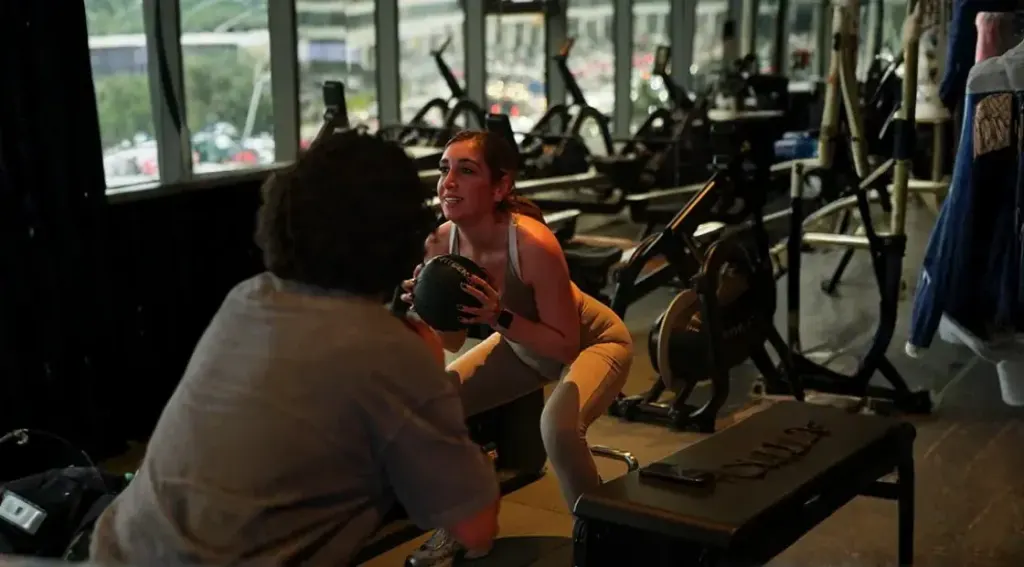
Combining Reformer Pilates and Strength Training: A 4-Week Sample Program from Beytepe
Pilates and weight training are not rivals; they complement each other. Use this 4-week sample program from our Beytepe club in Ankara to combine both in a balanced week.
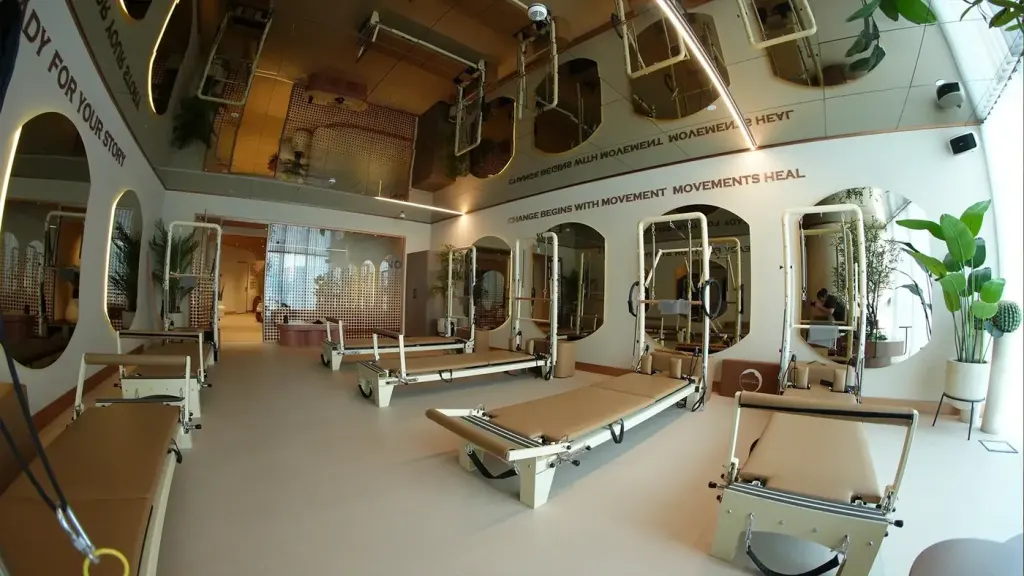
Does Reformer Pilates Help You Lose Weight? The Facts on Calories, Muscle and Body Composition
Does reformer pilates help you lose weight? A realistic answer covering calorie burn, muscle mass, metabolism and body composition, plus the right combinations for weight management.
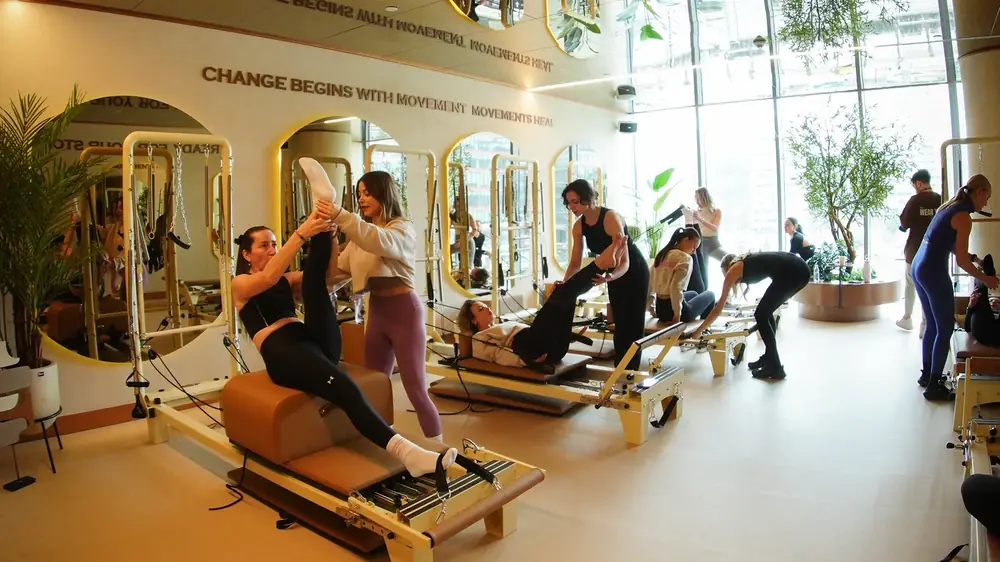
Reformer Pilates for Men: Why Strength Athletes Are Turning to the Reformer
Why are strength athletes turning to the reformer? We explain its contribution to mobility, deep core control, asymmetry correction and eccentric control.
