
Combining Reformer Pilates and Strength Training: A 4-Week Sample Program from Beytepe
Pilates and weight training are not rivals; they complement each other. Use this 4-week sample program from our Beytepe club in Ankara to combine both in a balanced week.
One of the questions our members ask most often is: "Should I do Pilates, or should I lift weights?" The question rests on a false choice. Pilates and weight training are not alternatives to each other; they are two complementary tools. Pilates develops movement quality and core control, while weight training builds muscle mass and maximal strength. In this article, we at O'Wellness Beytepe explain how to fit Reformer Pilates and strength training into the same week, which focus should lead on which day, and share a practical four-week sample program.
Why should you do both?
If the goal is strength and hypertrophy (an increase in muscle size) in the large muscle groups, free weights and machines provide the most efficient stimulus. Yet people who train only with weights often share a recurring gap: deep core stabilization, the ability to move the spine segment by segment, and eccentric control. Reformer Pilates is ideal for closing that gap. Spring resistance demands control in every phase of the movement, so muscles that are often overlooked in the weight room, such as the transversus abdominis, the multifidus and the rotator cuff stabilizers, are brought into play.
The reverse is also true: people who do only Pilates may find that gains in muscle mass and maximal strength plateau at some point. Adding weight training provides a stimulus that Pilates alone cannot offer in terms of bone density, metabolic rate and functional power. In short, for anyone who wants both clean movement patterns and genuine strength gains, combining the two methods is a highly sensible strategy.
The logic of programming: which day, in what order?
The most common mistake when combining the two methods is placing an intense Reformer session straight after a heavy leg workout. Tired muscles cause technique to break down in Reformer movements that require precise alignment. Instead, we recommend choosing one of three basic approaches:
- Separate days: Strength training and Reformer Pilates are spread across different days. This is the most sustainable route for beginners and intermediate members.
- Same day, in sequence: Reformer first, then weight training. Here the Reformer acts as a warm-up and activation layer, so you move on to the weights with your core and hip muscles already switched on.
- Active recovery day: A light Reformer session the day after heavy training can help ease muscle soreness and support circulation.
Looking at total weekly volume, a balance of 2 days of weights, 2 days of Reformer and 1 day of low-intensity cardio or mobility is a good starting point for most intermediate members. Over time, the ratio can be shifted towards strength or towards movement quality, depending on your goal.
A 4-week sample program
The table below shows a sample progression designed for an intermediate member who plans four training days a week. The weights, repetitions and spring resistance you use should be set together with your trainer according to your level. The table offers a starting framework; it does not replace a personal prescription.
| Week | Day 1 (Strength) | Day 2 (Reformer) | Day 3 (Strength) | Day 4 (Reformer + mobility) |
|---|---|---|---|---|
| Week 1 | Lower body basics: squat, hip thrust, straight-leg work (light to moderate load) | Basic footwork, hundred, spinal articulation (familiarization focus) | Upper body basics: row, chest press, shoulder stabilization | Core and hip stabilization + mobility & stretching |
| Week 2 | Lower body: load increased slightly, single-leg variations added | Arm series with straps, side-lying hip work | Upper body: volume increases, back and core superset | Balance-focused Reformer + light cardio (treadmill or bike) |
| Week 3 | Lower body: compound lifts (deadlift variation), moderate to high load | Advanced core series, spinal extension, hip abductors | Upper body: push-pull supersets, core finisher | Full-body Reformer flow + stretching |
| Week 4 | Lower body: gradual increase in load or reps, technique first | Single-leg and balance work, hip-core integration | Upper body: heaviest session of the week, controlled progression | Assessment: movement quality and flexibility check, light flow |
Adapting the program to your level
If you are just starting out, beginning with three days a week instead of four (2 strength + 1 Reformer, or 1 strength + 2 Reformer) is safer in terms of recovery. Advanced athletes can add a cycle or HIIT session on a fifth day to build cardiovascular capacity into the program as well. The O'Ride Cycle and O'Hiit classes on the O'Wellness timetable are good options for this.
Recovery principles to follow throughout the week
When you fit two different types of training into a single week, managing recovery becomes even more important. The points below help keep the program sustainable over the long term:
- Do not train the same muscle group at high intensity on two consecutive days. For example, the day after a heavy leg session, choose a Reformer session focused on the core and upper body rather than an intense lower-body one.
- Do not let sleep and nutrition slide. Most muscle repair happens during sleep, and adequate protein intake is essential for the recovery of muscle and connective tissue.
- Distinguish pain from fatigue. Muscle fatigue is normal, but sharp or worsening joint pain is a warning sign. In that case, reduce the load and consult a sports physiotherapist if needed.
- Plan deload weeks in advance. After 4–6 week blocks, reducing volume by 30-40% for one week supports long-term progress.
Which Reformer exercises complement weight training best?
On lower-body days
Before or after a heavy squat or deadlift day, the footwork series and bridge variations on the Reformer activate the hip extensors and abductors, which can improve alignment in your lifting. In addition, movements that lengthen the hamstrings and hip flexors under load help ease the tightness that limits your squat depth.
On upper-body and back days
Pulling variations with straps and shoulder stabilization exercises work the rotator cuff muscles that protect shoulder health during exercises such as the bench press or overhead press. This is a valuable complement, especially for people who spend long hours at a desk and have a rounded-shoulder posture.
Core integration
The hundred, teaser variations and oblique-focused movements develop rotational core strength, which is rarely isolated in the weight room. A strong core keeps your lower back safer in lifts such as the deadlift and also protects your spine in everyday life.
Common mistakes
- Trying to do both methods at maximum intensity: Weekly fatigue accumulates and recovery falls short. Set up a hierarchy in which one day is the "main" session and the other is supportive.
- Treating the Reformer as a stretching day only: With the right spring resistance, the Reformer provides a serious strength and endurance stimulus; ignoring this wastes its potential.
- Not recording progress: Noting both the weights you lift and changes in spring resistance shows whether the program is really working.
- Skipping the warm-up: A short mobility and activation routine, especially before weight training, lowers the risk of injury.
Who is this combination not suitable for, or who should be cautious?
Combining Pilates and weight training is an appropriate strategy for the large majority of healthy adults, but in some situations an additional assessment is needed before starting. If you have an acute back, shoulder or knee injury, are recovering from surgery, or have an uncontrolled cardiovascular condition, you should obtain approval from your doctor and a sports physiotherapist before beginning an intensive program that combines the two disciplines, and the program should be built up step by step accordingly. For beginners, starting with two or three days a week rather than four is safer, both for establishing technique and for reducing the risk of injury. If you have any chronic condition, always consult your doctor before starting the program.
How do you measure progress and update the program?
When the four-week block ends, you can look at several concrete indicators to see whether the program has worked: a gradual increase in the loads or repetitions you use in lifting, progress in Reformer spring resistance, a visible improvement in alignment in basic movements such as the squat, hip thrust and footwork, and shorter recovery time between sessions. If you see progress in most of these indicators, you can increase volume or intensity step by step in the next four-week block. If progress has stalled, either a deload week was skipped or something is off in a recovery factor such as sleep or nutrition.
Sample progression scenario: a four-month view
To make this concrete, let us look at the four-month journey of an intermediate member. In the first month, the basic program in the table above is followed and technique is the priority. In the second month, the same structure is kept, while weights and spring resistance are gradually increased and a light cycle session is added as a fifth day. At the start of the third month a deload week is planned and volume is reduced by about a third. In the fourth month, a more intense block begins on both the strength and the Reformer side. Throughout this process, the trainer regularly assesses movement quality and recovery indicators and adjusts the program accordingly. This scenario is a general example; the actual rate of progress can vary considerably from person to person.
The role of nutrition and recovery in the program
Placing two separate types of training in the same week asks more of your body's recovery capacity. Adequate protein intake supports muscle repair, while regular, good-quality sleep is the foundation for developing both strength and movement quality. Paying attention to hydration helps you maintain performance, especially when you plan two sessions on the same day. If you would like to structure your nutrition around your training goal, you can take advantage of the dietitian support at O'Wellness Beytepe; you will find the details on our special services page.
How can you follow this program at O'Wellness Beytepe?
At our club in the Yaka Beytepe complex in Çankaya, Ankara, you can use the strength & cardio area, the functional area (sled, kettlebell, TRX) and the O'Rise studio for strength work, and our Reformer Pilates studio, equipped by Balanced Body and limited to a maximum of 6–8 people per session, for Reformer sessions. For members who want to combine personal training with private Reformer sessions under one roof, our trainers can adapt a weekly plan like the one above to your personal goals. Our Reformer Pilates, special services and weekly schedule pages give detailed information about class times and service content.
The complex car park makes access easy. Our club, a few minutes from Hacettepe University's Beytepe campus and the Çayyolu–Ümitköy corridor, is open 06:00–23:00 on weekdays and 08:00–23:00 at weekends. You can check our membership page for membership options and the founding membership pre-registration, and request a free facility tour and trial session before deciding.
Complementary options in the Yaka Beytepe complex
If you want to add variety to your program, the same complex opens the door to other disciplines too. The O'Padel Beytepe courts are a good complement for those who want active rest through racket sports. On the endurance and athletic performance side, the Athletic Performance service at our club supports your strength program with sport-specific goals. You can also explore the platform of the O'Wellness parent brand for general wellness content.
Adapting the program to your goal
The four-week framework above offers a general balance, but changing the ratios to suit your goal often gives better results. Below you will find the distribution we suggest for three different goals:
- If muscle mass and maximal strength are the priority: 3 strength days a week and 1 Reformer day for active recovery. Reformer sessions are kept short, with light to moderate spring resistance.
- If movement quality and rehabilitation are the priority: 3 Reformer days a week and 1 day of light strength work. This can be preferred when returning from injury or managing chronic pain.
- If balanced general fitness is the goal: The 2+2 format shared above is a sustainable middle path for most members.
Reviewing your goal every few months and updating the program accordingly prevents progress from hitting a plateau. A short review meeting with your trainer every three months helps you handle these updates in a structured way.
Which areas should you track for progress?
In a program that combines two types of training, tracking progress with a single measure is not enough. We recommend monitoring the following four areas together:
| Area | Criterion | Tracking frequency |
|---|---|---|
| Maximal strength | Load and reps used in key lifts (squat, deadlift variation, row) | Every 2 weeks |
| Core control | Speed of progression to advanced Reformer movements, alignment quality | Monthly, with trainer assessment |
| Range of motion | Subjective change in hip and shoulder flexibility, pain-free range of motion | Monthly |
| Overall recovery | Sleep quality, daily sense of fatigue, motivation level | Weekly self-assessment |
Progress in these four areas is the most reliable way to tell whether the program is properly balanced. For example, if your core control is improving while your maximal strength is standing still, it may be time to increase your strength training volume.
Equipment and technique notes
Choosing the right spring resistance on the Reformer is as important as choosing the right barbell load in the weight room. A spring that is too light makes control easier but reduces the muscular stimulus; one that is too heavy can break down technique and raise the risk of injury. Your trainer helps you choose the appropriate resistance for each movement and increases it gradually over time. On the weights side, having solid technique before adding load, especially in compound lifts such as the squat, deadlift and row, is a basic requirement for both long-term progress and joint health.
Differences in approach by age group
The logic of combining Pilates and weight training holds at every age, but the points of emphasis can shift. Members in their twenties and thirties can usually tolerate higher volume and faster load increases; in this group the Reformer mostly plays the role of a complement that boosts lifting performance. After forty, as recovery times can lengthen, the Reformer's contribution to core and joint health becomes a more prominent priority in the weekly plan. At fifty and above, the Reformer's role in bone density and balance becomes even more important; in this age group, load in strength training is increased more slowly and technique always comes first.
Some practical differences related to sex can also be observed. Women members often place more emphasis on hip and core stabilization, while for men, shoulder and thoracic spine mobility is frequently the higher-priority area; this is linked to postural habits created by desk work. Of course, these generalizations do not replace individual assessment; each member's program is shaped by the goals and constraints identified in the first consultation.
An extra layer for athletes: performance-focused integration
For members who play sports such as running, tennis, padel or golf at an amateur or semi-professional level, combining Reformer Pilates with strength training is especially important for injury prevention. For example, weak hip abductors in runners can pave the way for knee pain, and insufficient rotational core strength in golfers for lower back pain. These athletes are given Reformer exercises that support the movement patterns of their sport, such as rotational core work and single-sided hip stabilization, and strength training is designed to reinforce these patterns in the large muscle groups. At Beytepe, this kind of integration is usually prepared within personal training or the Athletic Performance service, following an individual assessment.
Frequently asked questions
Can I do Pilates and weight training on the same day?
Yes, but the order matters. Doing Reformer Pilates first for warm-up and activation, followed by weight training, usually works better. Avoid stacking two intense sessions back to back on the same day.
How soon can I expect to see results?
It depends on personal factors such as your starting level, consistency and nutrition. In general, a four-week block is a reasonable starting framework for noticeable improvement in movement quality and fitness.
Can Reformer Pilates replace weight training?
No. The Reformer is a powerful tool for core control and movement quality, but it cannot fully match the high-load stimulus that weight training provides for maximal strength and muscle growth. The best results come from combining the two.
Can I follow the whole program at a single facility in Beytepe, Ankara?
Yes. O'Wellness Beytepe offers a strength & cardio area, a functional area and the O'Rise studio alongside a Reformer Pilates studio equipped by Balanced Body, all under one roof in the Yaka Beytepe complex. This allows you to follow the entire program at a single club. You can check our membership page for what each membership covers.
What should I do if the program feels too tiring?
Reduce the volume and add a recovery day. If you feel sharp or increasing joint pain, consult your trainer or our sports physiotherapist. The program is a flexible framework, not a rigid list of rules.
To build a strength and Reformer Pilates program that suits your goals, get in touch with us and request a free facility tour and trial session at O'Wellness Beytepe.
Related posts
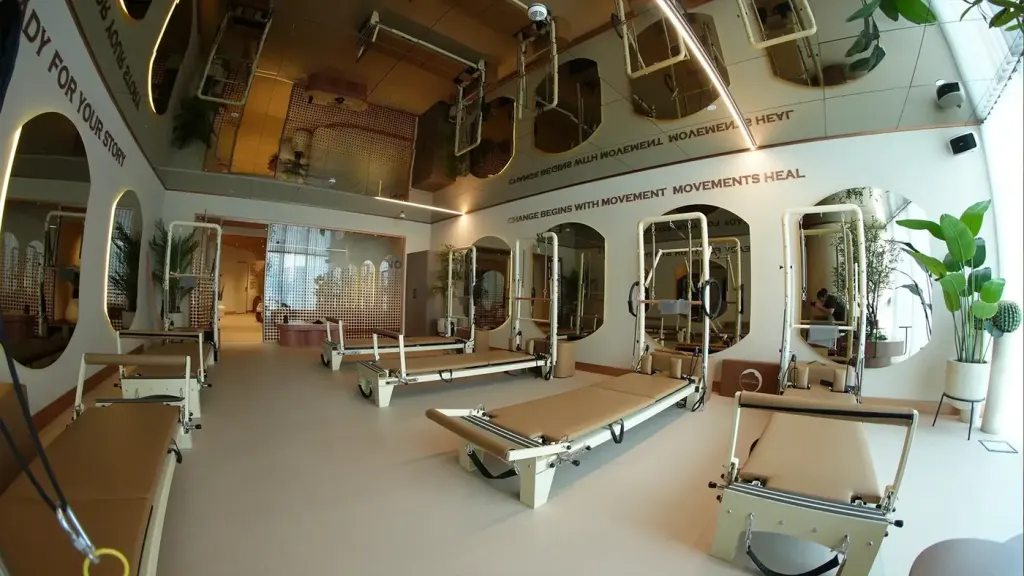
10 criteria to consider when choosing a reformer pilates studio in Beytepe
The 10 criteria to check when choosing a reformer Pilates studio in Beytepe, from equipment and class size to instructors and membership flexibility.
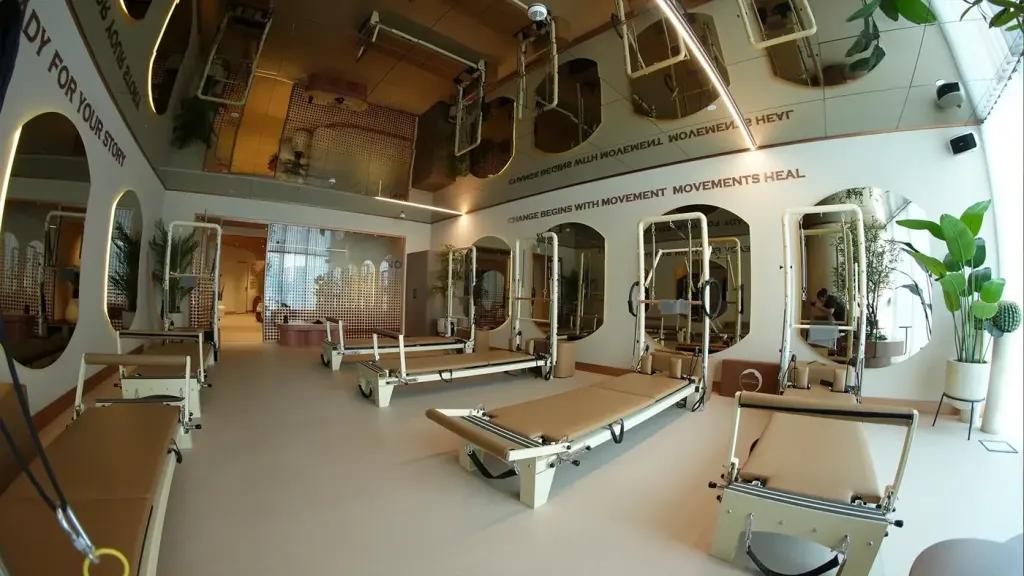
How Many Days a Week Should You Do Reformer Pilates? Programme Tips by Level
Reformer Pilates frequency depends on your level, goal and recovery capacity. Recommendations by level, sample plans and a step-by-step progression protocol.
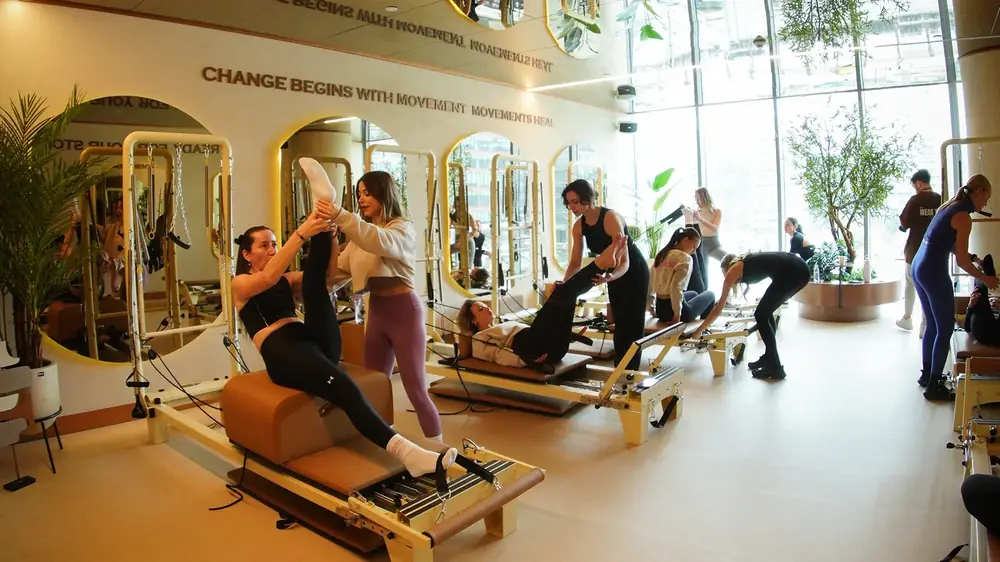
Postnatal Reformer Pilates: Core and Pelvic Floor Recovery
Postnatal Pilates brings the core and pelvic floor muscles back online step by step. We cover when to start, first priorities and warning signs to watch for.
