
Reformer Pilates for Men: Why Strength Athletes Are Turning to the Reformer
Why are strength athletes turning to the reformer? We explain its contribution to mobility, deep core control, asymmetry correction and eccentric control.
Until recently, it was unusual to see someone who had spent years squatting, deadlifting and bench pressing in the weights room walk into a reformer studio. Today, reformer pilates for men is becoming increasingly popular, especially among serious strength athletes. In this article we look at the reasons behind this shift, how the reformer contributes to strength training and the questions men ask most often.
Where does the women's sport perception come from?
The idea that pilates mainly appeals to women stems from the higher number of female participants seen in group classes. Yet Joseph Pilates originally developed his method while working with male boxers and dancers. The reformer itself is a gender-neutral resistance and movement tool; its springs can be adjusted and made heavier according to the athlete's current strength. So the perception of the reformer as a light workout does not reflect its real capacity.
Common problems faced by strength athletes
- Limited shoulder and hip mobility: movement patterns repeated under heavy load can create stiffness at certain joint angles.
- Weak deep core control: even when the visible abdominal muscles are strong, deep stabilisers such as the transversus abdominis and multifidus may be underdeveloped.
- Asymmetric strength: constantly favouring the dominant side creates differences between sides and raises the risk of one-sided injury.
- Lack of eccentric control: while the lifting phase gets the attention in weight training, the controlled lowering phase is often neglected.
The reformer addresses each of these four areas directly.
Benefits of the reformer for strength athletes
1. Gaining mobility under load
Reformer exercises do not just stretch the muscles; they also work them in a controlled way against spring resistance, which is known as loaded stretching. Athletes tend to adopt this more readily than static stretching, and it is considered a more lasting way to gain mobility.
2. Deep core stabilisation
During squats and deadlifts, it is the deep core cylinder rather than the visible abs that truly protects the spine. The reformer targets this cylinder directly, supporting spinal safety during heavy lifts.
3. Identifying and correcting asymmetry
Single-sided reformer exercises clearly reveal differences in strength and control between the two sides. The coach can observe this and give extra focus to the weaker side.
4. Eccentric control
Releasing the carriage slowly and with control against the pull of the springs directly trains eccentric muscle control, a critical skill for injury prevention.
5. Active recovery
Low joint-load, moderate-intensity reformer sessions placed between heavy training days can serve as active rest days that boost blood flow and support recovery.
Key benefits by sport
| Sport | What the reformer adds |
|---|---|
| Weightlifting / Powerlifting | Hip and shoulder mobility, core stabilisation, asymmetry correction |
| Running | Hip extensor strength, single-leg stability, flexibility |
| Golf / Tennis / Padel | Rotational power, anti-rotation core control, shoulder health |
| Combat sports | Hip mobility, core-to-hip connection, balance |
Sample weekly combination
For an athlete continuing strength training, a typical week might look like this:
- Monday: heavy lower-body strength training (squat, deadlift)
- Tuesday: reformer pilates (mobility and core focus, low-to-moderate intensity)
- Wednesday: heavy upper-body strength training
- Thursday: reformer pilates or Mobility & Stretching
- Friday: full-body strength training in the functional zone (sled, kettlebell, TRX)
- Weekend: active rest; a light walk followed by light stretching
This programme can be tailored to your goals and current training volume using the class options on our weekly schedule page.
A change in breathing: from Valsalva to diaphragmatic breathing
In weight training, most athletes use the Valsalva manoeuvre on heavy lifts, holding their breath to raise intra-abdominal pressure; this is useful for maximal force production. But when this habit carries over to daily life and low-to-moderate intensity movement, it can lead to unnecessary tension and a shallow breathing pattern. Reformer sessions teach athletes to synchronise breath with movement and to stabilise the core without holding their breath when appropriate. The two techniques are not mutually exclusive; you learn which to use in which context.
Shoulder health and the bench press
In athletes who regularly bench press and do similar pushing movements, the chest muscles shorten while the upper back muscles, especially the middle and lower trapezius and rhomboids, can remain relatively weak. This imbalance can increase the risk of shoulder impingement. Pulling exercises with straps on the reformer target exactly this weakened muscle group, restoring push–pull balance. This kind of balancing work can be seen as a preventive investment for athletes continuing a heavy bench press programme.
Hip mobility and squat depth
One of the most common factors limiting squat depth is insufficient hip mobility, particularly in flexion and internal-external rotation. Hip-opening exercises performed kneeling and side-lying on the reformer develop this mobility under load and with control. Some athletes report reaching depth more comfortably in the squat after a few weeks of regular reformer work; this is an individual observation and may not happen at the same pace for everyone.
Common mistakes
- Underestimating the reformer: leaving the springs at the lightest setting and doing movements superficially means not using the machine's real potential.
- Trying only to show strength: the goal on the reformer is to demonstrate control, not to lift weight; fast, uncontrolled movement reduces the benefit.
- Not integrating the core with the breath: bringing the breath-holding habit from the weights room to the reformer undermines the purpose of the exercise.
- Skipping mobility work: repeating only strength movements on the reformer and ignoring the flexibility component misses the machine's greatest advantage.
Who it is not suitable for and who should be careful
- For athletes with an acute muscle or joint injury, an assessment by a sports physiotherapist is recommended before starting a reformer programme.
- For those with a history of shoulder instability, some strap exercises should be modified with approval from a doctor or physiotherapist.
- For athletes approaching a competitive period, reformer intensity should be carefully adjusted so as not to fatigue the main training.
How is progress measured?
In strength athletes, reformer progress is usually judged by its indirect contribution to main training: indicators such as greater squat depth, less discomfort in overhead movements and a closing strength gap between sides are tracked. On the reformer itself, the ability to increase spring resistance gradually while maintaining movement control is monitored.
A sample programme flow
For a regular powerlifter who feels stiffness in the right hip and slight asymmetry in the squat, a programme typically progresses like this: the first two weeks focus on hip mobility and core awareness; from week three, single-sided footwork and anti-rotation work are added; in week five, eccentric control exercises come in. By the end of week six, such an athlete might notice greater squat depth and less hip stiffness; results vary from person to person.
Group class or one-to-one?
Both formats have advantages for strength athletes. Group classes provide social motivation and a regular training discipline, while one-to-one sessions allow targeted work on a specific asymmetry or movement restriction. Many athletes prefer to spend the first few weeks building a foundation with private Reformer Pilates sessions and then move on to small group classes with a maximum of 6–8 people per session. See our group classes page for detailed options.
Observations from other male athlete profiles
Runners often describe improved hip extensor strength and single-leg stability as feeling less tired on long runs. Combat athletes describe a stronger hip–core connection as feeling that punches and kicks come from a more solid base. These observations are individual and cannot be presented as general results, but they give an idea of why athletes from different sports choose the reformer.
Equipment and technical details
When working with strength athletes, coaches usually start with medium-to-heavy springs and increase resistance step by step as long as movement quality holds. Short loops are preferred for single-sided work and long loops for symmetrical arm series. Footbar height is also an important variable in hip mobility exercises.
Connecting to reformer fundamentals
To learn more about how the reformer works, how it differs from mat pilates and the six core principles of pilates, read the What Is Reformer Pilates? article on our blog. For strength athletes, the reformer is a performance-oriented extension of these principles.
Reformer for strength athletes at O'Wellness Beytepe
Our Reformer Pilates studio in Yaka Beytepe is equipped with Balanced Body reformers and works with a maximum of 6–8 people per session. Our strength athletes can integrate mobility and core programmes into their main training on the strength and cardio floor through private or small group sessions. Those who want to combine strength work with the reformer can explore Personal Training and Athletic Performance on our private services page, and learn about our team on the coaches page.
Frequently asked questions
Does reformer pilates cause muscle loss?
No. The reformer works on endurance and control under low-to-moderate load and does not cause muscle loss. It should be seen as a complement to your main strength training, not a replacement.
How many reformer sessions per week can someone who lifts add?
Usually one or two sessions a week placed between main strength workouts is enough. Intensity is set with your coach according to your recovery capacity.
Is the reformer useful when returning to strength training after injury?
Yes; thanks to low joint load and adjustable resistance, the reformer is often chosen for gradual loading after injury. We recommend progressing in coordination with your sports physiotherapist.
Why should strength athletes in Ankara choose O'Wellness Beytepe for reformer?
The strength and cardio floor, the functional zone and the Reformer studio are under one roof, and with Athletic Performance and sports physiotherapist support an integrated programme can be built to complement your strength training.
Realistic expectations when starting
Strength athletes new to the reformer may find the first few sessions unexpectedly challenging. This is not due to a lack of muscular strength but because neuromuscular coordination has not yet adapted to unfamiliar control and stabilisation demands. It is a natural learning curve and becomes noticeably easier within a few weeks.
A common remark from many strength athletes who try the reformer is that, contrary to first impressions, it is anything but easy; the real difference lies in the type of strength used, the speed of movement and the level of control required.
For a reformer programme to complement your strength training, fill in the contact form and let us plan your free facility tour and trial session in Beytepe.
Related posts
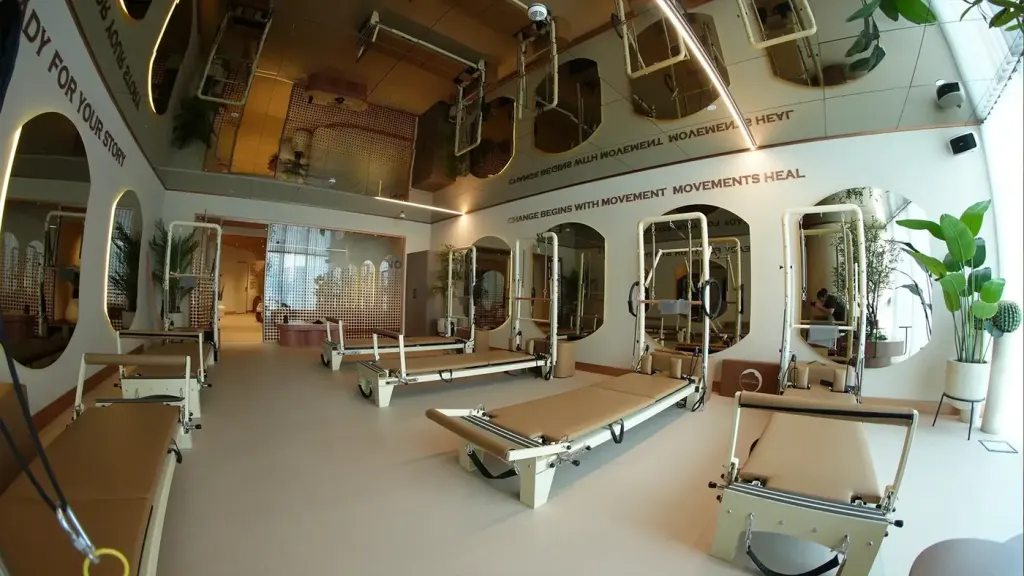
10 criteria to consider when choosing a reformer pilates studio in Beytepe
The 10 criteria to check when choosing a reformer Pilates studio in Beytepe, from equipment and class size to instructors and membership flexibility.
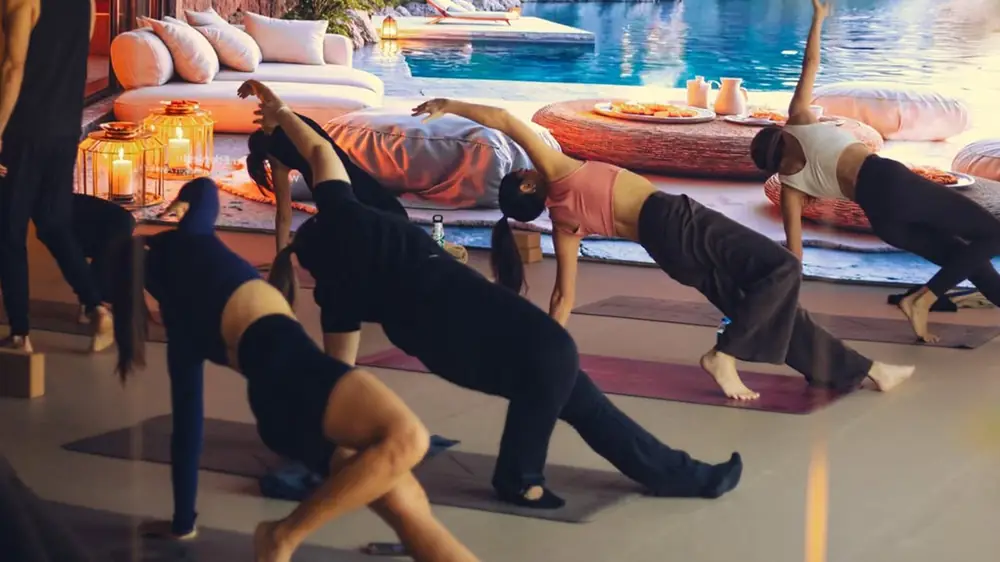
Can you do reformer pilates and yoga together? A balanced weekly plan
Pilates and yoga can be done together, and they complement each other. This article gives you a balanced weekly plan you can follow at O'Wellness Beytepe in Ankara.
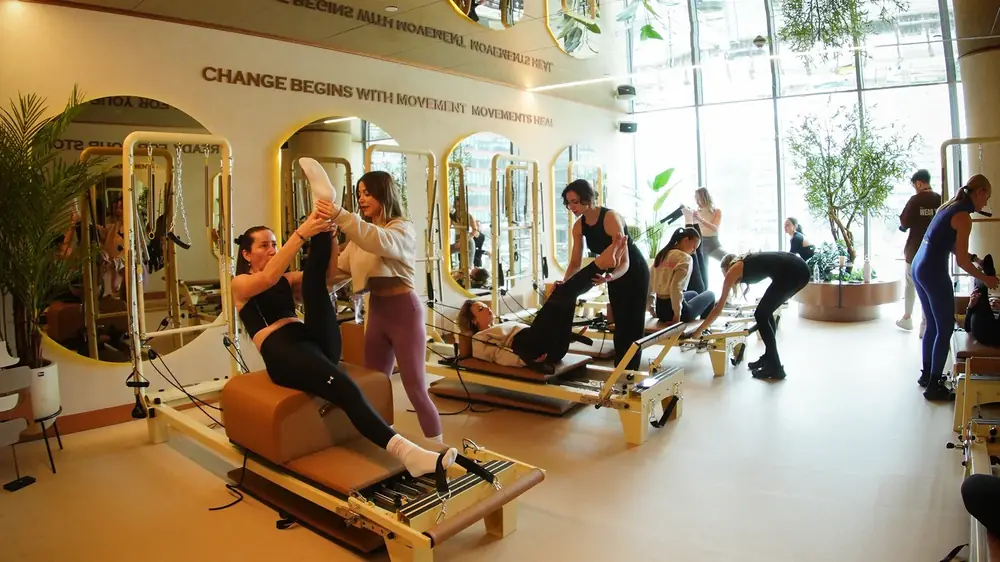
One-to-One Reformer Pilates or Group Class? The Right Format for Your Goal
We compare one-to-one Reformer Pilates and group classes on personalisation, learning speed, motivation and cost to help you pick the right format.
