
One-to-One Reformer Pilates or Group Class? The Right Format for Your Goal
We compare one-to-one Reformer Pilates and group classes on personalisation, learning speed, motivation and cost to help you pick the right format.
When you decide to start Reformer Pilates, the first question you face is usually about format: one-to-one or group class? There is no right or wrong answer; the decision depends on your goal, budget, previous experience and personal preference. To make the right choice, you first need a clear picture of what each format actually offers and how they differ. In this article we look at the concrete differences between one-to-one Reformer Pilates and group classes, which format suits which profile, and how to combine the two, drawing on the O'Wellness Beytepe approach.
Key differences between the two formats
| Criterion | Private | Group class |
|---|---|---|
| Personalisation | Fully individual programme | Based on general level, limited individual modification |
| Instructor attention | Constant and uninterrupted | Shared among 6-8 people |
| Scheduling flexibility | Usually more flexible appointment times | Fixed class timetable |
| Social motivation | Low | High; group energy can be motivating |
| Cost | Higher per session | More affordable per session |
| Learning speed | Usually faster, corrections are instant | More gradual, learning through observation |
Who is one-to-one Reformer Pilates for?
- People with a complex health history: Those with a herniated disc, recovering from shoulder surgery or with a history of chronic pain need movements adapted to them instantly and precisely.
- Those who are pregnant or postnatal: Modifications specific to the trimester or postnatal recovery are needed; we recommend starting after consulting your doctor.
- Beginners who want to progress quickly: One-to-one sessions are an advantage for those who want to learn the basic movement language quickly and correctly.
- Athletes with a specific performance goal: Situations in sports such as golf, tennis, padel or running that require individual asymmetry and weakness analysis.
- Those who need to plan around a busy work schedule: People who find it hard to fit fixed group times.
Who are group classes for?
- Those with general health and fitness goals: For people without specific health restrictions who want overall strength and flexibility, group classes are sufficient and effective.
- Those who need social motivation: Group energy can make it easier to keep attending regularly.
- Those planning carefully around a budget: For people building a regular, long-term habit, group classes are more economical per session.
- Those who already know the basic movement language: Starting one-to-one and moving to groups once basic alignment is established is a common and effective route.
The hybrid approach: combining both
Many members in fact choose neither only one-to-one nor only group; they combine the two. For example, taking a one-to-one assessment session once a month and continuing the rest in group format keeps costs reasonable while giving you regular individual feedback. When learning a new exercise or returning after an injury, starting with one-to-one sessions and joining group classes once form is established is also a popular route.
An often-overlooked advantage of one-to-one: speed
One of the most tangible benefits of one-to-one sessions is learning speed. In a group class the instructor attends to 6-8 people at once, whereas one-to-one every correction is made instantly and directly. This allows correct alignment to settle much faster, especially in complex exercises such as the long stretch or short box, and lets faulty patterns be corrected before they become ingrained. For some members, this speed advantage, appreciated over time, is the main factor that justifies the higher session fee.
An often-overlooked advantage of group classes: learning by observation
Watching other participants in group classes can be an unexpected source of learning for some members. Seeing an exercise performed by different body types and with different modifications can increase awareness of your own body. In addition, the gentle competition and sense of solidarity a group brings creates higher motivation for some people than working alone; seeing familiar faces in a class you attend regularly is an important factor in long-term consistency.
The cost of choosing the wrong format
Choosing the wrong format usually shows up in one of two ways: joining a busy group straight away with a complex health history and not getting the individual attention needed, or continuing with costly one-to-one sessions unnecessarily when the goal is simple general fitness. In either case, reviewing your format decision at regular intervals, for example every two or three months, helps you optimise both your budget and your results.
Questions to ask when deciding
- Is my health history complex? If so, starting one-to-one is recommended.
- How flexible is my budget per session? If it is limited, group classes or a hybrid model can be considered.
- Do I work better in a social setting or a quiet, focused one? This determines your source of motivation.
- Do I have a specific performance or rehabilitation goal? If so, one-to-one may be better for an individual programme.
- Do I need to plan around fixed or flexible times? If flexibility matters, one-to-one appointments are an advantage.
How to balance cost and benefit
Although one-to-one sessions cost more per session, faster learning and a lower risk of injury can reduce the risk of "wasted sessions" in the long run. Group classes, on the other hand, are generally a more accessible option for a regular, sustainable habit. When deciding, we recommend looking not only at the session fee but also at how quickly you reach your goal and your overall satisfaction; sometimes the option that seems more expensive is actually more economical because it gets you there faster.
Transitions: from one-to-one to group and back
When moving from one-to-one to group classes, it helps to get a brief overview from your instructor of the group format's pace and general flow. Moving from group to one-to-one usually comes from a need to focus on a specific goal: returning from an injury, refining an exercise or a performance target. These transitions can be made flexibly depending on your membership type; discussing them with your instructor in advance makes it easier to define the goal clearly.
An example journey
The journey of a member with a history of a herniated disc and no previous Pilates experience usually goes like this: the first session is one-to-one, and the doctor's report and pain-triggering movements are assessed. For the first 6-8 weeks a one-to-one programme without flexion, focused on a neutral spine, is followed. As the pain-free range of motion grows and the basic movement language settles, the member can move to small-group classes. The timing of this decision always depends on the instructor's observation and on the member feeling ready; there is no fixed timetable. This example shows how the move from one-to-one to group can be managed gradually and safely.
Practical ways for beginners to reduce cost
- Choosing a package: Buying a package instead of single sessions usually lowers the cost per session.
- Starting one-to-one, then moving to groups: Taking the first few sessions one-to-one and switching to more economical group classes once the basics are in place balances safety and budget.
- Asking about partner sessions: Check with reception whether there is a format for training with your partner, a friend or a family member; this can offer near one-to-one attention at a shared cost.
- Reviewing membership options: A membership that includes Reformer can improve overall cost by giving access to both group classes and Reformer sessions.
Why instructor-member fit matters
Just as much as the format, the instructor you work with shapes your experience. This fit matters even more one-to-one, because you spend the entire session with the same instructor. If an instructor's communication style, way of giving feedback or preferred pace does not suit you, do not hesitate to ask for a trial session with someone else; at O'Wellness Beytepe this is a perfectly normal and supported request.
How to get more individual attention in a group class
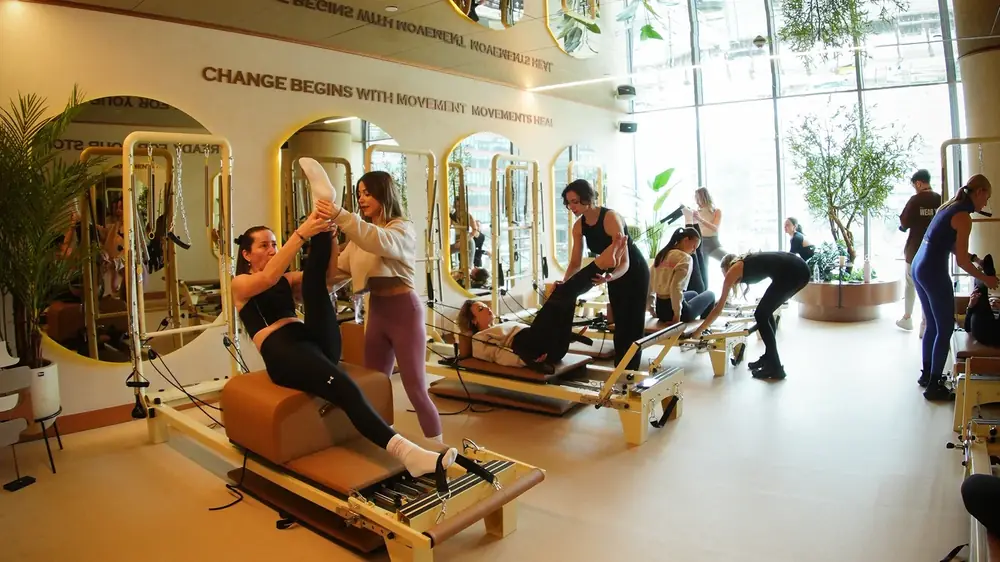
Even if you choose group classes, there are ways to get individual attention. Joining small-group classes, arriving a few minutes early for a quick chat with the instructor and working regularly with the same instructor all help the instructor get to know your movement patterns over time. The fact that our Reformer classes at Beytepe have a maximum of 6-8 people is an advantage here. While the group format does not offer every benefit of one-to-one, it can significantly raise the level of personalisation.
A middle option: training with a partner
Some studios offer duo sessions, where two people work with the same instructor with near one-to-one attention but at a shared cost. For two people with similar goals this can be a balanced middle ground between one-to-one and group; it is a practical solution, socially and financially, especially for couples or close friends. You can check the current availability of such an option at Beytepe with reception.
Choosing a format at O'Wellness Beytepe
Our Reformer Pilates studio in the Yaka Beytepe complex offers group classes and Private Reformer Pilates sessions on Balanced Body reformers. We recommend that new members take their first session as a one-to-one assessment, so our instructors can learn about your health history and goals and suggest the most suitable format. Those aiming for general strength and flexibility can also add complementary group classes such as Mat Pilates in the O'Soul studio or Total Body in the O'Rise studio. See our Membership page for membership options and our Trainers page for information about the team.
Frequently asked questions
I have no Pilates experience; can I join a group class directly?
You can, but we recommend taking your first one or two sessions one-to-one to learn the basic movement language faster and more safely.
How much more expensive are one-to-one sessions than group classes?
There is a price difference by the nature of the format; for current information, please contact us via the form on the Contact page.
I have an injury; which format is safer?
With a complex health history, the one-to-one format is considered safer because exercises can be adapted instantly and fully to the individual. We recommend consulting your doctor before starting.
Is there a studio in Ankara offering both one-to-one and group Reformer classes?
Yes. O'Wellness Beytepe offers both group Reformer classes and Private Reformer Pilates sessions in the Yaka Beytepe complex, a few minutes from Çayyolu, Ümitköy and Hacettepe University's Beytepe campus.
Can I change my format later?
Yes. Depending on your membership, you can switch between one-to-one and group formats or even use both; it is entirely natural to reassess your format as your goals change.
To find the format that suits you best, fill in the form on the Contact page and take advantage of our free trial session.
Related posts
Reformer Pilates During Pregnancy: A Safe Practice Guide by Trimester
Reformer pilates during pregnancy can be adapted for all three trimesters. We cover movement choices, what to avoid and how to prepare.
Reformer Pilates for Runners: Hip Stability and Injury Prevention
We examine the role of reformer pilates for runners in hip stability, core control and preventing common running injuries, with practical examples from Yaka Beytepe.

Your First Reformer Pilates Class: What to Wear, What to Expect, Mistakes to Avoid
Everything you need to know about clothing, equipment, the flow of the session and common mistakes before your first reformer pilates class, from O'Wellness Beytepe.
