
Reformer Pilates During Pregnancy: A Safe Practice Guide by Trimester
Reformer pilates during pregnancy can be adapted for all three trimesters. We cover movement choices, what to avoid and how to prepare.
The answer to "Can I exercise while pregnant?" is mostly yes in an uncomplicated pregnancy; what matters is how you do it. Thanks to the apparatus's adjustable support and wide range of movements, reformer pilates in pregnancy can be modified appropriately and continued through every trimester. In this article we cover what to watch in each trimester, which movements are preferred and which ones to stay away from.
General safety principles
Every pregnancy is different, so you need your obstetrician's approval before starting or continuing an exercise program. The generally accepted principles are these:
- From the second trimester onward, staying on the back (supine) for long periods is avoided; this position may carry a risk of the growing uterus compressing the main vein.
- Movements that sharply raise intra-abdominal pressure (intense crunches, breath holding) are limited.
- High-difficulty single-leg movements that risk loss of balance are avoided.
- Intense, non-stop sessions are avoided to prevent excessive rises in body temperature.
- If there are signs of abdominal separation (diastasis recti), movements are modified accordingly.
This general information does not replace medical advice; it is important to consult your doctor for guidance specific to your own health.
An approach by trimester
| Period | Main goal | Things to watch for |
|---|---|---|
| 1st trimester (weeks 0-13) | Maintaining current fitness, breathing work | Lower intensity if nauseous, avoid overheating |
| 2nd trimester (weeks 14-27) | Postural support, hip and back strength | Avoid long periods on the back, prefer side-lying positions |
| 3rd trimester (weeks 28-40) | Pelvic floor awareness, birth-preparation breathing | Mind the shift in balance, reduce range of motion |
First trimester: keeping the routine going
If you did regular reformer pilates before pregnancy, you can carry on in a way similar to your current routine with your doctor's approval. Symptoms such as nausea and fatigue may naturally lower the intensity; although there is no strict restriction in this period, listening to your body comes first. If you are starting from scratch, it is appropriate to begin with basic footwork and breathing on light springs.
Second trimester: posture and hip focus
As the belly grows, the center of gravity shifts forward and the lumbar curve may increase. In this period, hip and lateral trunk work done side-lying on the reformer helps balance the overload on the back muscles. Supine movements are kept short or performed with the upper body raised on a pillow. Instructors often prefer seated arm work with straps in this period because it does not load the back.
Third trimester: pelvic floor and birth preparation
In the final trimester the focus moves to awareness of the pelvic floor muscles and breathing techniques that will help during birth. Deep abdominal work gives way to gentle pelvic floor activation and lateral breathing. Because the shift in balance becomes more pronounced, standing movements are reduced and seated or side-lying work is preferred. Working one-to-one in this period makes it easier to adjust movements to the person on the spot.
Movements recommended to avoid
- Movements that press on the abdomen in a prone position
- Long, deep supine abdominal curls (after the second trimester)
- Dynamic movements involving jumping or sudden changes of direction
- High-intensity core work done while holding the breath
Advantages of the reformer in pregnancy
The main reason reformer pilates is favored in pregnancy is that movements can be modified easily with straps and platform support. The same exercise can be made safe by lowering spring resistance or changing position. The low joint load also protects the ligaments, which loosen under the influence of the hormone relaxin during pregnancy, from being overstressed. For the general logic of the reformer, see our reformer pilates page.
Common mistakes
- Insisting on pre-pregnancy intensity: Carrying on at the same weight and tempo because "I was already training" can raise injury risk because the joint structure has changed.
- Continuing to crunch the abdominals in the classic way: After the second trimester deep crunches may raise the risk of diastasis; they should be modified.
- Arriving hungry and dehydrated: Blood sugar swings in pregnancy can bring on dizziness faster; a light snack and water before the session matter.
- Holding the breath: Breath holding raises intra-abdominal pressure and is a habit to avoid especially in pregnancy.
- Not taking support in balance work: Because the center of gravity has shifted, standing close to a bar or wall during standing balance work improves safety.
Who it is not suitable for, or who should take care
- In pregnancies with diagnoses such as placenta previa, cervical insufficiency or preeclampsia, exercise can only be done with the doctor's specific approval and limits.
- In multiple pregnancy (twins, triplets), intensity and movement choice should be determined more carefully with the doctor's opinion.
- People with a history of preterm birth must get their doctor's approval before starting an exercise program.
- People who have never exercised regularly should start not with an intense program but at very low intensity and for short durations.
How is progress tracked?
In pregnancy, progress means comfort and function more than strength gains: tiredness after a daily walk, the course of back pain, sleep quality and ease of breathing are asked about verbally by the instructor at the start of each session. Movement choice and duration are adjusted on the spot according to this information; no fixed weekly increase is targeted.
A sample session flow (second trimester)
- Welcome and check-in (5 min): Ask about the day's state, sleep, swelling and pain.
- Breathing and neutral pelvis (10 min): Diaphragmatic breathing side-lying.
- Hip and lateral trunk muscles (15 min): Side-lying hip opening with straps, trunk stabilization.
- Upper body and posture (10 min): Seated arm series, shoulder-opening movements.
- Relaxation (10 min): Gentle stretching and breathing side-lying.
Session format and frequency
In pregnancy, reformer sessions are generally recommended in a one-to-one or very small group format, once or twice a week. O'Wellness Beytepe offers Private Reformer Pilates for this need; before each session the instructor asks how you feel that day (fatigue, pain, balance) and adjusts the program. A period of light stretching and rest is added at the end. Confirm the current format and times for a pregnancy program with our team.
Equipment choice and studio environment
Because sweating and heat sensitivity can increase in pregnancy, a well-ventilated studio environment should be preferred. Before the session you are welcome to share your preferences about room temperature and ventilation with our team. Comfortable, breathable clothing and non-slip pilates socks provide extra safety in this period of shifting balance.
When to stop and when to see a doctor
In situations such as bleeding, regular contractions, dizziness, shortness of breath, chest pain or a marked decrease in the baby's movements, exercise must be stopped immediately and a doctor consulted. In high-risk pregnancy and conditions such as placenta previa, the exercise program should be continued only with the doctor's approval and within the limits they set.
Equipment and position adjustments
In a pregnancy reformer session, instructors can ease the pelvic angle by adding a pillow or support to the carriage and reduce hip flexion by changing the angle of the foot bar. For strap work, the long loop is usually preferred because it creates less shoulder tension. Accessories that press directly on the abdomen (for example heavy sandbags) are avoided.
Combining with other classes
Alongside reformer sessions, low-impact breathing and flexibility work is a good complement in pregnancy. With your doctor's approval, easy walking or yoga-type classes can be added to your weekly program; however, intense flow classes in a hot environment are generally recommended to be avoided in pregnancy. The parks and walking paths in and around Beytepe also offer options for easy-paced walks. For post-session recovery such as massage and sauna, consult your doctor first.
A bridge to the postpartum period
Regular and safe reformer work throughout pregnancy also lays a positive foundation for postpartum recovery. In approaches specific to the postpartum period, pelvic floor and core recovery carry particular importance; once you have your doctor's approval, you can build a gradual plan together with your instructor.
The importance of communicating with your instructor
The most critical element in keeping reformer sessions safe during pregnancy is open communication with your instructor about how you feel that day. If your sleep quality is poor, you feel nauseous or you notice a change in the baby's movements, telling the instructor before the session allows the program to be adapted immediately. Even within the same week, energy levels can vary from day to day; for this reason, a flexible approach is adopted instead of sticking rigidly to a fixed weekly plan. We recommend a short check-in conversation with our trainers before each session.
Balancing family and work life
For working expectant mothers, planning one or two fixed sessions a week is the most practical way to keep the program going. For those working along the Beytepe, Çayyolu and Ümitköy corridor, it is possible to plan short sessions at lunch or after work; the wide weekday window of 06:00-23:00 adds flexibility. Setting aside a short rest after the session helps recovery, especially in the third trimester.
Connection to general reformer knowledge
To better understand the special modifications of reformer pilates in pregnancy, it helps to know the basic working principle of the apparatus. The resistance logic of the springs, the movement of the carriage and the six basic pilates principles (centering, concentration, control, precision, breath, flow) apply in all sessions outside pregnancy too. Your pregnancy program is a special adaptation built on this foundation.
Frequently asked questions
When can reformer pilates be started during pregnancy?
In an uncomplicated pregnancy, you can start from the first trimester with your doctor's approval. If you had no exercise history before pregnancy, starting in the second trimester at low intensity is usually more comfortable.
Do I need to avoid supine movements completely?
Short supine positions that cause no discomfort usually do not pose a problem; however, from the second trimester on, a side-lying position or a raised upper body is preferred over staying on the back for long. If you feel discomfort or dizziness, change position right away.
What should be done if there is diastasis recti (abdominal separation)?
Instead of classic crunches, modifications that gently engage the deep abdominal muscles without increasing the separation are used. Your instructor and, if needed, the Sports Physiotherapist will give you specific guidance.
Why O'Wellness Beytepe for pregnancy reformer pilates in Ankara?
Beytepe has a Reformer studio with Balanced Body apparatus, a Private Reformer Pilates option and a Sports Physiotherapist service in the same facility. This setup allows pregnancy-specific adaptations to be planned with confidence.
For a reformer pilates program suited to your pregnancy, reach out through our contact page and we will arrange a personal facility tour and trial session.
Related posts
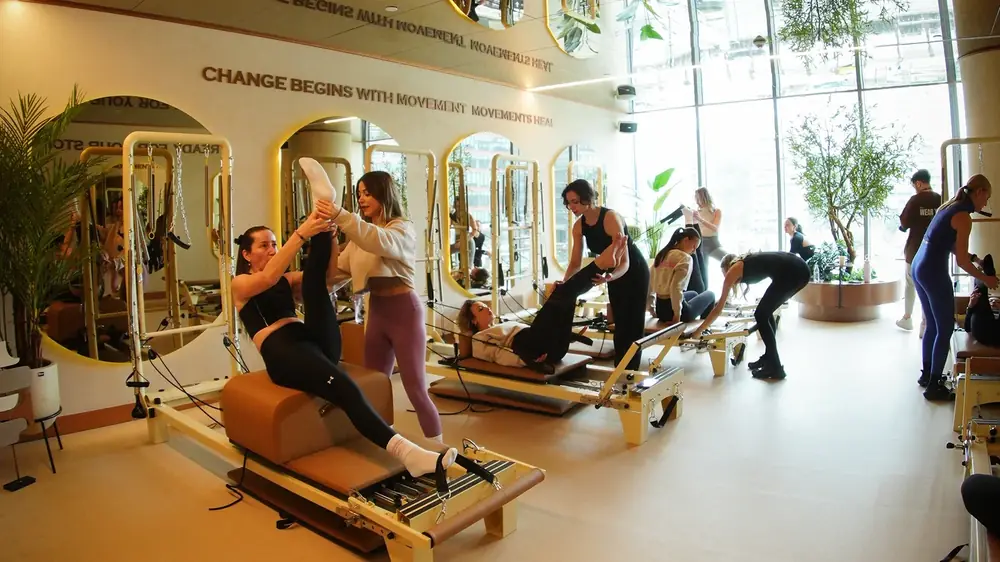
Reformer Pilates and the Shoulder Girdle: Reducing Neck Tension with Scapular Awareness
If your shoulders creep towards your ears, the issue is often scapular control. We explain how reformer pilates balances the shoulder girdle, with tips for use in class.
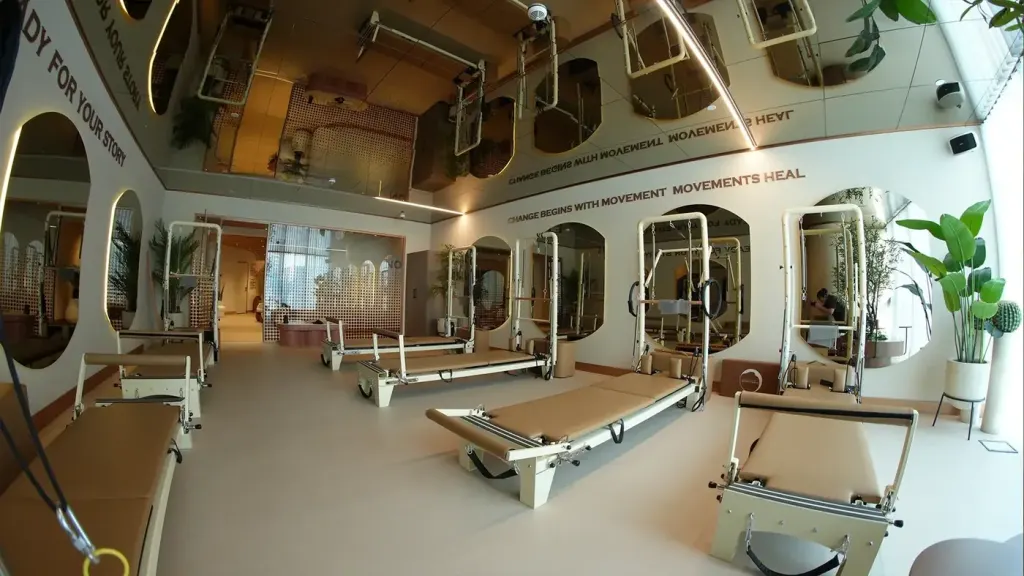
Reformer pilates near Çayyolu and Ümitköy: the studio experience at Yaka Beytepe
A guide to the O'Wellness Beytepe studio at Yaka Beytepe for anyone seeking reformer pilates near Çayyolu: location, session flow and first steps.
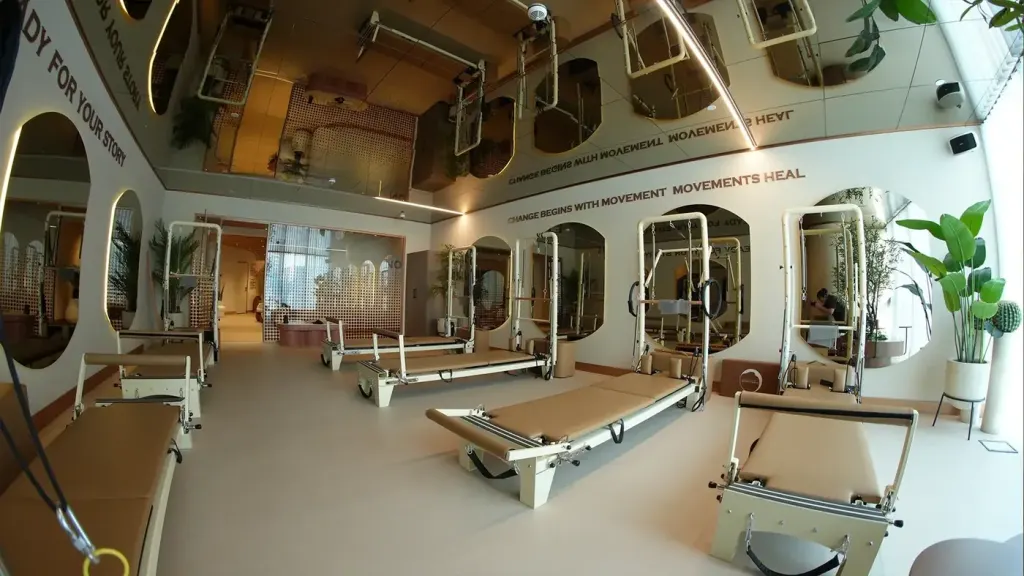
What Is Reformer Pilates? Benefits, Who It Suits and a First-Session Guide
How the reformer works, how it differs from Mat Pilates, its scientific benefits, who it suits and what to expect in your first session at O'Wellness Beytepe.
