
Can you do reformer pilates and yoga together? A balanced weekly plan
Pilates and yoga can be done together, and they complement each other. This article gives you a balanced weekly plan you can follow at O'Wellness Beytepe in Ankara.
“Can I do pilates and yoga together, or should I pick one?” This is one of the questions newcomers to the gym ask most often. The short answer is yes: they can be combined, and most of the time they complement each other. In this article we explain how the two disciplines differ, why they work side by side without getting in each other’s way, and how to fit them into your week with a sample plan.
Are pilates and yoga the same thing?
Both rely on breath, control and body awareness, but their origins and focus differ. Reformer pilates aims to build core strength, spinal stability and muscular endurance by using resistance on a spring-loaded machine. Yoga, on the other hand, emphasizes flexibility, balance and mental calm through breathwork (pranayama) and static and flowing postures (asana). Reformer mostly plays a strengthening role, while yoga is more of a stretching and balancing one. These different emphases make the two complementary rather than competing.
Why does combining them make sense?
When the body is exposed to the same stimulus again and again, adaptation slows down. Someone who only trains for strength may fall behind in flexibility and balance, while someone who only stretches and works on balance may miss out on the support that muscle strength and bone density provide. Combining reformer pilates and yoga in the same week offers these advantages:
- Strength and flexibility balance: The muscles you train on the reformer can be stretched more deeply and safely in yoga sessions.
- Recovery support: Yoga is reported to help calm the nervous system and ease muscle tension after heavy strength days.
- Balanced injury risk: When range of motion and strength develop together, the chance of one-sided overload goes down.
- Mental variety: Repeating the same format every day can sap motivation; two different disciplines keep the week fresh.
In what order? Same day or separate days?
The choice depends on personal preference and your schedule, but a few general principles will help:
| Scenario | Recommendation |
|---|---|
| Same day, back to back | Reformer first (strength), then yoga (stretching and recovery) is preferred; reversing the order can make strength work less effective on tired muscles. |
| Separate days | Leaving at least one day between reformer and yoga days gives your muscles time to recover. |
| Busy weeks | Adding just a short yoga session (deep stretch or mobility focused) to the evening of a reformer day may be enough. |
| After an injury | Avoid making big changes to your routine without approval from a doctor or sports physiotherapist. |
A sample balanced weekly plan
The plan below is a general example designed to balance strength, flexibility and recovery. It should be adapted to your personal goals and experience level together with our instructors.
- Monday: Reformer Pilates, a session focused on core and general strength.
- Tuesday: Vinyasa Yoga, flowing movement and breathwork.
- Wednesday: Mobility & Stretching, or a rest day.
- Thursday: Reformer Pilates, your second strength session.
- Friday: Deep Stretch Yoga, deep stretching and recovery.
- Saturday: Balanced Yoga or light cardio (O'Ride Cycle), depending on your preference.
- Sunday: Active rest; a walk or complete rest.
This plan includes 2 reformer sessions and 2-3 yoga or stretching sessions. With 4-5 training days in total, it balances strength and flexibility goals. At O'Wellness Beytepe all of these classes can be planned under one membership; see our membership page for details.
A simplified version for beginners
If you have no sports background, it is more sustainable to start with 1 reformer and 1 yoga session per week rather than following the plan above in full, then increase gradually over a couple of weeks. In your first trial session, our instructors will work out the right starting frequency with you.
Points to keep in mind
Paying attention to a few details when combining reformer pilates and yoga both improves results and reduces injury risk:
- Avoid overloading: Trying to train both disciplines at top intensity can eliminate recovery time; build at least one full rest day into your week.
- Share your health history: Members with back, neck or joint problems are advised to consult their doctor before starting and to share this history with our instructors.
- Mind your breathing: On the reformer you exhale on effort, while yoga relies on continuous, flowing breath. Knowing this difference makes your transitions more effective.
- Track your progress: Review your posture, flexibility and strength gains regularly with your instructor, and update the plan accordingly.
How does the reformer-yoga balance change with your goal?
The sample above offers a general balance; as your goal becomes clearer, shifting the ratio of reformer to yoga produces better results.
- If strength and posture come first: 3 reformer sessions and 1-2 gentle yoga sessions (Deep Stretch or Balanced Yoga) per week; here yoga mainly serves recovery.
- If flexibility and stress relief come first: 2 reformer sessions and 2-3 yoga sessions (including Vinyasa) per week; the reformer keeps your base strength while yoga takes a bigger share.
- If athletic performance comes first (running, tennis, padel): the reformer targets rotational strength and hip stability while yoga targets the hip flexors and shoulder mobility; Mobility & Stretching classes add further support.
- If general health and sustainability come first: a balanced split of 2 reformer sessions, 2 yoga sessions and 1 light cardio day; this profile is the recommended starting point for most new members.
Common programming mistakes
When combining reformer and yoga, some mistakes members often make can reduce the benefit you expect:
- Training at top intensity every day: Doing both reformer and yoga at maximum effort daily removes recovery and can lead to a performance plateau.
- Fatiguing the same muscle groups back to back: Following an intense, core-heavy reformer session with an intense, core-heavy yoga flow delays recovery in that area.
- Ignoring the breathing difference: Moving from the reformer’s exhale-on-effort pattern to yoga’s continuous, flowing breath can feel confusing in the first sessions; this is normal and becomes automatic over time.
- Never updating the plan: The body adapts within a few months; if the same plan runs unchanged for months, progress can slow. Review your plan with your instructor periodically.
How do you track your progress?
The way to tell whether a program that combines reformer and yoga is working is to observe a few areas regularly: a gradual increase in spring resistance on the reformer, deeper range of motion in yoga postures, stronger posture and balance awareness in daily life, and muscle soreness that fades faster between sessions. If you see no progress in these indicators within a few weeks, it helps to revisit your session frequency or class choices with your instructor.
Reformer and yoga under one roof at O'Wellness Beytepe
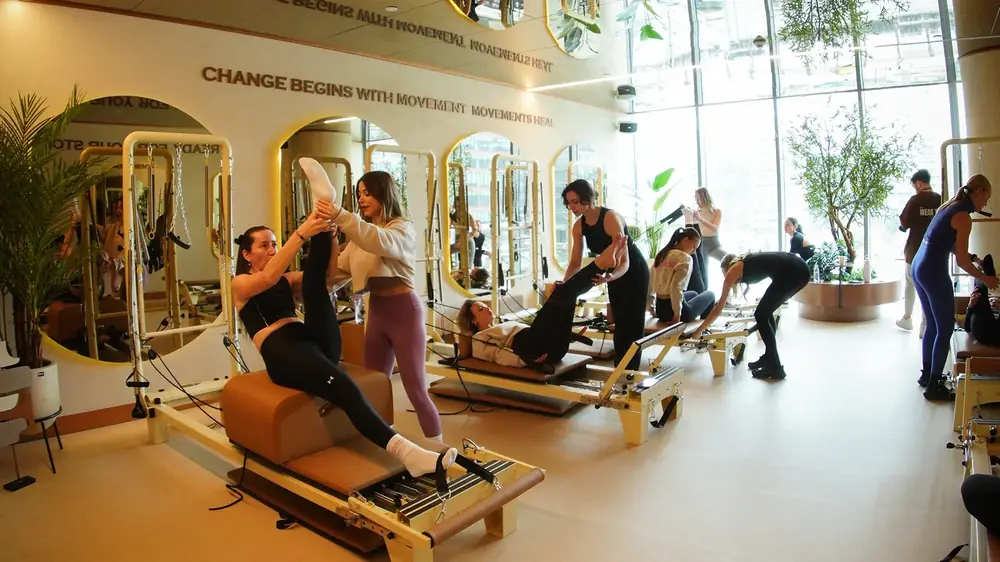
At O'Wellness Beytepe, inside the Yaka Beytepe complex, the Reformer Pilates studio equipped with Balanced Body machines and the O'Soul studio, where yoga, mat pilates and mobility classes take place, share one roof. You do not have to travel to separate venues when switching between disciplines. Our reformer sessions are limited to 6-8 people, and our yoga classes range from Vinyasa to Deep Stretch at different intensity levels. For post-session recovery, a Mobility & Stretching class and Deep Stretch Yoga are good complements. You can see weekly class times on our weekly schedule page and all class types on our group classes page. Located on Kanuni Sultan Süleyman Boulevard, the club is just minutes from Hacettepe University’s Beytepe campus and the Çayyolu-Ümitköy corridor, and the complex car park makes it easier to keep your weekly routine going. The club is open 06:00-23:00 on weekdays and 08:00-23:00 on weekends.
If you want to personalize your plan, you can talk to our instructors and, if needed, get support from one-on-one sessions among our special services. These include Personal Training, Private Reformer Pilates and a Sports Physiotherapist.
The role of reformer pilates and yoga in post-injury recovery
Reformer pilates and yoga are chosen not only for performance or aesthetic goals but also frequently during recovery. The reformer’s spring support makes it possible to work within a pain-free range of motion, while the slow, controlled breathing in yoga is reported to help calm the nervous system. For people with back, neck or shoulder problems, using the two disciplines together has the potential to close both strength and flexibility gaps. However, if you have such a history, you must consult your doctor before starting and go through an assessment by our sports physiotherapist.
How to balance pilates and yoga by age group
The needs of different age groups also affect the balance of a program. The table below summarizes general tendencies; the exact plan should always be shaped by an individual assessment.
| Age group | General tendency |
|---|---|
| Ages 20-35 | Strength and performance goals may take priority; 2-3 reformer and 1-2 yoga sessions per week is a balanced start. |
| Ages 35-50 | Posture, back health and stress management stand out; reformer and yoga can be spread evenly across the week. |
| Over 50 | Strength and balance with low joint load come first; yoga sessions can be chosen to be gentler and mobility oriented. |
| Pregnancy and postpartum | With a doctor’s approval, proceed in a one-on-one format with modifications suited to the trimester or postpartum period. |
Combining reformer and yoga for athletes
For athletes in sports such as golf, tennis, padel or running, reformer pilates is a supportive practice for rotational power, hip stability and shoulder health. Yoga can help balance the asymmetries caused by the one-sided movement patterns common in these athletes and stretch the hip flexors and the muscles around the shoulder. During heavy training or competition periods, a yoga session can be added as an active recovery day. Athletes who want to focus on athletic performance can also ask about our Athletic Performance service at Beytepe; for padel players, O'Padel Beytepe in the same complex is a handy complement.
How can you monitor the effect of your program?
A few simple indicators can be tracked to see whether your combined reformer pilates and yoga program is working:
- Posture change: Changes in shoulder and spinal alignment in the mirror or in photos.
- Range of motion: Progress over time in specific stretches such as forward folds or hip openers.
- Daily energy and sleep quality: An indirect way to observe the effect of the yoga component on stress and recovery.
- Training performance: The increase in spring resistance you use in reformer sessions over time.
Our instructors can review these indicators with you at regular intervals and update your program. If, after the review, you would like a program supported by one-on-one sessions, you can look at our special services page.
Common planning mistakes
When you practice reformer pilates and yoga together, some planning mistakes can lower the benefit you get. One of the most common is cramming both disciplines into the same day of the week and leaving the other days empty; recovery becomes irregular and progress slows. Another is treating the yoga session as merely a light activity and not taking it seriously; yet a yoga session done with proper breathing and posture directly affects how well your reformer sessions go. Finally, changing the program too often makes progress hard to measure. Keeping the same structure for at least 4-6 weeks makes it easier to see both your body’s adaptation and your real improvement.
Frequently asked questions
Can pilates and yoga be done on the same day?
Yes, they can be done on the same day; the usual recommendation is strength work with reformer pilates first, followed by yoga for stretching and recovery.
Does reformer pilates replace yoga?
No, they have different focuses; the reformer targets strength and core stability, while yoga targets flexibility, balance and breath. Used together, they give a more balanced result.
Can I take both reformer and yoga classes at O'Wellness Beytepe?
Yes, at Beytepe the Reformer Pilates studio and the yoga classes in the O'Soul studio are in the same club. For membership coverage, you can get information from our team during the founding membership pre-registration process.
How many reformer and yoga sessions per week are ideal?
For a general balance, 2 reformer and 2-3 yoga or stretching sessions per week are recommended; the ideal frequency depends on your personal goals and experience level and should be determined together with our instructors.
Can I follow this plan if I have an injury?
If you have a history of injury or chronic pain, we recommend consulting your doctor before starting and having an assessment with our sports physiotherapist.
Bringing reformer pilates and yoga together in the right balance gives more sustainable results than doing just one of them intensively, because the body gets stronger, becomes more flexible and finds the space it needs to recover. To build a plan that fits your goals, experience level and schedule, talking one-on-one with our instructors is more accurate than applying a generic template as is.
To create a balanced reformer pilates and yoga program tailored to you, you can book your free facility tour and trial session through our contact page.
Related posts

How to Measure Progress in Reformer Pilates: Spring Load, Control and Logs
How do you track progress in Reformer Pilates through form, control, breath and spring load? A guide to plateaus and tracking logs.

Can People with a Herniated Disc Do Reformer Pilates? Safe Moves and What to Avoid
Is reformer pilates safe with a herniated disc? We cover safe movement categories, what to avoid, medical clearance and a sample physiotherapist-guided start.
Pelvic Floor Friendly Training: Foundational Awareness with Reformer Pilates
The pelvic floor works together with the abdominals, hips and breath. How can reformer pilates' controlled structure help build this awareness?
