
Can People with a Herniated Disc Do Reformer Pilates? Safe Moves and What to Avoid
Is reformer pilates safe with a herniated disc? We cover safe movement categories, what to avoid, medical clearance and a sample physiotherapist-guided start.
Many people diagnosed with a herniated disc wonder whether they can keep exercising, and in particular whether they can start an equipment-based method such as reformer pilates. With a herniated disc, reformer pilates can often be practised safely under the right conditions and with the right movements; in many cases it can even play a supporting role in managing symptoms. In this article we look in detail at which movements are considered safe, what to avoid and the steps to follow throughout the process.
Important note: this article is for general information and does not replace medical advice. If you have a herniated disc, always consult your doctor before starting any exercise programme and, if possible, get an assessment from a sports physiotherapist.
What is a herniated disc, briefly?
A herniated disc occurs when the inner part of an intervertebral disc pushes through its outer layer. This bulge can press on nearby nerves and cause pain, numbness or weakness. The degree and location of the herniation directly determine which movements are safe, so an individual assessment is essential rather than a generic list of dos and don'ts.
Why is reformer pilates often recommended for a herniated disc?
Reformer pilates offers several important advantages over mat pilates: spring resistance allows movements to be performed within a pain-free range, straps and platform support make it easier to control the load on the spine, and the moving carriage reduces work against gravity, making some movements safer. Strengthening the deep muscles around the spine, especially the transversus abdominis and multifidus, can support spinal stability and contribute to pain management over the long term, as studies on pilates have generally shown.
Why are doctor and physiotherapist approval essential?
The degree and location of a herniated disc and accompanying symptoms such as pain radiating into the leg, numbness or loss of strength vary widely from person to person. A movement that is safe for one person with the same diagnosis may not be suitable for another. That is why getting your doctor's approval before starting reformer pilates and, if possible, an assessment from our sports physiotherapist ensures a safe programme tailored to you.
Movement categories generally considered safe
| Category | Why it is considered safe |
|---|---|
| Core activation with a neutral spine | Works the deep muscles without forcing the spine into flexion |
| Light extension-based movements | May ease symptoms in some herniation types (with medical approval) |
| Hip and glute strengthening | Strengthens the supporting muscles that reduce load on the lower back |
| Footwork series (light springs) | Offers a low-risk start in a supported supine position |
Movements and positions to avoid
- Deep, fast flexion: movements requiring sudden, deep forward bending can increase pressure on the disc.
- Flexion combined with rotation: movements that bend the spine forward and twist it at the same time can raise the risk at the herniated level.
- Sudden, uncontrolled movements on heavy springs: uncontrolled loading can disrupt spinal stability.
- Prolonged straight-leg raises: some classic pilates movements that can overload the lower back should not be done without modification.
This list is a general guide; which movements suit you should be decided based on your physiotherapist's assessment.
Why start with one-to-one sessions
For people with a herniated disc, starting with private Reformer Pilates sessions or with a sports physiotherapist is recommended over group classes. In a one-to-one format, the coach can adapt each movement to your symptoms on the spot and, if you feel pain or discomfort, stop immediately and suggest an alternative. Even in small group classes of 6–8 people per session, this level of real-time personalisation may not always be possible.
Sample 6-week safe start
- Weeks 1–2: physiotherapist assessment and one-to-one sessions focusing on neutral spine awareness and breathing.
- Weeks 3–4: footwork series on light springs and controlled core activation exercises.
- Weeks 5–6: hip and glute strengthening is added depending on symptoms; if there is no pain, the movement repertoire is gradually expanded.
This programme is not a fixed prescription; at each stage it is sped up or slowed down according to how your symptoms progress. For the general principles of reformer pilates, see the What Is Reformer Pilates? guide on our blog.
When to stop and when to continue
Mild muscle fatigue during exercise is normal, but sharp pain radiating into the leg, numbness, tingling or loss of strength are warning signs. If such symptoms appear, stop the movement immediately and inform both your coach and your doctor. Being able to tell mild post-exercise lower back fatigue apart from nerve-type pain that increases during or after exercise is key to progressing safely.
Collaboration between sports physiotherapist and coach
At O'Wellness Beytepe, our sports physiotherapist works with our Reformer Pilates coaches to prepare a programme tailored to you in conditions such as a herniated disc. This collaboration ensures both that movements are adapted safely and that your progress is reviewed regularly. For details, see the Sports Physiotherapist service on our private services page.
Long-term expectations
Various studies have shown that regular, correctly performed core strengthening reduces pain and functional limitation in people with chronic low back pain. Still, every herniated disc case is different and recovery varies from person to person. A patient, gradual approach supervised by a doctor and physiotherapist is the best strategy for both safety and lasting results.
Supporting practices beyond the reformer
Alongside reformer pilates, low-impact activities such as regular walking can help maintain mobility without increasing load on the spine. As our club does not have a pool, if you are considering water-based exercise we suggest discussing swimming options in Ankara with your doctor. Those wanting to ease muscle tension can, with medical approval, consider light mobility work and foam roller release. To support flexibility and relaxation, low-intensity classes such as Deep Stretch Yoga in the O'Soul studio can also be considered, again with medical approval.
When is reformer pilates not recommended?
During an acute disc herniation, or if there are signs of serious nerve compression such as progressive weakness or bladder or bowel dysfunction, an urgent medical assessment is essential before any exercise. With such serious symptoms, no exercise programme, including reformer, should be started without medical approval.
Approach differences by degree of herniation
Herniated discs are usually classified by degree as bulging (mild), protrusion (moderate) and extrusion (marked, sometimes with sequestration). In mild bulging cases, core stabilisation work can begin relatively early with medical approval. In more advanced cases, especially with signs of nerve root compression, when and how to start exercising depends entirely on the doctor's and physiotherapist's assessment. In short, a herniated disc is not a single condition but a broad spectrum, and a general article cannot replace a personal medical assessment.
How to find a neutral spine
The foundation of safe reformer work is being able to maintain a neutral spine. Neutral is the posture in which the natural curve is preserved, with the lower back neither overly flattened nor overly arched. Lying on your back with knees bent and feet down, there should be neither a large gap under your lower back nor full contact with the floor; the balance point between the two is neutral. In the first sessions, our coaches help you find this position with tactile guidance and verbal cues. As this awareness develops, you can protect your spine more consciously in daily life too, when sitting or bending.
Building core stability step by step
- Stage 1, breathing and deep core activation: learning to engage the transversus abdominis gently, with a sense of drawing the belly in slightly on the exhale.
- Stage 2, supported supine footwork: pressing the footbar on light springs while maintaining a neutral spine.
- Stage 3, controlled spinal movement: small-range spinal articulation within a pain-free range (with physiotherapist approval).
- Stage 4, hip and glute strengthening: bridges and side-lying hip work to strengthen the supporting muscles that reduce lower back load.
- Stage 5, functional integration: gradually expanding the repertoire for safe transfer to daily movements such as bending, lifting and turning.
The pace of moving between stages depends on the person's symptoms and the physiotherapist's assessment; some people stay at one stage for weeks while others progress faster.
Additional advantages of the reformer over mat pilates for a herniated disc
In mat pilates, working against gravity can create noticeable lower back load in some exercises; for example, the mat version of the classic Hundred requires lifting the head and shoulders, which may not be suitable in some herniated disc cases. On the reformer, the same principle can be applied far more controllably with shoulder rests and spring resistance. This difference explains why the reformer is often chosen in herniated disc rehabilitation.
Thoracic or cervical vs lumbar herniation
The herniated disc discussed in this article concerns the lumbar, or lower back, discs. Herniations in the neck (cervical) or mid-back (thoracic) may require different precautions and modifications; for example, with a cervical herniation, exercises using shoulder and arm straps should be assessed differently. Whichever region your herniation is in, always clarify with your doctor or physiotherapist which movements are safe for that area.
Practical tips during exercise
- Never hold your breath: exhaling on effort balances intra-abdominal pressure and supports the spine.
- Do not hesitate to stop a movement midway: if something feels uncomfortable you do not have to finish it; tell your coach and ask for an alternative.
- Take time to warm up: sudden loading with cold muscles can increase risk at the herniated level.
- Progress slowly: with a herniated disc, not rushing is the fastest recovery strategy in the long run.
Daily habits that support spinal health
You can support your spine outside reformer sessions too: avoid sitting in the same position for long periods, bend your knees and keep your back straight when lifting something heavy, and maintain mobility regularly with short walks. These habits help carry the gains from the reformer into daily life and reduce the risk of re-injury.
How progress is assessed
With a herniated disc, progress is judged not only by reduced pain but also by improvements in daily functions such as sitting, standing up, walking time and sleep quality. Your physiotherapist measures your range of motion, muscle strength and pain level at regular intervals and updates your programme accordingly. This regular review is key to protecting both your safety and your motivation.
A sample reformer journey
Consider a member with a mild bulging disc who works long hours at a desk. After medical approval, they have an initial assessment with our sports physiotherapist, which identifies which movements stay within a pain-free range. For the first two weeks, only breathing work and the footwork series on light springs are used. From week three, with no increase in pain, bridges and controlled spinal articulation are added. By the end of week eight, such a member might notice a marked improvement in sitting tolerance and morning stiffness. This example reflects the typical course of a gradual, professionally supervised approach, but every case follows its own path.
Complementary approaches
Exercise alone may not be enough to manage a herniated disc. Physiotherapy sessions, manual therapy where needed, ergonomic adjustments such as sitting position and desk and chair height, and weight management may also be part of the process. It is a well-known physiological fact that excess weight increases the load on the lumbar spine, so nutritional support can also help herniated disc patients with weight goals. Those wanting dietitian support can find information on our private services page.
Staying motivated: a process that takes patience
Many people who start exercising with a herniated disc may feel disappointed because they expect quick results. Yet spinal health usually takes shape over months rather than weeks. Focusing on small but consistent progress, such as doing a movement more comfortably this week or feeling less morning stiffness than last week, is the most effective way to stay motivated long term. Our coaches and physiotherapist track your progress concretely throughout and share it with you.
Impact on family and working life
A herniated disc can create limitations not only during exercise but also in daily situations such as picking up children, long car journeys or desk work. The core stability and hip strength gained through reformer pilates help you do these daily activities more safely and comfortably. This is not just a sporting gain but a practical, measurable result that directly affects quality of life and daily comfort.
Why O'Wellness Beytepe for herniated disc management in Ankara?
When starting exercise with a sensitive condition such as a herniated disc, a setting where a sports physiotherapist and reformer coaches can work together under one roof is a major advantage. At O'Wellness Beytepe in Yaka Beytepe, this collaboration means assessment, programme design and follow-up are carried out in one place and in coordination. Being a few minutes from Hacettepe's Beytepe campus and the Çayyolu–Ümitköy corridor, with the complex car park, makes access easier during a process that requires regular, frequent sessions.
Frequently asked questions
I have a herniated disc; can I do reformer pilates?
In most cases, yes, with medical approval and the right modifications. Flexion-based movements are removed and neutral spine and controlled core work are prioritised.
Does reformer pilates cure a herniated disc?
Reformer pilates is not a treatment; however, by strengthening the muscles that support the spine, it can contribute to symptom management and functional improvement. Treatment decisions rest with your doctor.
What should I do if I feel pain?
Stop the movement immediately, tell your coach and see your doctor if necessary. Sharp or radiating pain during exercise is not normal.
Is there a special programme for people with a herniated disc in Beytepe?
Yes. At O'Wellness Beytepe, our sports physiotherapist and Reformer Pilates coaches work together to prepare one-to-one, personalised programmes for members with a herniated disc.
How many reformer sessions per week are possible with a herniated disc?
Usually you start with one or two one-to-one sessions a week; frequency and content are increased under physiotherapist guidance depending on how symptoms progress.
To start a safe reformer pilates programme with a herniated disc, plan your free trial session including a sports physiotherapist assessment via our contact page.
Related posts

Breathing in Reformer Pilates: Lateral Breath and Movement Pairing
What is lateral thoracic breathing, how does it pair with movement and how do you practice it at home? A step-by-step guide to breath in Reformer Pilates.
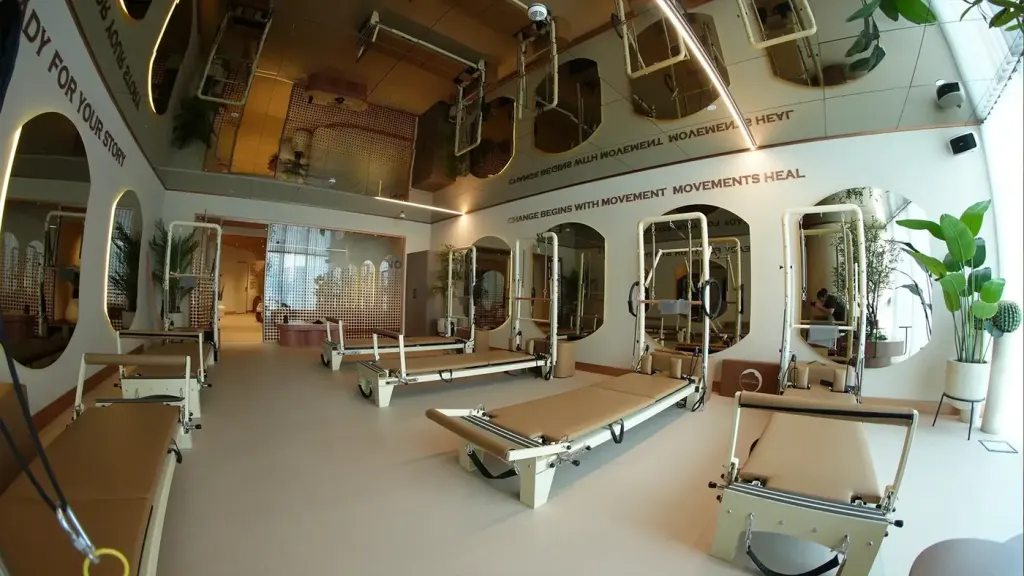
Feet and Ankles in Reformer Pilates: Stability That Starts at the Base
The feet are the body's first contact with the ground. We explain how reformer pilates strengthens the arch, ankle and lower chain, and what to watch for.
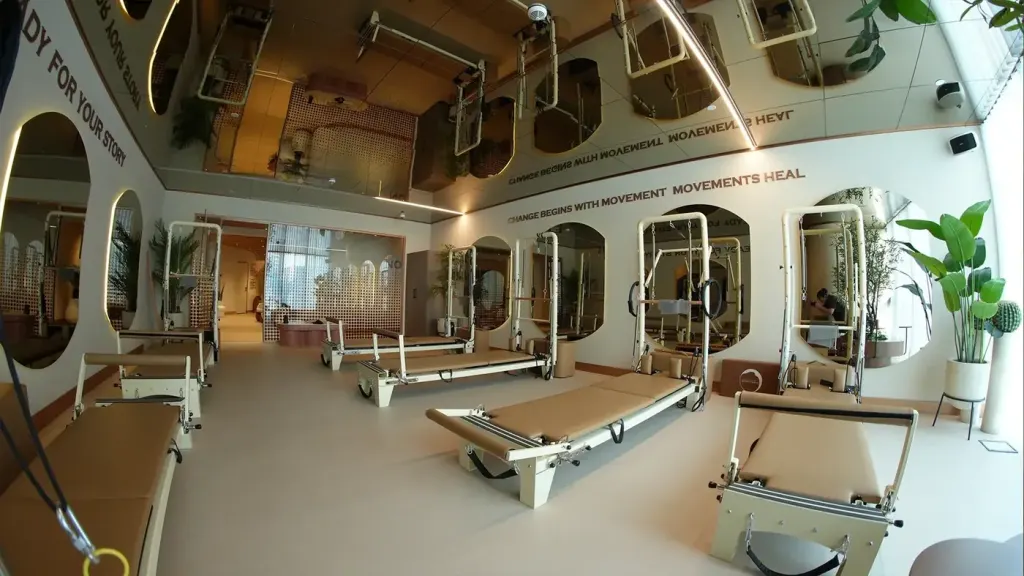
Reformer Pilates or Mat Pilates? Differences, Benefits and the Right Choice
We compare Reformer and Mat Pilates in terms of resistance, target group and combination to help you make the right choice.
