
Reformer Pilates for Scoliosis: An 8-Week Approach to Spinal Symmetry
With adjustable springs and one-sided work, Reformer Pilates supports muscular balance around a scoliotic spine. We look at an 8-week staged framework.
Before starting exercise, someone diagnosed with scoliosis usually asks two questions: which movements are safe, and which might increase the curve? Thanks to the adjustable resistance of the machine and the way it allows one-sided work, scoliosis Reformer Pilates offers a relatively clear answer. In this article we explain how an 8-week staged Reformer programme can be built for adults with spinal curvature, which principles it relies on and what to watch out for.
What is scoliosis and how does it relate to exercise?
Scoliosis is a sideways curvature of the spine, seen from the front or back and usually accompanied by rotation. In idiopathic scoliosis (cause not fully known), common in adults, progression of the curve has usually stopped; the aim of exercise is not to correct the curve but to improve the muscular balance around it and reduce pain and loss of function. Physiotherapy literature reports that asymmetric approaches such as the Schroth method increase postural awareness by training the trunk muscles differently on the concave and convex sides of the curve. Reformer Pilates fits this logic well: the springs can be set differently on the right and left, and one-sided pulls can be done with the straps.
Important note: This article is for general information and does not replace scoliosis treatment. Before starting an exercise programme, we recommend consulting your orthopaedic or physical medicine doctor and, if possible, progressing with a physiotherapist experienced in scoliosis.
Why is the Reformer preferred for scoliosis?
- Adjustable resistance: The concave side is usually shortened and tight, while the convex side is weak and lengthened. By setting the springs differently on each side, work can focus on strengthening the weak side and stretching the tight side.
- One-sided work with straps: Single-arm or single-leg pulls force the trunk to respond symmetrically, which makes it easier for the instructor to see imbalances.
- Platform feedback: The moving carriage wobbles as soon as the body leans to one side; this instant feedback helps the person notice their own asymmetry.
- Low joint load: Most movements done lying or sitting place no axial load on the spine, making it possible to keep training even during painful periods.
Assessment before starting the programme
At O'Wellness Beytepe, members with scoliosis do a short postural assessment with their instructor before starting the Reformer programme; shoulder and hip alignment, shoulder blade position and breathing pattern are observed. In more complex cases, starting with one-to-one sessions alongside an assessment by our sports physiotherapist builds a solid and safe base before moving on to group classes. Details are on our private services page.
The 8-week staged programme
The table below gives a general outline for one-to-one or duo sessions; since the degree and direction of the curve differ for everyone, the programme is shaped individually by the instructor.
| Week | Focus | Example work |
|---|---|---|
| 1-2 | Breathing and awareness | Lateral breathing, neutral pelvis, light-spring footwork |
| 3-4 | Asymmetric activation | Single-sided leg and arm series on the convex side, stretching on the concave side |
| 5-6 | Core stabilisation | Plank variations, controlled side plank, anti-rotation work with straps |
| 7-8 | Functional integration | Standing balance work, transfer to everyday movement patterns |
At every stage, movement quality comes before the number of repetitions. The instructor adds one or two extra repetitions on the convex side to help the weaker muscle group get relatively stronger.
Key Reformer exercises
Single-leg footwork
Footwork done lying on the back and pressing the foot bar with one foot gives the chance to observe and train the hip and leg muscles separately on each side.
Trunk rotation with straps
Controlled rotations done seated while holding the straps target the deep rotator muscles around the spine. In scoliosis, the direction and range of rotation are set by the instructor.
Side plank variations
A side plank on the carriage, from the knee or the feet, works the lateral trunk muscles such as the obliques and quadratus lumborum asymmetrically; holding a little longer on the convex side is recommended.
Back extension
Gentle extensions done face down with the straps contribute to balanced activation of the back muscles; if there is pain, the range of motion is reduced.
What should you watch out for?
- No movement that increases pain should be forced; tell the instructor straight away.
- In high-grade cases with a Cobb angle above roughly 40 degrees, exercise should be planned together with medical follow-up.
- For adolescents who are still growing, the programme must be run with the approval and follow-up of an orthopaedic doctor.
- Postural changes come gradually over weeks; focus on consistency rather than quick results.
Common mistakes
- Training both sides equally: Symmetrical training may seem logical in scoliosis but misses the real goal; the programme should be deliberately asymmetric.
- Ignoring pain and carrying on: Continuing with the thought that it hurts a bit but feels good can lock in compensation patterns.
- Focusing only on the trunk: Hip and shoulder girdle muscles also affect spinal alignment; the programme should not be limited to the abdominal and back muscles.
- Expecting quick results: Postural change takes weeks, sometimes months; saying it does not work after two or three sessions is a premature judgement.
- Skipping home exercises: If the breathing and activation patterns learned in the studio are not carried into daily life, progress stays limited.
Who it may not suit / who should be careful
- For people with planned surgery or recent spinal surgery, exercise should only begin with the approval of the post-operative rehabilitation team.
- In children and adolescents with suspected rapidly progressing curvature, an orthopaedic assessment comes first; exercise alone is not a monitoring method.
- If there are neurological signs such as severe back pain that does not ease with rest, numbness or loss of strength, medical assessment is the priority.
- In conditions of low bone density such as osteoporosis, the degree of rotation and flexion should be limited according to the doctor's and physiotherapist's advice.
How is progress measured?
Progress in scoliosis is assessed through pain level on a 0-10 scale, fatigue felt during daily tasks, shoulder and hip alignment seen in the mirror, and the instructor's photo-based posture tracking. The Cobb angle can only be measured by radiological imaging; the Reformer programme targets not this angle but the functional limitation that comes with it. At O'Wellness Beytepe our instructors aim to run a short posture check every four weeks and update the programme.
A sample case flow
For a member in their thirties who works at a desk and has mild thoracolumbar scoliosis with a dropped right shoulder, a typical flow goes like this: in the first session a posture photo is taken and range of motion is assessed; the first two weeks focus on breathing and a neutral pelvis; from week three, asymmetric activation begins with extra repetitions on the convex side; in week six anti-rotation work with straps is added; by the end of week eight the member reports maintaining shoulder alignment more easily while sitting and feeling less tired after long meetings. This is a general example; duration and content vary in every case.
Equipment and technical details
In scoliosis-focused work, instructors deliberately choose different light, medium and heavy resistance levels, indicated by spring colours, on each side. Short loops are used for single-sided shoulder and hip work, while long loops are used for arm series. The height of the foot bar and the support cushions on the carriage are adjusted individually for spinal comfort. The Balanced Body Reformers in our Beytepe studio allow these settings to be made precisely.
Combining with related classes
In addition to Reformer sessions, one Mobility & Stretching class a week helps maintain flexibility on the tight concave side. Those who want to build their general posture and strength base can complement their Reformer work with Mat Pilates classes in the O'Soul studio. See our weekly timetable for sample class times.
Carrying the Reformer into daily life
Spine-friendly habits outside the sessions strengthen the effect of the programme: simple changes such as not sitting turned in the same direction for long periods, carrying a backpack evenly on both shoulders and reviewing your sleeping position make a difference. For those who drive long distances or spend time in daily traffic on the Eskişehir road, taking a break and walking for a few minutes also helps. For basics on core and posture, see the Reformer Pilates articles on our blog.
Home programme and daily repetition
To reinforce the activation learned in the studio, instructors usually suggest two small habits: when getting up in the morning, feel a neutral pelvis with lateral breathing for 5-10 breaths, and set an alarm during the day to check shoulder alignment. These short repetitions spread the effect of one or two Reformer sessions a week across the rest of the day. For desk workers, ergonomic adjustments such as screen height, chair support and how bag weight is distributed are also a complementary part of the programme.
Why the choice of instructor matters
In asymmetric conditions such as scoliosis, the instructor's power of observation matters more than the number of movements. An experienced instructor can tell from a slight wobble of the carriage which side is compensating, and can redirect the movement to the right muscle by changing the strap angle by a few degrees. Once the O'Wellness Beytepe team is announced, you will find details about our instructors on the trainers page.
Scoliosis-focused work at O'Wellness Beytepe
Our Reformer Pilates studio in the Yaka Beytepe complex is equipped with Balanced Body Reformers and sessions are limited to a maximum of 6-8 people; in one-to-one and duo sessions your instructors follow your asymmetric programme closely. Our sports physiotherapist, who works at the same club, supports your programme by coordinating with your instructor when needed. Visit the relevant page for private Reformer Pilates options.
Frequently asked questions
Does Reformer Pilates correct scoliosis?
In adults, exercise usually does not change the degree of the curve; the goal is to improve muscular balance, reduce pain and increase postural awareness. In growing adolescents, preventing progression is assessed under medical follow-up.
Can someone with scoliosis join a group class?
In mild, pain-free cases, you can move on to small-group Reformer classes once a foundation has been built in one-to-one sessions. You decide the right timing together with your instructor.
What should I do if I feel pain during exercise?
Stop the movement immediately and let your instructor know. Pushing through pain is not recommended; the programme is rearranged according to your tolerance that day. For persistent pain, consult your doctor.
Why choose O'Wellness Beytepe for scoliosis-focused Reformer Pilates in Ankara?
With one-to-one and duo options, sports physiotherapist support and small group capacity, our studio offers a suitable setting for applying asymmetric programmes safely. The club is a few minutes from the Hacettepe Beytepe campus and the Çayyolu-Ümitköy line, and the Yaka Beytepe complex car park is available.
The long-term view
Living with scoliosis calls for ongoing care rather than a one-off treatment. Reformer Pilates can be a sustainable part of that care that fits into daily life. The programme is reshaped over time according to changing needs such as work pace, painful periods or seasonal activity changes; that is why regular communication with your instructor is worth more than a single perfect programme.
Contact us about your scoliosis-focused Reformer Pilates programme; let us plan a suitable first assessment together with a free facility tour and trial session.
Related posts
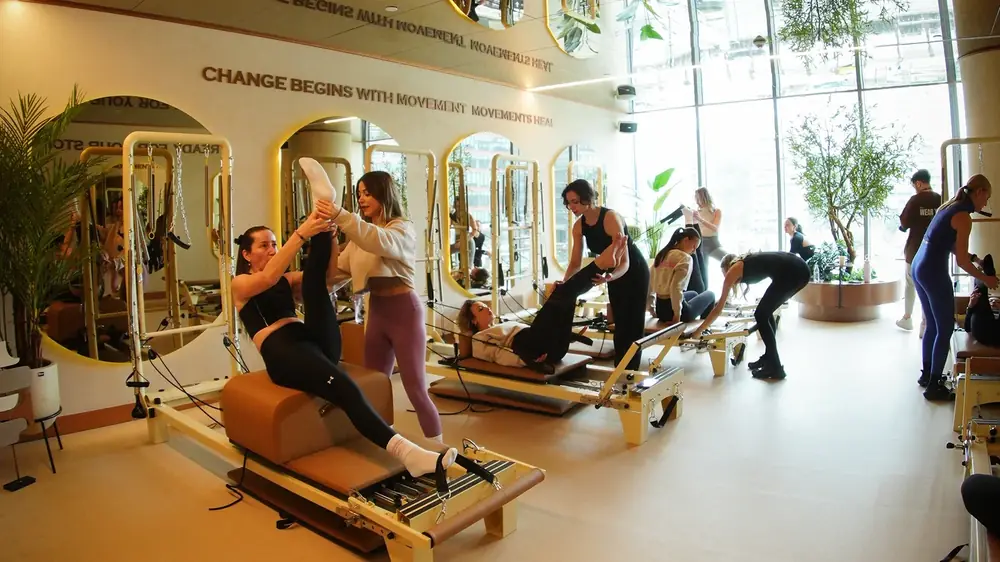
Reformer Pilates for Golf, Tennis and Padel Players: Rotational Power and Shoulder Health
A golf swing, a tennis serve and a padel smash are asymmetrical movements repeated thousands of times in the same direction. Reformer Pilates helps offset that imbalance with rotational power and shoulder control.
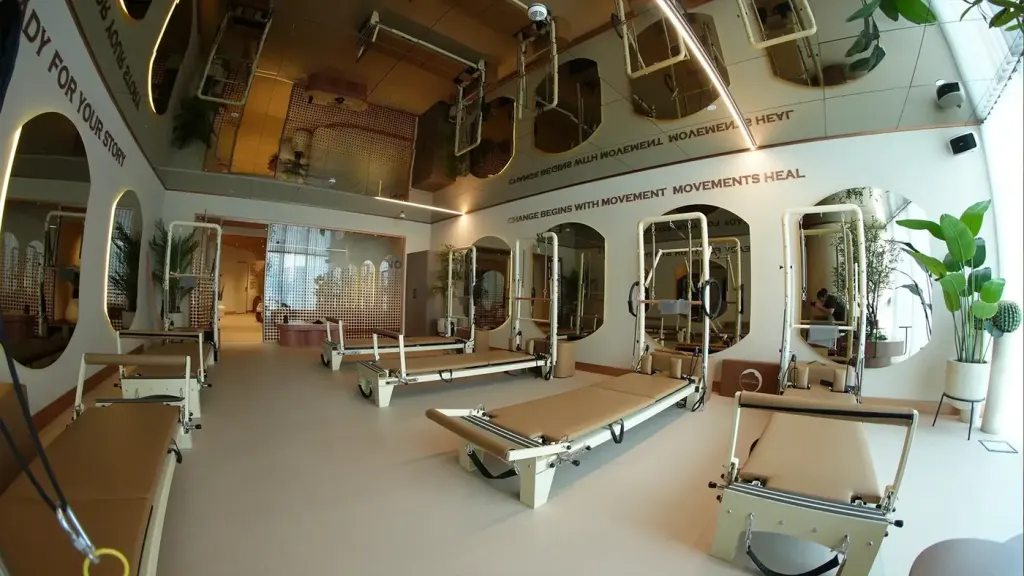
10 criteria to consider when choosing a reformer pilates studio in Beytepe
The 10 criteria to check when choosing a reformer Pilates studio in Beytepe, from equipment and class size to instructors and membership flexibility.
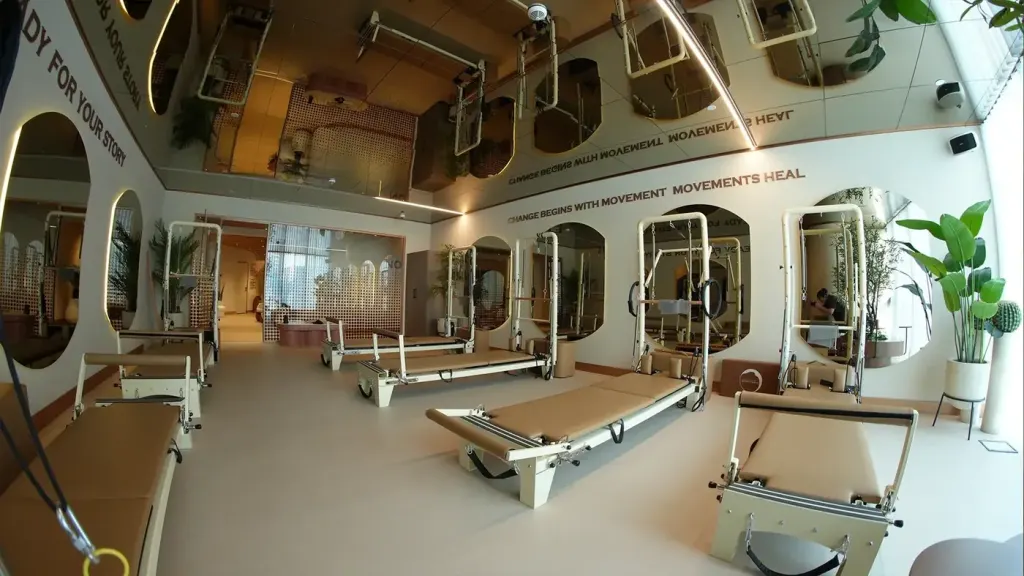
Reformer Pilates or Mat Pilates? Differences, Benefits and the Right Choice
We compare Reformer and Mat Pilates in terms of resistance, target group and combination to help you make the right choice.
