
Reformer Pilates for Golf, Tennis and Padel Players: Rotational Power and Shoulder Health
A golf swing, a tennis serve and a padel smash are asymmetrical movements repeated thousands of times in the same direction. Reformer Pilates helps offset that imbalance with rotational power and shoulder control.
Weekend amateurs and competitive athletes eventually face the same question: how do you improve performance on the course or court while protecting the body? A golf swing, a tennis stroke and a padel smash are repetitive, asymmetrical movements in which the torso rotates in the same direction thousands of times. Over time this repetition can restrict spinal rotation, overload one shoulder and leave the other side weak. The golf Pilates approach targets exactly this imbalance: Reformer Pilates builds rotational power through the controlled resistance of the springs while working the shoulder joint in a balanced way. In this article we explain why the reformer is an effective complementary workout for club and racket sport players, which movements stand out and how we set up this programme at O'Wellness Beytepe.
The mark one-sided sports leave on the body
This awareness usually comes late, especially for recreational players who play a few times a week; the asymmetry goes unnoticed until pain becomes obvious. Yet a simple range-of-motion assessment done early makes it possible to anticipate most future injuries.
A right-handed golfer always finishes the swing in the same direction. Over the years this repetition can increase the torso's capacity to rotate one way while limiting rotation the other way. In tennis and padel players, the shoulder of the hitting arm may also have more internal rotation and less external rotation capacity than the other shoulder. These imbalances may not affect performance in the short term, but in the long run they set the stage for overuse injuries in the lower back, hips and shoulders. The aim of rotational power training is to make the torso equally strong and controlled in both directions.
Why is the reformer suited to rotational work?
Working on rotation with free weights can easily overload the spine; uncontrolled twisting is risky for the lower back. On the reformer, the carriage is attached to springs, so the movement follows a limited and predictable path. This teaches the athlete to initiate rotation from the hips and ribcage and to protect the lower back. Because spring resistance keeps the muscles engaged in both the outward and return phases, it provides a stimulus very similar to the acceleration-deceleration cycle of a golf swing.
Key Reformer exercises
- Seated rotation (short box series): isolates ribcage rotation while the hips stay fixed, mimicking the upper-body component of the golf swing.
- Single-arm strap pull variations: allow the shoulder joint to produce controlled force at different angles and balance the rotator cuff muscles.
- Kneeling arm series: arm work in a kneeling position with the core held steady improves shoulder mobility while maintaining trunk stability.
- Footwork and leg circles: help the hip joint move freely in all planes; when hip rotation is insufficient, the deficit is made up by the spine.
Why does shoulder health matter so much?
In the tennis and padel serve and in the follow-through phase of golf, the shoulder joint works at high speed through a wide range of motion. The rotator cuff muscles are responsible for controlling this speed and keeping the joint in its socket. If these muscles are weak or fatigued, the risk of shoulder impingement rises. Strap work on the reformer allows the rotator cuff and the muscles around the shoulder blade to be strengthened in isolation in a safe setting where the centre of gravity stays fixed. If you have shoulder pain, wake at night or have limited movement when raising your arm, we recommend a sports physiotherapist assessment first.
Hips and core: the real engine of the swing
The power in a golf swing actually comes not from the arms but from hip and trunk rotation. Players with a weak core and limited hip mobility over-rotate the lumbar spine to make up for missing power, which is one of the most common causes of lower back pain. Reformer Pilates works the deep abdominal muscles (transversus abdominis) and the muscles around the hips at the same time, supporting the transfer of force in the correct order: hips, trunk, shoulder and arm. This kinetic chain work positively affects both hitting distance and control.
Sample weekly programme
| Day | Focus | Recommendation |
|---|---|---|
| Monday | Rotational power | Reformer Pilates (short box, strap series) |
| Wednesday | Hip mobility | Mobility & Stretching |
| Thursday | General strength | Total Body |
| Saturday | Rotational power + stretching | Reformer Pilates + Deep Stretch Yoga |
This programme is not a fixed prescription; it should be adapted with your coach for in-season and off-season periods. In the weeks before a tournament, intensity can be reduced and mobility given priority.
When do results show?
Changes in rotational range and shoulder stability usually begin to be felt within 6-8 weeks of regular attendance. The effect on hitting distance or serve speed varies with the individual, current fitness and progress in technical training. Reformer Pilates does not replace technical training; it should be seen as a physical foundation that supports it.
How is progress measured?
When working with athletes, we recommend assessing progress not by a single measure but by tracking several indicators together:
- Rotational range: the difference between the two directions in seated trunk rotation should shrink over time; your coach can check this at regular intervals by observation or a simple measurement.
- Shoulder external rotation capacity: external rotation in the hitting arm approaching that of the other arm is a positive sign for shoulder health.
- Single-leg balance time: weight transfer in the swing relies on single-leg balance; a longer hold shows improved lower-body stability.
- Post-session pain and tightness: less tightness in the lower back or shoulder after hitting is a practical sign that load is being distributed more evenly.
Noting these indicators in a training log and comparing them over 6-8 week periods is the most practical way to see objectively whether the programme is working.
A sample case flow
For a right-handed player who plays three days a week and feels mild tightness on the left side of the lower back, the programme might be set up as follows: the first session is one-to-one, and rotational asymmetry and shoulder range of motion are assessed. For the first four weeks the focus is on hip mobility and rotation capacity on the weaker side, using low to moderate spring resistance. From the fifth week, shoulder stability work with straps and rotational power series are added. By the end of the eighth week, a reduction in rotational asymmetry and relief from post-play lower back tightness are typically reported; this is an individual example and may not happen at the same pace for everyone.
Equipment and technical details
In rotational work, adjustable strap length and the position of the shoulder rests are important. Securing the feet under the bar on the short box keeps the hips still so that only the ribcage rotates; this isolation directly mimics the hip-shoulder difference known as "separation" in the golf swing. Starting single-arm strap exercises on the lightest spring setting helps the shoulder move along the correct path; a heavy spring at this early stage can trigger compensatory movements.
Who is it not suitable for, or who needs caution?
Athletes with acute shoulder instability, recent rotator cuff surgery or an active lumbar disc herniation should not start rotational exercises directly; physician and sports physiotherapist approval should be obtained first. If dizziness, sharp stabbing pain or numbness in the arm occurs, stop exercising immediately and consult a health professional.
Combining with other classes
Not leaving rotational power work on its own strengthens the results. Mobility & Stretching for hip mobility, Total Body for general trunk strength and Vinyasa Yoga for integrating breath and balance all complement the reformer programme. When training load is high in season, we recommend focusing on Deep Stretch Yoga, enough sleep and a good nutrition routine for recovery.
Who should be especially careful?
Athletes with a history of spinal disc herniation, spondylolisthesis or recent shoulder surgery should consult their physician before moving on to rotational exercises and start with one-to-one sessions in a limited range of motion. The basic rule is to work within the pain-free range, not through pain.
Seasonal planning
Golf and tennis are largely seasonal sports, and Ankara's harsh winter also noticeably reduces how often people play outdoors. For this reason the reformer programme should be shaped around the season. In the off-season, such as the winter months, when heavy repetition on the course or court decreases, more intensive work can be done on range of motion and basic strength. At the start of the season the programme is gradually brought closer to on-court speed and power production; spring resistance is reduced and movement speed increased. In season, especially during tournament weeks, the aim is not new gains but maintaining existing mobility, so session intensity is deliberately lowered. This cyclical approach reduces injury risk and ensures the athlete feels fresh rather than tired when it matters most. Padel, which can be played year-round on covered courts, can be added flexibly to this cycle.
An athlete-focused approach at O'Wellness Beytepe
Our Reformer Pilates studio in the Yaka Beytepe complex uses Balanced Body reformers, and sessions run with a maximum of 6-8 people. For golf, tennis and padel players, we recommend that the first assessment is done one-to-one and that asymmetries are identified. Alongside private Reformer Pilates sessions, our Athletic Performance service and the mobility-focused classes in the O'Soul studio can further support rotational capacity. For those playing on the O'Padel Beytepe courts in the same complex, the reformer is a practical complement that balances the load of play.
Frequently asked questions
What is the difference between golf Pilates and a regular reformer class?
The same equipment is used; the difference lies in exercise selection and programming. Golf Pilates places more emphasis on rotational movement, hip mobility and shoulder stability.
How many reformer sessions a week are enough?
One to two sessions a week in season and two to three off-season is ideal. Intensity should be reduced in tournament weeks.
I have had shoulder pain in the past; is the reformer safe?
Usually yes, but an assessment by a physician or sports physiotherapist is recommended first. The programme is built gradually within a pain-free range of motion.
Why O'Wellness Beytepe for athlete-focused Reformer Pilates in Ankara?
With Balanced Body reformers, small groups and sports physiotherapy and Athletic Performance support under one roof, we can build athlete-specific programmes. Our club is in Beytepe, a few minutes from the Çayyolu–Ümitköy line, with easy access and parking in the complex.
I am losing power on my serve; can the reformer help?
Serve power depends largely on the efficiency of the hip-trunk-shoulder chain. The reformer contributes indirectly by strengthening this chain, but it does not replace technical training; you should continue your technical work with your coach.
Can I start without any Pilates experience?
Yes. Many athletes start with no Pilates background. The first sessions focus on teaching the basic movement vocabulary and breath coordination, then move on to athlete-specific rotational work.
To support your golf, tennis or padel performance, get in touch with us; let's work out the right programme for you together with a free facility tour and trial session.
Related posts
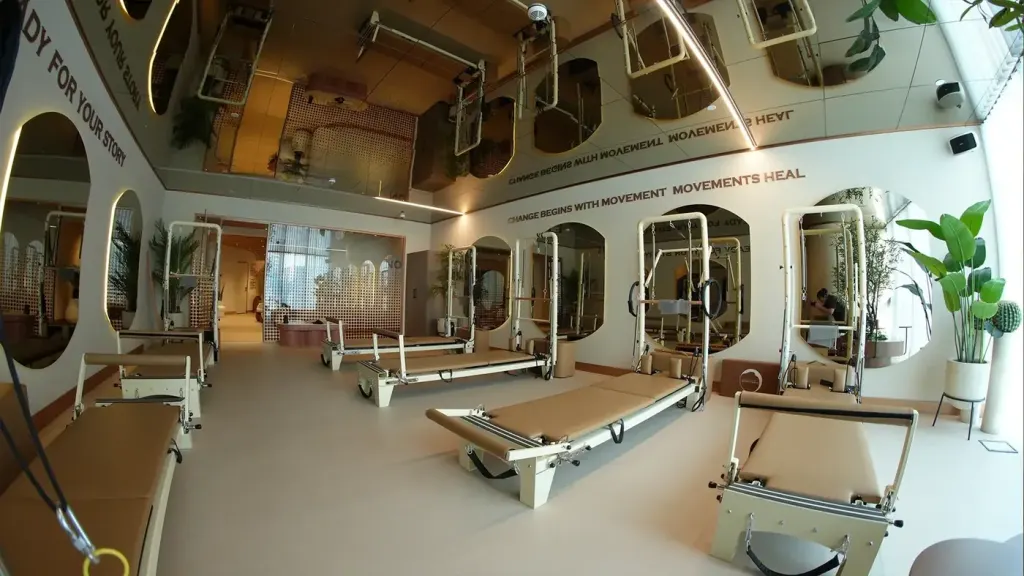
What Is Reformer Pilates? Benefits, Who It Suits and a First-Session Guide
How the reformer works, how it differs from Mat Pilates, its scientific benefits, who it suits and what to expect in your first session at O'Wellness Beytepe.

How to Measure Progress in Reformer Pilates: Spring Load, Control and Logs
How do you track progress in Reformer Pilates through form, control, breath and spring load? A guide to plateaus and tracking logs.
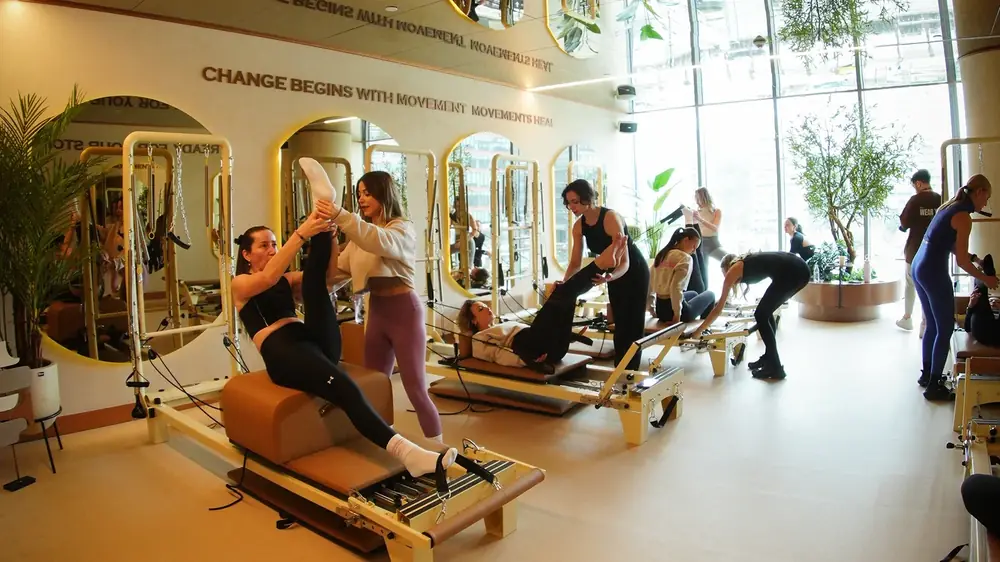
Reformer Pilates and the Shoulder Girdle: Reducing Neck Tension with Scapular Awareness
If your shoulders creep towards your ears, the issue is often scapular control. We explain how reformer pilates balances the shoulder girdle, with tips for use in class.
