
Meditation and Mindfulness: How They Affect Your Fitness Performance
Mental focus and breath control are as much a part of performance as muscle strength. We explain how to add meditation and mindfulness to your weekly training.
The link between meditation and sports performance has, in recent years, become a topic of interest not only for professional athletes but for anyone who trains regularly. Performance is not just about muscle strength and endurance; mental focus and breath control are also important parts of the equation. In this article, we at O'Wellness Beytepe explain how meditation and mindfulness practices can contribute to your training quality, recovery and motivation, and how you can fit them into your weekly program.
What do meditation and mindfulness mean?
Meditation is a practice that aims to calm the mind by directing attention to a particular focal point, most often the breath. Mindfulness is the ability to observe what is happening in the moment without judgment, and meditation is just one of the ways to develop this skill. In fitness, these two concepts are used to read the body's signals better during training, release unnecessary tension and strengthen focus.
Mental focus and training quality
If your attention is scattered while lifting weights or trying to control a movement on the Reformer, it can become harder to perform the movement with the right muscle groups. It is generally observed that people who practise breathing and mindfulness regularly find it easier to establish this focus, known as the "mind-muscle connection", during movement. This connection directly determines movement quality, especially in disciplines that demand control, such as Pilates and yoga.
The physiological effect of breathwork
Slow, deep diaphragmatic breathing is known to help reduce heart rate and muscle tension by sending signals to the calming (parasympathetic) branch of the nervous system. A few minutes of breathwork before training eases unnecessary anxiety and helps you start the session better prepared. After training, the same technique can make it easier for the body to shift into recovery mode.
| Training moment | Meditation/breath practice | Expected benefit |
|---|---|---|
| Before the session (3-5 min) | Diaphragmatic breathing, short body scan | Focus, less unnecessary tension |
| During the session | Breath synchronized with movement | Movement control, mind-muscle connection |
| After the session (5-10 min) | Slow breathing, relaxation position | Calming the nervous system, shift to recovery |
| Rest days | 10-15 min seated meditation | Stress management, sleep quality |
Step by step: a short pre-session mindfulness practice
- Get into a comfortable position (1 min): Sitting or lying on your back, relax your shoulders.
- Do a body scan (1-2 min): Moving from your feet to your head, notice where you hold tension.
- Breathe from the diaphragm (2 min): Inhale through the nose for 4 counts and exhale for 6; feel your belly rise with the breath.
- Set your intention (30 sec): Briefly clarify in your mind what you want to focus on in today's session.
- Transition: Open your eyes and start warming up with gentle movements.
Stress, cortisol and recovery
Persistently high stress can negatively affect sleep and overall recovery capacity, which in turn can slow the progress you expect from training. Regular meditation has been reported to reduce perceived stress and support the relaxation response. A mindfulness practice maintained alongside training can therefore contribute not only to mental but, indirectly, to physical recovery as well. Those who want extra recovery support can also combine a calm breathing practice with Deep Stretch Yoga or the Mobility & Stretching class.
The role of yoga and breath-focused classes
Classes held in the O'Soul studio at O'Wellness Beytepe, such as Vinyasa Yoga, Balanced Yoga and Deep Stretch Yoga, naturally include the practice of synchronizing movement with breath. For those without meditation experience, attending these classes regularly is a practical way to develop mindfulness through movement. If you are looking for a calmer, lower-tempo session, the Mobility & Stretching class also sets aside time for breathwork.
Common mistakes
- Forgetting the breath entirely: Holding your breath while lifting or during a demanding movement can raise intra-abdominal pressure more than necessary and disrupt focus.
- Treating meditation as "idle time": Even a short breathing break can contribute to training quality; it should not be seen as wasted time.
- Excessive expectations: Meditation does not create a dramatic performance leap overnight; its effect builds over time with regular practice.
- Poor timing: Rather than taking long breathing breaks in the middle of a high-tempo cardio session, it is better to place these practices before or after a session, or on rest days.
Who is it suitable for, and who should be careful?
Meditation and breathing exercises are generally safe for most people and can be practised regardless of age or fitness level. However, people with severe anxiety disorders, a history of panic attacks or certain respiratory conditions are advised to consult their doctor or a specialist before trying advanced techniques, especially those involving breath holding. For beginners, short and simple breathing exercises are a much safer starting point than advanced techniques.
How do you track progress?
It is more realistic to track the effect of meditation through subjective indicators than through a numerical performance metric: less anxiety before sessions, attention wandering less often during training, better sleep quality and a softer perception of stress during the day. Keeping a small journal and briefly noting these indicators once a week makes it easier to see the difference the practice is making for you.
Sample 4-week practice plan
| Week | Focus | How to do it |
|---|---|---|
| 1 | Building the habit | 3 minutes of diaphragmatic breathing before every workout |
| 2 | Body awareness | Breathing before the session, 5-min body scan after |
| 3 | Integration with classes | 1 yoga or mobility class a week, focusing on breath-movement sync |
| 4 | Independent practice | Adding 10 min of seated meditation on rest days |
How do you integrate it into your training program?
Positioning meditation as a natural part of your existing training routine, rather than as a separate "extra task", improves consistency. For example, arriving a few minutes early for your Reformer Pilates session and starting with breathwork, or fully experiencing the relaxation section at the end of a Deep Stretch Yoga class, are practical ways to bring mindfulness into your daily routine without setting aside extra time. You can find class times that suit you on the O'Wellness Beytepe weekly schedule page.
The right technique with trainer support
Learning breathing techniques correctly increases their benefits. Our trainers at O'Wellness Beytepe show you step by step how to match breath and movement in yoga and mobility classes, and for those who want one-to-one work, personalized sessions can be planned as part of our special services. After the busy pace of Ankara, experiencing these practices in a calm studio setting in Beytepe offers a short but valuable break in the day.
Types of meditation and their fitness applications
There is no single correct method of meditation; different techniques respond to different needs. For those who want to add it to their training routine, the basic approaches and their practical applications can be summarized as follows:
| Technique | Short definition | Relationship to training |
|---|---|---|
| Diaphragmatic breathing | Deep, slow breathing from the belly | Before/after sessions, during warm-up and cool-down |
| Body scan | Directing attention to body regions in turn | Noticing tension, preparation before stretching |
| Focus (single-point) meditation | Steady attention on one object or the breath | Before movements that demand balance and control |
| Mindful movement (walking meditation) | Focusing on steps and breath while walking | On active rest days, during a cool-down walk |
Differences in practice by level
It is natural for beginners and experienced practitioners to differ in duration and content. Beginners are advised to do short 2-3 minute practices focusing on a single breathing technique, while experienced practitioners can do sessions lasting up to 10-15 minutes that combine body scanning with focus meditation. For both groups, consistency matters more than duration: a short practice done every day is more effective than a long one done only occasionally.
Equipment and environment
Meditation and breathwork require no special equipment; a quiet corner where you will not be disturbed is enough. In the studio, the few minutes before class starts, when the lights dim and the music softens, create a natural opportunity for this practice. For those practising at home, a cushion or yoga mat you can sit comfortably on can help support your back.
Group class or individual practice?
Breathing and mindfulness work done in a group class makes learning the correct technique easier thanks to the trainer's guidance, and the group's energy provides motivation. Individual practice offers flexibility in timing; it can be done in short intervals at any time of day. The best approach is to learn the basics in a group class or with a trainer, and then continue the practice on your own.
Taking it into daily life
Perhaps the greatest gain from meditation and mindfulness is that it does not stay in the studio but carries over into everyday life. Taking a few deep breaths when you feel tense in traffic on the Eskişehir road, at work or at home is a natural extension of the skill you learn in training. In this way, regular practice becomes a habit that supports both your training performance and your overall quality of life.
Practical tips for consistency
When building a new habit, the hardest part is usually maintaining it. Linking meditation to your existing training time with a calendar reminder removes the need to find extra time. Starting small, gradually extending the duration as you progress and being patient with yourself make it easier for the practice to stick in the long run.
The value of practising in a community
Breathwork done with a trainer in a group class helps you notice details that can easily be missed when practising alone; correct posture, breathing rhythm and the quality of relaxation become clearer with the trainer's feedback. Over time, this experience becomes a reference point that guides you when you practise on your own at home or while travelling.
Frequently asked questions
Does meditation really improve sports performance?
It does not directly increase muscle strength, but it has been reported to support training quality and recovery through focus, breath control and stress management. Its effect emerges over time with regular practice.
Does meditation require a special talent?
No. Starting with simple breath awareness is a method anyone can use. Short but regular practices gradually develop into a deeper mindfulness skill.
Is meditation more useful before or after training?
They serve different purposes: before training it helps with focus and preparation, and afterwards with calming the nervous system and shifting into recovery. You can try both in short sessions.
Which classes can I combine meditation and breathwork with in Beytepe, Ankara?
The yoga, mat Pilates and mobility classes in the O'Soul studio at O'Wellness Beytepe naturally include the coordination of breath and movement. These classes offer a suitable setting to begin mindfulness practice through movement.
Can I meditate if I have an anxiety disorder?
Simple breath awareness is usually safe, but people with severe anxiety or a history of panic attacks are advised to consult their doctor before trying advanced techniques.
To add breathing and mindfulness work to your training routine, get in touch with us; we will plan suitable class and session suggestions together and arrange a free facility tour and trial session.
Related posts
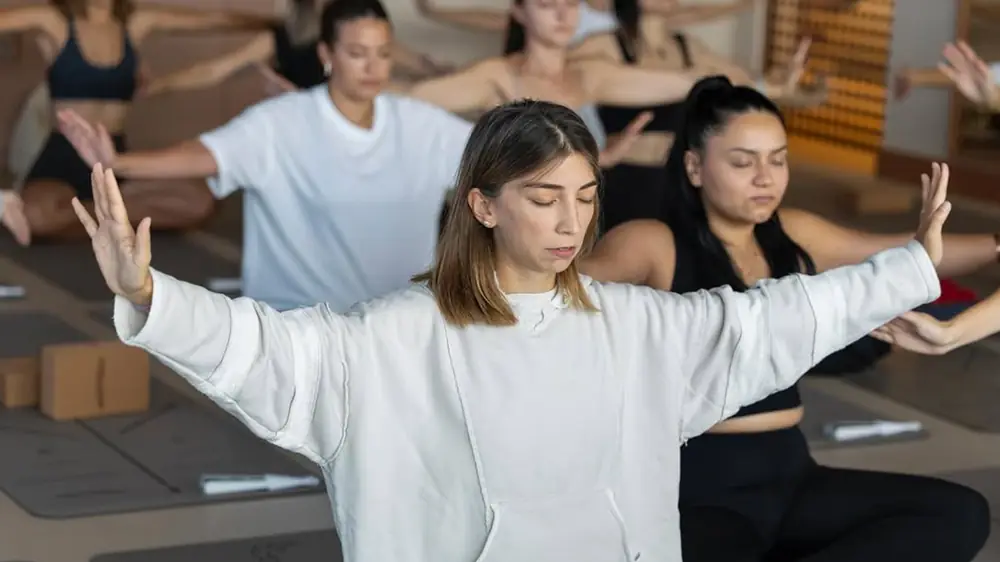
Yoga for runners: hip flexors and hamstrings
Yoga poses that balance the one-directional load of running, the right timing before and after runs, and tips for weaving them into your week.
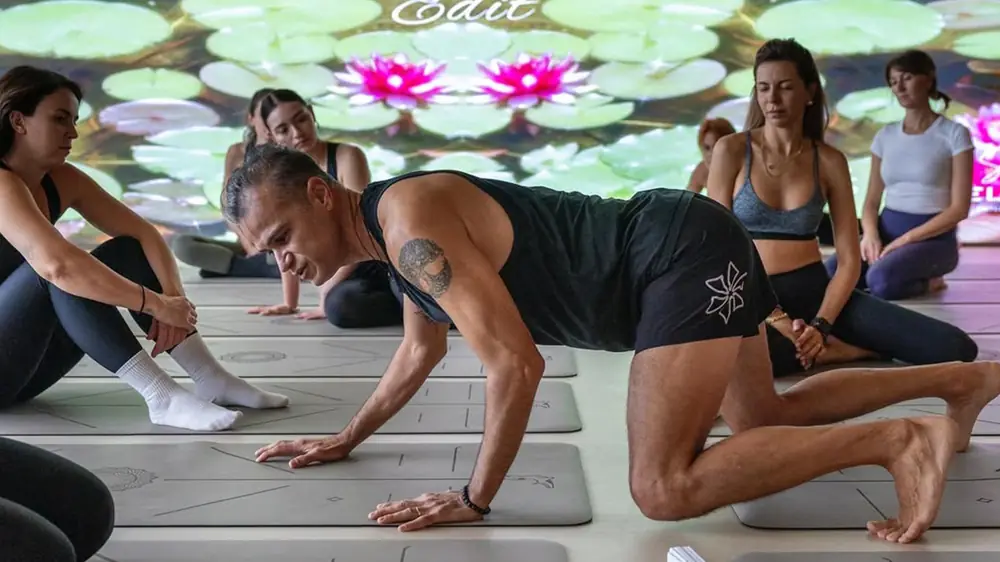
How Does Flexibility Improve? Static, Dynamic and PNF Stretching Compared
How can flexibility be developed? Static, dynamic, ballistic and PNF stretching, when to use each, and a sample weekly program.
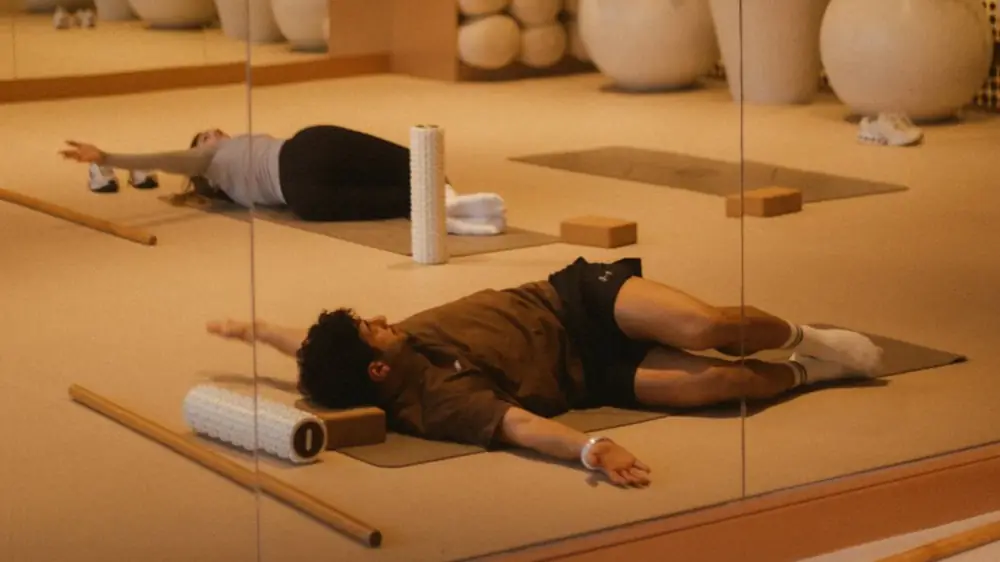
Tight Hip Flexors: The Hidden Problem of Desk Workers
Sitting for hours shortens the hip flexors, and the symptoms often appear in the lower back. We cover self-tests, stretching and strengthening moves and a daily 10-minute routine.
