
Tight Hip Flexors: The Hidden Problem of Desk Workers
Sitting for hours shortens the hip flexors, and the symptoms often appear in the lower back. We cover self-tests, stretching and strengthening moves and a daily 10-minute routine.
Tight hip flexors are one of the most common, yet most overlooked, movement restrictions in people who sit for long hours. The symptoms usually show up somewhere other than the hip: lower back tension, limited squat depth, a shorter stride when running or discomfort after standing for a long time. Whether you spend long hours in an office on Ankara's Eskişehir road or at a desk on the Beytepe campus, in this article we explain what the hip flexors are, how sitting affects them, simple self-tests and an approach that combines stretching with strengthening. This is general exercise information; see a health professional for diagnosis and treatment.
Which muscles are the hip flexors?
Hip flexion is the movement that brings the thigh towards the torso. The main muscles responsible are:
- Iliopsoas (iliacus and psoas major): The main hip flexor. The psoas starts at the lumbar vertebrae and attaches to the thigh bone, creating a direct mechanical link between the hip and lower back.
- Rectus femoris: Part of the quadriceps group; it both flexes the hip and straightens the knee.
- Tensor fasciae latae (TFL): On the outer side of the hip; it contributes to flexion and internal rotation.
- Sartorius and pectineus: Play supporting roles.
The psoas attaching to the lumbar vertebrae is a key detail: when this muscle shortens, it tends to pull the lumbar spine forward, which means an increased curve in the lower back.
Why does sitting lead to tightness?
When you sit, the hip is bent at roughly 90 degrees, so the hip flexors spend most of the day in a shortened position. Muscles adapt to the positions they are held in, and a muscle kept short all the time gradually loses resting length.
On top of that, the opposing muscle group, the glutes, is compressed and inactive while you sit. The result is a two-sided picture: tightness at the front and weakness at the back. This feeds a phenomenon known as reciprocal inhibition: tight flexors make it harder for the glutes to fully engage.
Symptoms: where do you notice them?
- Lower back tension: Especially after standing for a long time.
- Limited squat depth: You can't get below a certain point, or you notice your lower back rounding.
- Limited hip extension: Your back stride stays short when walking or running.
- Difficulty engaging the glutes: In a glute bridge you feel your lower back or hamstrings rather than your glutes.
- Anteriorly tilted pelvis: A pronounced arch in the lower back and the belly pushing forward when standing.
- A pinching feeling at the front of the hip: In a deep squat or lunge position.
- Excessive stretch in the back leg in a lunge: Beyond the normal feeling, strong enough to make holding the position hard.
Simple self-tests
Modified Thomas test
Sit on the edge of a table or a high bed and lie back. Pull one leg to your chest with both hands and let the other hang freely.
- Normal: The thigh of the free leg touches the surface or stays very close to it.
- Sign of tightness: If the free thigh stays in the air, iliopsoas tightness is suspected.
- Rectus femoris tightness: If the knee of the free leg tends to straighten.
- TFL tightness: If the free leg drifts outwards.
Glute bridge test
Lie on your back with your knees bent and lift your hips. If you feel the movement in your lower back or hamstrings rather than your glutes, your glute activation may be weak and your flexors dominant.
Standing posture check
Take a photo of yourself from the side. A belt line that tilts noticeably forward can indicate that your pelvis is in an anterior tilt.
The fix: stretching alone isn't enough
The most common approach is to stretch the tight muscle. That is necessary, but on its own it rarely gives lasting results, because the other half of the problem is weakness in the glutes and core. So a three-part approach is needed: stretch, strengthen and change position.
Stretching work
- Half-kneeling lunge stretch: One knee on the floor; push the hips forward, but tuck the pelvis under rather than arching the lower back. Lightly bracing the abs moves the stretch to the front of the hip. 30–45 seconds per side, 2–3 reps.
- Couch stretch: A kneeling position with the back foot resting against a wall or sofa; it targets the rectus femoris more intensely. 30 seconds per side.
- Side-lying quad stretch: Lie on your side and pull your ankle back with your hand.
- Dynamic leg swings: Standing and holding on to something, swing the leg forwards and backwards; suitable before training.
Important note: Arching the lower back to gain range while stretching moves the stretch from the hip flexor to the lower back; this is the most common mistake. Tucking the pelvis under and lightly bracing your abs gives you the right feeling.
Strengthening work
- Glute bridge: 3 × 12–15 reps; holding for 2 seconds at the top and squeezing the glutes increases the effect.
- Single-leg glute bridge: As the next step, 3 × 8–10 per leg.
- Hip thrust: The weighted progression.
- Walking lunge and split squat: Train hip extension functionally.
- Dead bug: Builds core control and the ability to hold pelvic position.
- Plank: Teaches you to keep the pelvis neutral.
- Romanian deadlift: Strengthens the posterior chain of the hip.
Changing position
- Get up every 45–60 minutes; this simple step is more effective than a single stretching session.
- Standing desk: If possible, alternate between sitting and standing during the day.
- Standing in meetings: Works well for short meetings.
- Walking break: Walk for 10–15 minutes at lunchtime.
- Seating setup: Cross your legs less, and set your chair so your hips sit slightly higher than your knees.
A daily 10-minute routine
- Half-kneeling lunge stretch: 2 × 30 seconds per side.
- Couch stretch: 30 seconds per side.
- Glute bridge: 2 × 15 reps.
- Dead bug: 2 × 8 reps per side.
- Split squat (body weight): 2 × 10 per leg.
- Dynamic leg swings: 10 reps in each direction.
When this routine is done 4–5 days a week, most people report a noticeable improvement in range of motion and lower back tension within 3–6 weeks.
How group classes and Reformer Pilates help
Reformer Pilates directly addresses the balance between the hip flexors and the glutes. Hip extension movements against spring resistance, work on holding pelvic position and controlled breathing tackle all three parts of the problem together. At O'Wellness Beytepe, classes on Balanced Body reformers with a maximum of 6–8 people per session let the instructor follow your form closely. Mobility & Stretching and yoga classes in the O'Soul studio also help open up the front of the hip.
On the strength side, performing squats, deadlifts and lunges with correct technique trains the hip through its full range of motion and creates natural protection against tightness. If you're unsure of your technique, a few Personal Training sessions can be a good start.
When should you see a specialist?
- Sharp pain at the front of the hip with a catching sensation.
- Numbness or tingling spreading down the leg.
- A noticeable limp when walking.
- Restriction that doesn't respond to stretching and strengthening within six weeks.
- Night pain or discomfort that doesn't ease with rest.
In these cases, consult your doctor. The sports physiotherapist at our club can also help adapt your exercise programme after a medical assessment.
Conclusion
Tight hip flexors are a predictable result of desk-based life and usually show up not in the hip but in the lower back, squat depth or walking quality. The fix is not a single stretch but a three-part approach: gently opening the tight front of the hip, strengthening weak glutes and core, and changing position regularly through the day. Combine a targeted 10-minute daily routine with two strength or Reformer Pilates sessions a week, and you will start to feel the difference within a few weeks.
Related posts
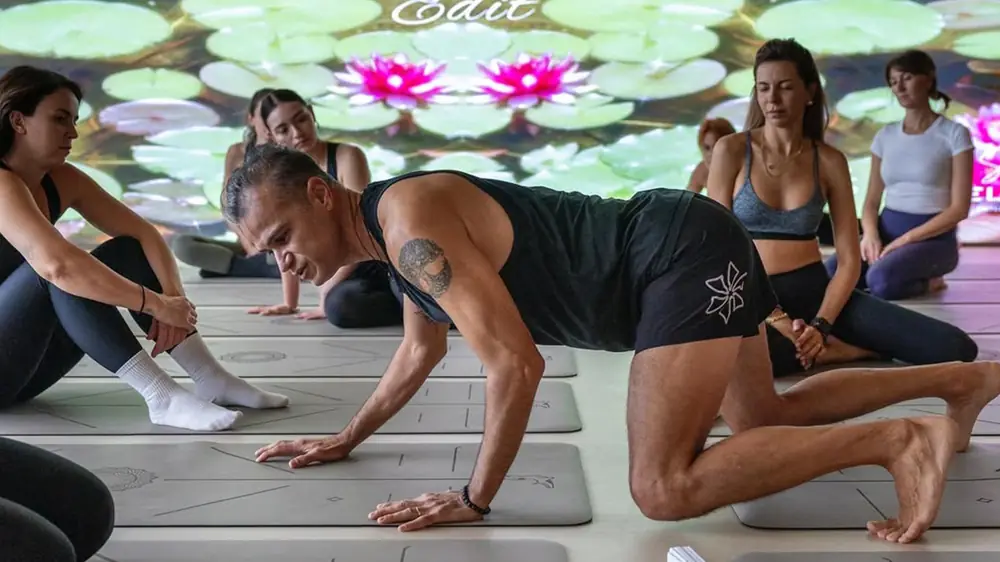
Meditation and Mindfulness: How They Affect Your Fitness Performance
Mental focus and breath control are as much a part of performance as muscle strength. We explain how to add meditation and mindfulness to your weekly training.
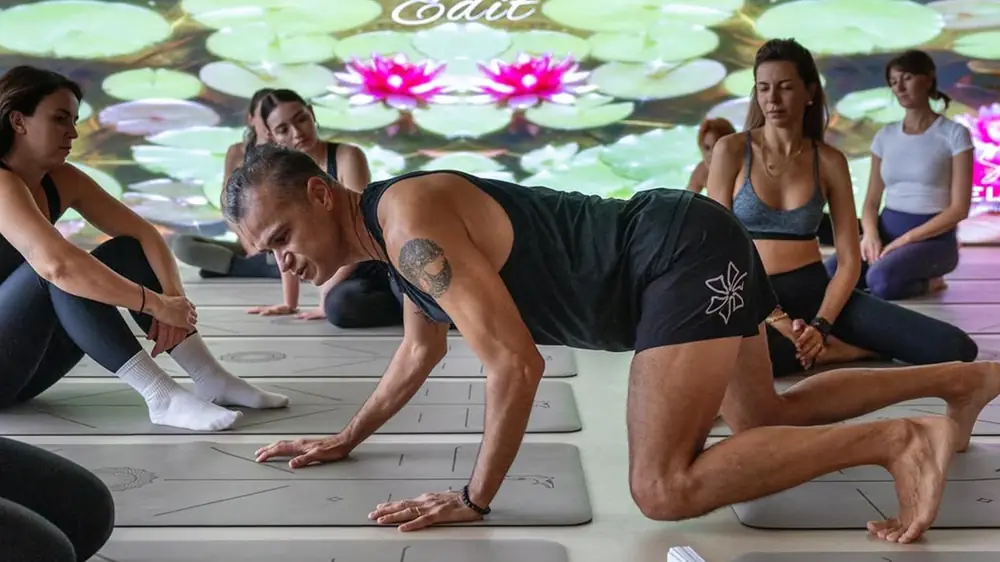
Budokon Yoga: Where Yoga Meets the Martial Arts
Budokon yoga blends classic yoga postures with ground movements and agility drills from the martial arts. We explain its core principles, benefits and who it suits.
What Is Yoga Nidra? The Lying-Down Deep Rest Practice and Its Benefits
Yoga nidra is a guided deep-rest practice done lying still. We explain its stages, duration and how it fits alongside a training routine.
