
Yoga for Men: Busting the Flexibility Myth
Yoga for men develops strength, balance and breath control far more than it demands flexibility. We cover common myths, real benefits and practical tips for starting out.
"If yoga isn't about touching your toes to your ears, what is it about?" That question sums up the most common misconception about yoga for men. In reality, yoga is a complete training method that builds the core skills many fitness disciplines depend on: strength, balance, joint control and breath management. In this article we look at why the flexibility myth does not hold up, the concrete benefits yoga offers male athletes and general fitness goals, and how to get started with a program.
Where does the flexibility myth come from?
In popular media, yoga is usually shown through the advanced poses of extremely flexible practitioners, which creates the backwards idea that you must already be flexible to practice. In reality, a yoga class starts from the range of motion you have today and aims to improve it over time. Someone with tight hip flexors, short hamstrings or limited shoulder mobility may be exactly the person who gains the most from yoga, because those are the restrictions it works on.
Common restrictions in the male body
- Short hamstrings and hip flexors: Long hours of sitting and one-directional movement patterns in weight training can cause tightness in these areas.
- Limited shoulder and chest mobility: Programs built around the bench press can shorten the chest muscles and weaken the upper back, which affects shoulder posture.
- Weak core stabilization: Visible abs and functional core stabilization are different things; even strong athletes can have a stability gap in the deep abdominal and lower back muscles.
- Restricted ankle and hip rotation: This can make it hard to perform squats and lunges with full, clean form.
What yoga concretely adds to strength training
Most yoga poses demand isometric strength and stabilization. Plank, chaturanga and the warrior series load the shoulders, core and legs statically, bringing in muscle groups that weight training often neglects. Because yoga also builds control at the end ranges of motion, it can improve your form in movements such as the deep squat or overhead press. If you want to plan strength and mobility work together, you can also talk to our trainers in the strength and cardio area.
Breath control and performance
The diaphragmatic breathing and breath-movement coordination taught in yoga classes help not only in the studio but on the training floor as well. Being able to manage your breath at the right moments, whether under a heavy set or in a hard cardio block, affects both performance and safety. Athletes who practice yoga regularly find it easier to breathe in a controlled way instead of holding their breath when things get tough.
Balance and joint health
Poses that demand balance on one leg, such as tree pose and warrior 3, train the small stabilizer muscles around the ankle, knee and hip. Classic weight programs that focus on big muscle groups often do not target these muscles enough, and over time that can raise injury risk. Regular balance work is an important complement for protecting joint health, especially for athletes over 35.
Which type of yoga suits men best?
| Type of yoga | Key feature | Who it suits |
|---|---|---|
| Vinyasa yoga | Breath-movement flow, medium-high tempo | Those who want to combine cardio and strength |
| Balanced yoga | Balance of strength and flexibility | Anyone with a general fitness goal |
| Deep stretch yoga | Long-hold deep stretching | Those who want to recover after weight training |
| Mobility & stretching | Focus on joint range of motion | Those who want better squat and deadlift form |
| Mat pilates | Focus on core control and posture | Those who want stronger trunk stability |
Challenges you may meet in the first class
For a man with no yoga experience, the most common difficulty in early classes is the feeling of not being able to perform a pose fully in the stiff areas. That is completely normal. One of the basic principles of yoga is adapting the pose to your own body, never the other way around. Asking the instructor for props such as blocks or straps does not mean you cannot reach an advanced level; it is part of learning correctly.
Step by step: Warrior 2 (virabhadrasana 2)
- Open your feet wide; point the front foot forward and turn the back foot out close to 90 degrees.
- Bend the front knee so that it lines up over the ankle, and do not let it collapse inward.
- Keep the hips open to the sides, not facing forward or back, and hold the torso upright.
- Extend your arms parallel to the floor at shoulder height and direct your gaze over the front hand.
- Hold the position for 5-8 breaths and focus on diaphragmatic breathing.
Modification: If you have knee or hip sensitivity, keep the front knee angle shallower. For a more advanced version, hold the position, raise the arms overhead and move into the flying warrior variation.
Common mistakes
- Being competitive: Racing the person next to you or the instructor in a "who is more flexible" contest lowers motivation and raises injury risk.
- Ignoring the breath: Focusing only on the shape of the movement and not following the breathing rhythm means missing one of yoga's most important benefits.
- Overdoing it: Forcing stretches to the point of pain can cause muscle or ligament injuries; a mild feeling of tension is enough.
- Stretching only and neglecting strength: A balanced yoga practice includes both strength and flexibility; choosing only passive stretching classes limits the benefit.
Who should be careful?
With conditions such as a herniated disc, a history of serious shoulder injury or uncontrolled high blood pressure, some advanced poses (inversions and deep back bends, for example) should be limited or modified. If you have this kind of health history, it is important to consult your physician before starting and to let your instructor know.
A 4-week starter plan
| Week | Focus | Frequency |
|---|---|---|
| 1 | Basic poses, breath awareness | 1-2 classes per week |
| 2 | Introduction to balance poses | 2 classes per week |
| 3 | Getting used to flow (vinyasa) tempos | 2 classes per week |
| 4 | Combining with weight training | 2 yoga classes + your current strength program |
How do you measure progress?
Improvements in flexibility usually become noticeable within a few weeks: the distance from your fingertips to the floor, the depth of your hip angle or the time you can hold balance poses are concrete markers. The real progress, however, shows up as ease in everyday movements, like climbing stairs or bending over, and in the quality of your form during weight training. Keeping a journal of weekly observations helps you stay motivated.
How to add it to your current training program
Yoga does not need to replace weight training; the two complement each other. After heavy training days, a slow-paced class such as deep stretch yoga can support recovery, while on rest days a medium-paced class like vinyasa can serve as active rest. If you want to approach recovery as a whole, sleep habits and the Mobility & Stretching class can also be added to your routine.
The yoga experience for men at Beytepe
The group classes in our O'Soul studio at O'Wellness Beytepe offer a learning-focused environment, away from competition, with a mixed group of participants. Because the studio sits in the Yaka Beytepe complex close to the strength area, the Reformer Pilates studio and the functional area, you can plan both strength and yoga work on the same day. For those living along the Çayyolu and Ümitköy axis, an after-work or weekend practice fits easily into the routine.
Using props: blocks, straps and blankets
Yoga props are not for people who are "not flexible enough"; they are there to maintain correct alignment. A yoga block raises the floor to your hand in poses where it cannot reach, helping you keep the spine long. In a standing forward fold (uttanasana), for example, placing blocks under the hands helps keep the back flat instead of rounded. A strap lets people with limited shoulder or hamstring flexibility hold the leg or arm at a safe distance. A blanket is used as support under the knees or hips and reduces pressure on the joints. Using these props is not failure; it means putting correct technique first.
Mental benefits and stress management
Beyond its physical benefits, people who practice regularly often report better stress-coping skills. For men with a hectic work schedule, switching off the phone and work agenda during class and focusing only on breath and movement can act as a short mental reset. Over the long term this may help ease the bodily effects of chronic stress, such as muscle tension and sleep problems; but if you experience serious anxiety or signs of burnout, it is important to seek a specialist.
Differences in approach by age group
In your 20s and 30s, yoga mostly acts as a flexibility and mobility layer that complements strength training, and this age group usually adapts faster to advanced balance and flow poses. From 40 onward, yoga plays a more decisive role in protecting joint health and keeping the spine mobile; in this period, starting with more controlled, alignment-focused classes rather than fast flow classes lowers injury risk. What both groups share is gradual progress without forcing the body.
The link between yoga and combat sports
For men who are interested in combat sports or train in them, yoga is a complement that feeds directly into performance, especially through hip rotation, spinal flexibility and breath control. Fluid, dynamic forms of yoga make the transition easier because the movement patterns are partly familiar. For those who want to combine the martial arts sessions among the personal services at O'Wellness Beytepe with a yoga practice, the two disciplines complement each other naturally.
Frequently asked questions
I am not flexible at all. Can I still do yoga?
Yes. Yoga can be adapted for everyone regardless of flexibility level; poses are modified with props such as blocks and straps to fit your current range of motion.
Does yoga make you lose muscle mass?
No. Yoga added on top of regular weight training does not reduce muscle mass; on the contrary, it can support performance by strengthening the stabilizer muscles that weight training tends to neglect.
How many days a week of yoga is enough?
Even 1-2 days a week gives a noticeable benefit when kept up consistently. For those with heavy weight training, scheduling classes on recovery days is a practical approach.
Is there a yoga class at Beytepe where men will feel comfortable?
The yoga classes at O'Wellness Beytepe are open to everyone with a mixed group of participants. More dynamic classes such as vinyasa offer a familiar tempo, especially for those with a weight-training background. You can check the weekly schedule for current class times.
Is yoga safe if I have an injury history?
Generally yes; but if you have a history of shoulder, lower back or knee injury, consult your physician before starting and inform your instructor so the movements can be modified for you.
If you would like to try a yoga program that complements your strength training, get in touch with us for a free facility tour and trial session.
Related posts
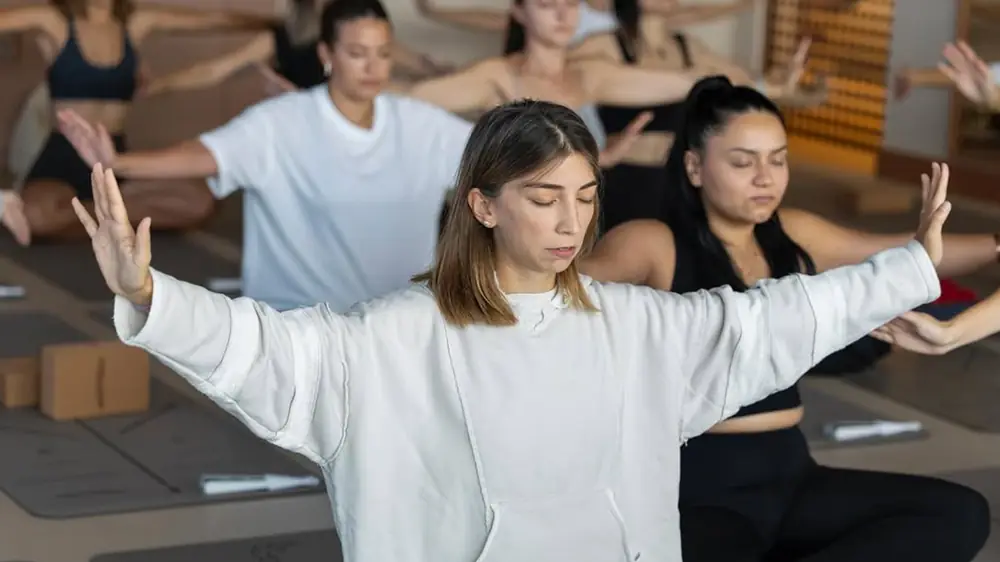
Yoga for Lower Back Pain: Safe Poses and a 20-Minute Routine
We explain which yoga poses help and which are risky for low back pain, and what a safe practice framework looks like. See a doctor first for severe pain.
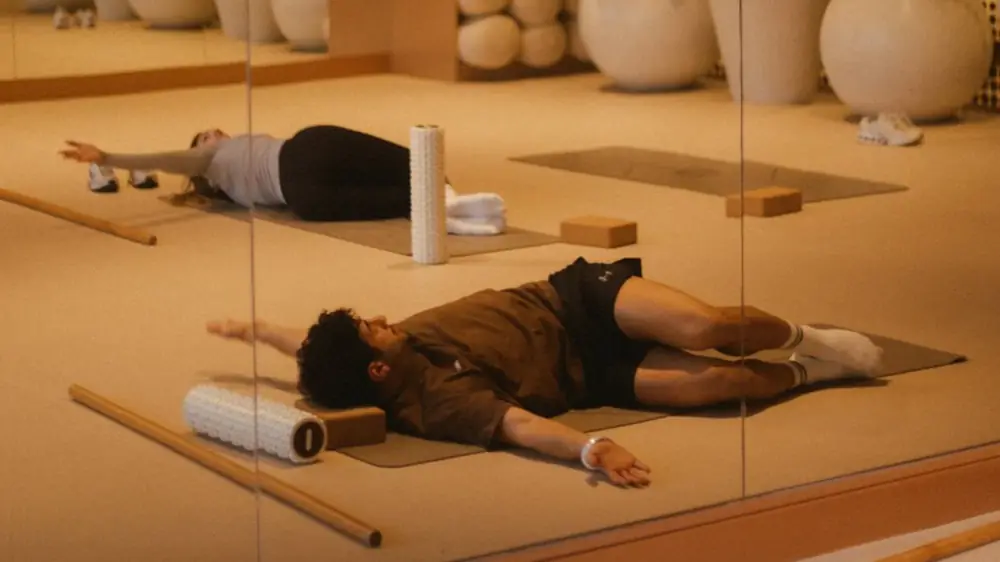
What Is Mobility and How Is It Different from Flexibility? Key Concepts for Joint Health
Mobility is the range a joint can move through under active muscular control, and it is not the same as flexibility. We cover the key concepts for joint health and a practical plan.
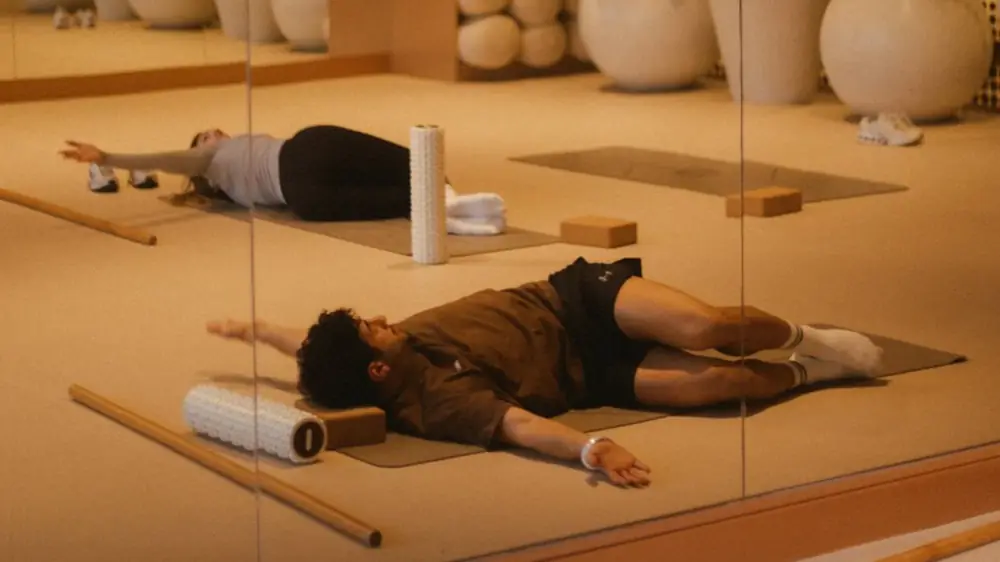
Thoracic Spine Mobility and Its Link to Shoulder Pain
Limited thoracic mobility can set the stage for shoulder pain. We look at exercises that improve upper-back range of motion and how they connect to shoulder health.
