
12 Things Yoga Beginners Should Know Before Their First Class
From clothing to breathing, common mistakes to studio etiquette: 12 practical things to know before your first yoga class, all in one place.
Before your first yoga class, questions like am I flexible enough or will I do something wrong may be on your mind. The good news for yoga beginners is that the class is shaped around your current range of movement and progresses as you gain experience. In this article we have gathered 12 practical points that will help you before and during your first class, whether in Beytepe, Ankara or elsewhere, from clothing to breathing and from common mistakes to studio etiquette.
1. Choosing the right clothing
You do not need expensive specialist clothing for yoga; stretchy fabrics that sit close to the body without being tight are enough. Very loose clothes can fall over your face in inverted poses such as downward dog and distract you. Non-slip yoga socks help you keep your balance as you start to sweat.
2. Equipment: small details make a big difference
Most studios provide basic equipment such as mats, blocks and straps, although you may prefer to bring your own mat for hygiene reasons. Using a block or strap does not mark you as a beginner; many advanced practitioners also use these props frequently to maintain alignment.
3. Do not come hungry or too full
Eating a heavy meal 1.5-2 hours before class can cause discomfort, especially in poses that involve the abdomen such as twists and forward bends. Arriving completely hungry can cause dizziness; a light snack such as a banana or a few almonds 30-45 minutes before class is usually enough.
4. Breath matters more than movement
The most common mistake beginners make is focusing on making the pose look right and forgetting to breathe. In yoga teaching, however, the breath guides the movement; the aim is to maintain a steady, uninterrupted rhythm in and out through the nose. If your breath is held or becomes strained, that is usually a sign you are pushing the pose too hard and need to ease off.
5. Namaste and basic terms
In class you may hear Sanskrit pose names (asanas) and some traditional expressions such as namaste. You are not expected to memorise them; most instructors describe the poses with explanations in Turkish or English. Over time these terms will start to feel familiar on their own.
6. Do not hesitate to ask for modifications
If a pose causes discomfort or your range of motion is not enough, asking the instructor for an alternative is completely normal. Experienced instructors know at least one easier and one harder variation of every pose and will suggest the one that suits you best.
7. Basic poses you may meet in your first class
| Pose | Turkish name | Goal |
|---|---|---|
| Tadasana | Dağ pozu (mountain pose) | Postural awareness |
| Adho mukha svanasana | Aşağı bakan köpek (downward dog) | Back and hamstring stretch, shoulder strength |
| Balasana | Çocuk pozu (child's pose) | Rest, releasing the back |
| Virabhadrasana | Savaşçı pozu (warrior pose) | Leg strength, balance |
| Savasana | Ceset pozu (corpse pose) | Full relaxation, closing the class |
8. Step by step: Downward dog (adho mukha svanasana)
- Come onto your hands and knees in a tabletop position, with your hands shoulder-width apart.
- Spread your fingers slightly and press your palms firmly into the floor.
- Lift your knees off the floor and push your hips up and back so your body forms an inverted V.
- Your knees can stay bent; as your hamstring flexibility improves, your heels will move closer to the floor.
- Let your head hang freely between your arms without tensing your neck.
- Hold the position for 5-8 breaths.
Modification: Those with wrist pain can spread their fingers wider or support themselves on their fists. Those with noticeable tightness in the back of the legs can keep their knees comfortably bent.
9. Common mistakes
- Comparing yourself with the person next to you: Everyone's range of motion is different; forcing a pose because of someone else's creates unnecessary risk.
- Holding your breath: It is common for the breath to stop reflexively in hard poses; when you notice, return to the breath.
- Skipping savasana: Getting up before the class ends cuts short the nervous system's calming phase; this part is an essential element of the class.
- Confusing pain with tension: Mild tension is normal, but sharp or stabbing pain is a signal to stop; change the position immediately.
10. Who should take extra care?
If you have had recent surgery, have a serious spinal condition or uncontrolled high blood pressure, or are pregnant, it is important to consult your physician and inform your instructor before starting. Many poses can be safely adapted in these situations, as long as the instructor knows about your condition.
11. How do you measure progress?
In the first weeks, progress means being able to follow your breath more easily, holding balance for longer and feeling lighter after class, rather than reaching a deeper pose. Over time, increased range of motion, such as your fingers getting closer to your feet in a forward bend, also becomes a concrete indicator.
12. Studio etiquette
- Arriving a few minutes early lets you set up your mat calmly.
- Silencing your phone or leaving it outside the studio helps both you and the other participants focus.
- Avoiding strong perfume is a considerate gesture towards others in an enclosed studio.
- Cleaning the equipment you used and putting it back at the end of class is part of studio etiquette.
Which yoga class should you start with?
At O'Wellness Beytepe, one of the best entry points for beginners is the Balanced Yoga class, which offers a balanced pace between strength and flexibility. Those who prefer a slower start can try Deep Stretch Yoga, while those curious about a flowing style can try Vinyasa Yoga. All of these classes take place in the O'Soul studio; see our group classes and weekly schedule pages for current times and level information.
A simple plan for the first month
| Week | Goal |
|---|---|
| 1 | Getting to know the basic poses and breathing rhythm, one class a week |
| 2 | Observing how the body responds, two classes a week |
| 3 | Starting to deepen poses by reducing modifications |
| 4 | Adding variety by trying a different style of yoga |
Combining yoga with other classes
Once your yoga practice starts to settle, adding a complementary class such as Mobility & Stretching to your weekly schedule can improve your joint range of motion faster. For those who want to build core strength, Mat Pilates or small-group Reformer Pilates sessions also pair well with yoga.
Your first yoga experience in Beytepe
The free club tour and trial session offered before membership at O'Wellness Beytepe in the Yaka Beytepe complex are the most practical way to test your first yoga experience with low risk. Classes in our O'Soul studio are run with mixed-level groups, allowing beginners to comfortably take part alongside experienced participants. Our location a few minutes from the Hacettepe Beytepe campus and the Çayyolu–Ümitköy corridor, plus the complex car park, also make it easier to arrive on time.
A brief introduction to yoga styles
For beginners, yoga is not a single thing but a large family offered at different paces and with different focuses. Hatha yoga traditionally moves more slowly, with poses held for longer. Vinyasa yoga links poses together in flows synchronised with the breath and is more cardio-oriented. Budokon yoga brings movements from martial arts into the yoga flow for a more dynamic experience. Deep stretch yoga is an approach in which poses are held passively for several minutes, focusing on deep connective tissue stretching. This variety allows anyone with different goals to find a style that suits them.
Non-physical benefits
The benefits of yoga are not limited to flexibility and strength. Many people who practise regularly say that focusing on the present moment during class reduces distraction in everyday life. Breath awareness can become a practical tool, usable outside class too, for calming down before a stressful meeting or exam or after a busy day. These effects vary from person to person and do not replace medical treatment.
Learning to listen to your body
Perhaps the most valuable skill for beginners is distinguishing tension from pain. The pulling sensation felt in a stretching muscle is normal and decreases over time; but a sharp, stabbing or electric-like feeling in a joint is a warning, and the position should be eased immediately. Learning this distinction can take a few classes; telling your instructor openly what you feel during this period ensures you get the right feedback.
Practising at home
Doing short practices at home between studio classes is a nice way to reinforce what you have learned. However, it is safer for beginners to repeat basic movements learned in class, such as mountain pose, child's pose and cat-cow, rather than trying advanced poses alone at home. Complex balances and inversions should be learned in a guided class where you can receive proper alignment feedback.
Common worries and the reality
| Worry | Reality |
|---|---|
| Everyone will be more flexible than me | Group classes are mixed-level; everyone works within their own range of motion and no one is compared. |
| I don't know the terms, I'll fall behind | Instructors demonstrate poses verbally and visually; the Sanskrit names are learned over time. |
| I'm not physically strong enough | Yoga is a way to build strength, not a prerequisite; it is adapted to everyone through modifications. |
| It might feel like a religious ritual | Studio classes focus on physical exercise and breathwork; participation is entirely a personal choice. |
Recovery after class
It is normal to feel mild muscle soreness the day after your first classes, especially if stabilising muscles you had not used much before were engaged. Drinking plenty of water, light movement such as a short walk and good sleep help this temporary soreness pass quickly; light stretching is also a relaxing option. If the pain is severe or a joint is swollen, rest and consult your physician if necessary. With regular practice these temporary aches decrease and your body adapts to new movement patterns more quickly.
Frequently asked questions
Is it a problem if I can't do any pose fully in my first class?
No, this is completely normal. Yoga teaching prioritises adapting the pose to your body; your instructor will show you suitable modifications.
Do I have to bring my own mat?
Most studios provide mats, but you may prefer to bring your own for hygiene reasons; it is entirely a personal choice.
Is there music during yoga?
It depends on the class style; some classes are accompanied by soft background music, while some traditional classes are silent or focus only on the sound of the breath.
What kind of yoga environment is there for beginners in Beytepe, Ankara?
O'Wellness Beytepe's O'Soul studio offers mixed-level group classes and close guidance from our trainers, creating an environment where beginners can settle in comfortably; you can try it first with a free trial session.
How long is the first class, and will it be very tiring?
Group classes usually last 45-60 minutes; the instructor adjusts the pace to the general level of the class, and it is not expected to be overly tiring for beginners.
To plan your first yoga experience, contact us via our contact page; let us arrange your free trial session together.
Related posts
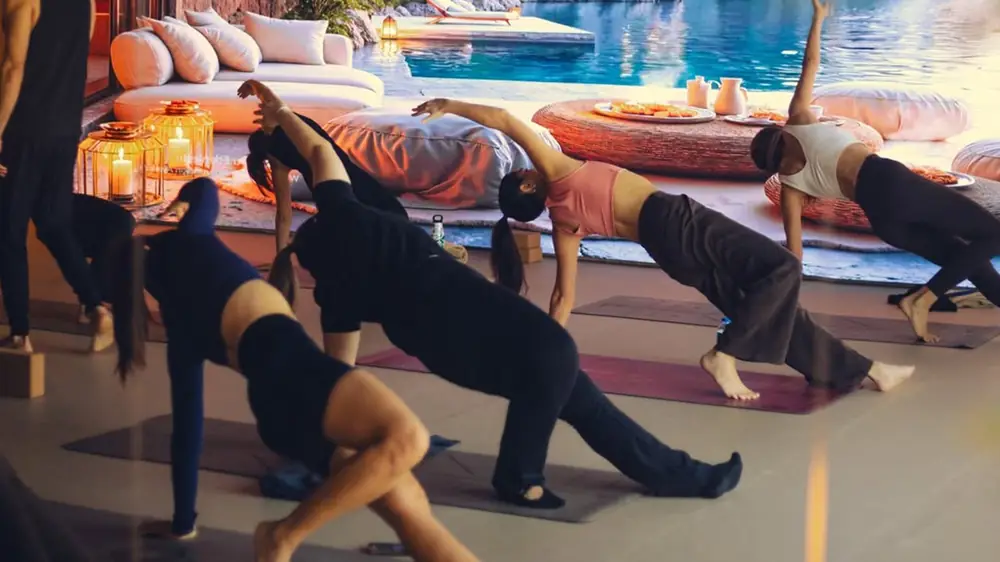
Shoulder Stability in Yoga: Protecting the Shoulders in Downward Dog, Plank and Chaturanga
In vinyasa flows the shoulders bear load hundreds of times. We explain how to protect and strengthen the shoulders with scapular control and correct alignment.

Sun Salutation (Surya Namaskar) Step by Step: A Safe Flow for Beginners
The sun salutation is yoga's best-known flow, working the spine, hips, shoulders and breath in a single sequence. This guide walks through the 12 poses in order with safe modifications.
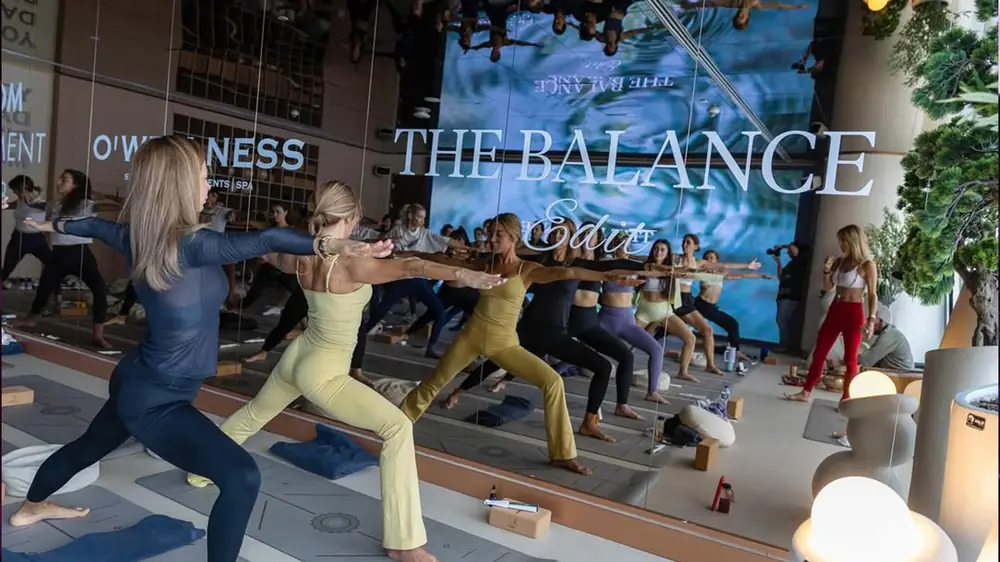
Balanced yoga: balancing strength and flexibility
Balanced yoga combines dynamic strength work with flexibility-focused movement in the same class. We explain its structure, benefits and who it suits.
