
Balanced yoga: balancing strength and flexibility
Balanced yoga combines dynamic strength work with flexibility-focused movement in the same class. We explain its structure, benefits and who it suits.
Is it possible to leave a yoga class both having worked up a sweat and feeling relaxed? Balanced yoga, which takes a balance-based approach, aims for exactly that: within one class it combines dynamic strength work with flexibility-focused movement. This format, neither fully intense nor fully calm, appeals to a wide range of participants. In this article we look at the structure of balanced yoga, its basic principles and who it suits.
What is balanced yoga?
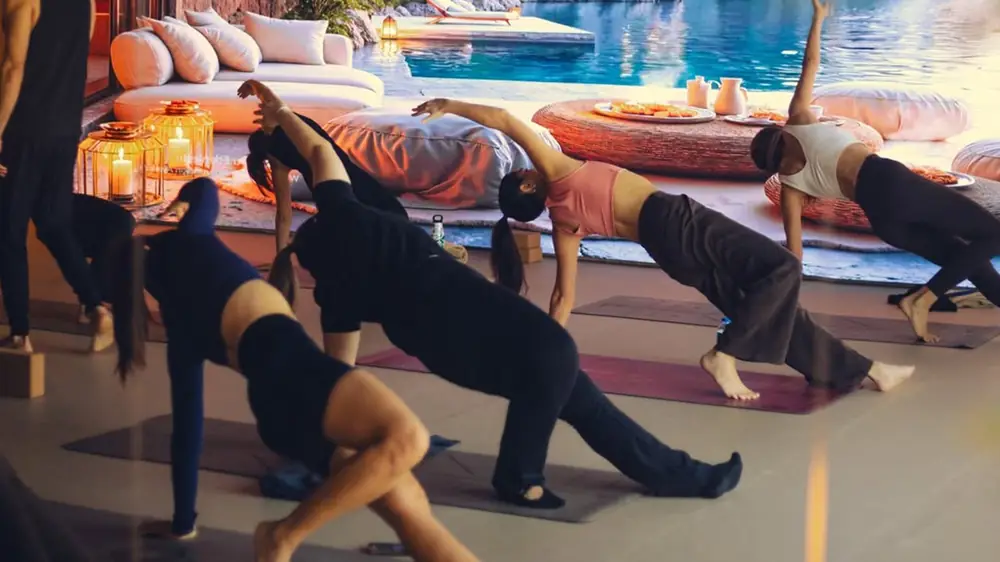
As its name suggests, balanced yoga aims to balance two different goals within one class: strength and flexibility. One part of the class is devoted to movements that demand muscle strength and endurance, such as warrior series, plank variations and balance poses, while the other part is given to slower, deeper poses that target hip, shoulder and spine flexibility. This structure aims to help participants gain both physical strength and range of motion.
The flow of a typical balanced yoga class
- Warm-up (10 min): The body is prepared with joint mobility work and light breathing exercises.
- Strength section (15-20 min): Muscle strength and endurance are worked with warrior series, plank variations and balance poses (tree, half moon).
- Transition and core work (10 min): Controlled movements targeting the deep abdominal and back muscles are added.
- Flexibility section (15-20 min): Hip-opening, shoulder-opening and spine-lengthening poses are held for medium to long durations.
- Relaxation (5-10 min): The class ends with full relaxation (savasana) lying on the back.
Comparison: balanced yoga and other types
| Feature | Balanced yoga | Vinyasa yoga | Deep stretch (yin) yoga |
|---|---|---|---|
| Tempo | Medium, variable | Medium-high, steady flow | Low |
| Main focus | Balance of strength and flexibility | Cardio, flow | Fascia, relaxation |
| Who it suits | A wide range of participants | Those wanting a dynamic class | Those focused on recovery |
For more information about other types of yoga, you can look at our group classes page.
Potential benefits
- Balanced development: Because muscle strength and flexibility are worked within the same class, the aim is a balanced physical capacity instead of one-sided development.
- Core stability: The core muscles are often engaged in both the strength and the flexibility sections.
- Joint health: Strengthened muscles support the joints while flexibility work preserves range of motion; the balance of the two matters for joint health.
- Sustainability: A tempo that is neither too intense nor too calm can make regular attendance easier.
- Mental balance: The class's changing tempo offers an experience that is both energizing and calming, which can support mental balance.
Level and modification variations
In the strength section, plank and push-up variations can be made easier by lowering the knees to the floor; in balance poses, wall or chair support can be used. In the flexibility section, props such as blocks and blankets can make the poses accessible. For experienced participants, the number of repetitions or the hold time in the strength section can be increased, and deeper variations can be tried in the flexibility section. Instructors guide these modifications by asking about your level at the start of class.
Common mistakes
- Breaking form in the strength section: As fatigue builds, errors such as a sagging lower back can appear in plank or warrior poses; in that case, taking a break matters more than continuing with poor form.
- Rushing through the flexibility section: Not giving flexibility poses enough time after the strength section reduces the class's balancing effect.
- Holding your breath: Holding the breath in both strength and flexibility movements hurts performance and relaxation.
- Skipping the warm-up: Going straight into the strength section with cold muscles raises the risk of strain.
Who it may not suit / who should be careful
People with an acute joint injury, uncontrolled high blood pressure or a heart condition should be careful in the intense movements of the strength section and lower the tempo if needed. During pregnancy, some plank and abdominal-focused movements should be modified or left out. If you have such health conditions, it is important to consult your physician before starting and to inform your instructor.
How is progress measured?
Progress in balanced yoga can be tracked by longer holds in plank or balance poses in the strength section, an increased range of motion in the flexibility section and a more balanced energy level at the end of class. Evaluating these indicators every few weeks helps you understand how effective your program is.
A sample 4-week adjustment plan
- Week 1: Attend once a week; get a feel for the overall tempo and structure.
- Week 2: Attend twice a week; focus on the poses in the strength section.
- Week 3: Attend twice a week; increase the depth of the poses in the flexibility section.
- Week 4: Attend 2-3 times a week; evaluate overall balance and endurance.
Equipment and clothing tips
No special equipment is needed for balanced yoga classes; for props such as mats, blocks and blankets, you can ask our instructors about the studio setup before class. Breathable clothes in flexible fabric give comfort in both the strength and flexibility sections. Non-slip socks or bare feet support safety in balance poses.
Combining with other classes
The balanced structure of balanced yoga makes it adaptable to both heavy training days and calmer days. After an intense Reformer Pilates session, a calmer deep stretch yoga can be chosen instead of balanced yoga; balanced yoga can be a stand-alone day or added to a medium-intensity week. For general program suggestions you can look at our group classes page.
Getting there from Beytepe and around
In balance poses, outside conditions matter as much as mental focus: in a class you enter in a rush, balance work becomes noticeably harder. The location of the Yaka Beytepe complex, close to the Hacettepe University Beytepe campus and the Çayyolu-Ümitköy corridor, offers a practical advantage here; members coming from this area can arrive a few minutes before class and catch their breath. The complex car park is an extra convenience for those arriving by car; we recommend checking current information in advance for public transport or route options.
The balanced yoga experience at O'Wellness Beytepe
O'Wellness Beytepe serves in the Yaka Beytepe complex; yoga and mobility classes take place in the O'Soul studio. You can look at our weekly schedule page for current class times and at our instructors page for information about our instructor team. We offer a free facility tour and trial session before membership; for founding membership pre-registration, you can look at our membership page.
Group class or one-to-one?
Balanced yoga is usually offered in a group format, and this format is valuable for both motivation and a sense of community. If you have a specific health condition or a very specific goal, one-on-one sessions offer a more focused way of working; for such needs, planning can be done within the personal services.
Breathing technique: an approach that changes by section
In a balanced yoga class, the breathing technique changes depending on which section of the class you are in. In the strength section the breath is more active and synchronized with the movement; for example you exhale as you move into a plank, and keep breathing steadily while holding the position. When you move into the flexibility section, the breath slows and deepens; this transition helps the nervous system shift from an active state to a calm one. Consciously telling these two breathing modes apart strengthens the balancing effect of the class.
Poses commonly used in the strength section
Warrior series often appear in the strength section: in Warrior 1, you stand with the front knee bent, the back leg straight and the arms extended overhead; this pose targets leg and core strength. In Warrior 2, the torso turns to the side and the arms open sideways at shoulder height; this calls for hip openness and balance. In plank, the body is held in a straight line with the shoulders aligned over the wrists; this pose builds core and shoulder strength. These poses are generally held for 30-60 seconds and repeated.
Poses commonly used in the flexibility section
In the flexibility section, pigeon pose is a popular choice targeting the hip external rotators; it is done with the front leg bent forward and the back leg extended behind. The seated forward fold supports hamstring and lower back flexibility. Shoulder-opening poses are done with the hands clasped behind the back or with the help of a strap. These poses are held longer than those in the strength section, generally for 60-90 seconds.
Membership and trial
Balanced yoga is part of the O'Wellness group classes program. Before deciding which membership suits you, you can try the class yourself with the free facility tour and trial session and judge the instructor's teaching style and the studio atmosphere. For current options you can look at our membership page or get in touch with us.
Conclusion
This approach, which combines strength and flexibility under one roof, is a versatile option that can serve many different goals. Balanced yoga, with its balance-based approach, offers strength and flexibility in a single class and appeals to a wide audience. Its structure, neither too intense nor too calm, is a valuable option for those who want to build a regular and sustainable practice. If you have concerns about your health, it is important to consult your physician before starting. Experiencing this balance between strength and flexibility regularly can positively affect both your performance and your everyday movement comfort in the long term.
Frequently asked questions
Is balanced yoga suitable for beginners?
Yes. The class's balanced tempo structure and modification options suit both beginners and experienced participants.
What is the difference between balanced yoga and vinyasa yoga?
Vinyasa focuses on a continuous flow synchronized with the breath, while balanced yoga divides the class into strength and flexibility sections and balances two different goals.
How many times a week should I do balanced yoga?
As a general starting point, attending twice a week can be enough to support both strength and flexibility gains; this frequency can be increased according to your personal goals.
Why choose O'Wellness Beytepe for a balanced yoga class in Beytepe?
Yoga and mobility classes are offered in our O'Soul studio; they can be easily combined with other yoga types and strength training in the same weekly program. A Mobility & Stretching class is also an option for recovery after class.
I have back pain. Can I do balanced yoga?
If you have an existing back condition, it is recommended to inform your instructor before class and consult your physician if needed; the movements can be modified according to your situation.
Over time you may notice which section, strength or flexibility, needs more development for you, and by sharing this with your instructor you can adapt the class to your goals. This mutual feedback process makes your balanced yoga practice more effective, balanced and personalized over time.
Related posts

Breathwork and Training Performance
What is breathwork and how does it affect performance? We cover diaphragmatic breathing, nasal breathing, box breathing and how to use them before and after training.
Yoga Poses for Neck and Shoulder Tension
How can yoga ease neck pain? We walk you step by step through safe yoga poses for neck and shoulder tension caused by desk-bound life.
Dynamic vs static stretching: which one, and when?
What is the difference between dynamic and static stretching, and which should you choose before and after training? We explain the science and the practice.
