
Reformer Pilates for Knee Health: Joint-Friendly Movements and Cautions
If your knees are sensitive, how can Reformer Pilates be an option? Joint-friendly movements and points of caution.
The knee is one of the joints that carries the most load and draws the most complaints. Knees that ache on stairs, stiffen after long sitting or hurt at the front after running push many people away from exercise. There is a common misunderstanding: not everyone with knee trouble should stay still. Well-chosen, controlled exercises that can be adjusted to load often help protect the joint by strengthening the muscles around it.
Reformer Pilates is an interesting option here, because the spring system lets you adjust load without forcing it. In this article we cover the knee-friendly side of the Reformer, which movements need care and what to tell your instructor before class. The text is for general information; if you have a diagnosed knee condition, always consult your physician or physiotherapist.
Why can the knee feel comfortable on the Reformer?
When you do leg-pressing movements lying on your back on the Reformer, body weight is supported. In movements such as a standing squat or lunge, the knee carries far more load. In the supine position you can adjust spring resistance in small steps, shorten the range and work at a slow tempo. This wakes the muscle while keeping the load on the joint surfaces manageable.
- Body weight is supported, so joint load can be adjusted.
- Spring resistance can be raised or lowered in small steps.
- Range of motion can be limited per person.
- A slow, controlled tempo builds muscle-nerve control.
- Foot, knee and hip alignment can be watched closely by the instructor.
The muscle groups that protect the knee
It is important to know that the knee does not work alone. The hip muscles, especially gluteus medius and maximus, prevent the knee from collapsing inward. The quadriceps at the front of the thigh guide kneecap movement, while the hamstrings behind balance the joint. The calf and ankle also take part in load transfer. Footwork and side-lying movements on the Reformer train this chain together.
| Muscle group | Role at the knee | Example Reformer movement |
|---|---|---|
| Gluteus medius | Prevents the knee collapsing inward | Side-lying leg lift |
| Quadriceps | Guides the kneecap | Footwork, controlled knee extension |
| Hamstrings | Balances the joint from behind | Leg curl variations |
| Calf and ankle | Load transfer | Heel raise sets |
| Core | Pelvic stability | Neutral pelvis work |
Knee-friendly Reformer movements
Footwork: foot positions
Footwork is the foundational section where you push the carriage with your legs. Feet can be parallel with heels on the bar or toes on the bar. What matters is that the knee tracks in line with the second toe. If the knee collapses inward, the spring is lightened or the range shortened.
Side-lying series
Side-lying leg work targets the hip abductors and indirectly protects the knee. Keeping the pelvis still, placing the foot slightly forward and keeping the movement small improve the quality of these series.
Bridge and hip work
In supine bridge movements the hips and posterior chain get stronger. Versions done with feet on the carriage together with the spring give strong hip activation without bending the knee deeply.
Situations that call for care
Some positions can load the knee more. Deep knee flexion, movements that require kneeling on the knee and twisting transitions where the knee tends to buckle need modification in people with sensitive knees. You do not have to drop these movements; reducing the range, using a pad or choosing an alternative position is often enough.
- Stop the movement if pain increases; do not push through pain.
- If you feel locking, catching or giving way, tell your instructor immediately.
- With swelling or a sense of warmth, get a physician's evaluation before exercise.
- Move slowly; speed leads to loss of control.
- Do not release suddenly on the spring system; control the return.
What to tell your instructor before class
A short but clear briefing before class improves safety significantly. Share which knee is the problem, in which movements the pain appears, whether you have had surgery or injury before and your physician's recommendations. If you consider working with a sports physiotherapist, that service is among our private services at the club.
A weekly program suggestion
The suggestion below is a general framework for a healthy person with mild knee sensitivity and no marked problem; it is not a medical prescription.
| Day | Work | Duration |
|---|---|---|
| Day 1 | Reformer: footwork, bridge, side-lying | 45-50 min |
| Day 2 | Light walk and mobility | 20-30 min |
| Day 3 | Strength: hip and core focus | 40-45 min |
| Day 4 | Rest | – |
| Day 5 | Reformer: same structure, slight progression | 45-50 min |
Ankle, hip and knee: the chain working together
The source of knee pain is often not the knee itself but the joints below and above it. If ankle movement is restricted, the knee may collapse inward to compensate. If the hip muscles are weak, the thigh rotates inward and strains the tracking of the kneecap. A good knee program therefore includes ankle mobility and hip strength as well.
Leaving the heel on the bar during footwork and bending the ankle in a controlled way is a practical drill for calf and ankle range of motion. Keeping the arch from collapsing and pressing through the three points of the foot, the big toe base, little toe base and heel, also helps knee alignment.
Common mistakes at the knee
- Locking the knee fully: Snapping the knee straight at the end of the movement stresses the joint; leave a soft bend.
- Letting the knee drift in or out of the foot line: The knee should track in line with the second toe.
- Overloading the spring: Heavy springs lead to loss of control and compensation.
- Working at too fast a tempo: The springs throw you around and the joint is not protected.
- Skipping the warm-up: Starting with cold joints and muscles can increase discomfort.
Warm-up and what to do after class
A five to ten minute light preparation before class helps nourish the knee with synovial fluid and wake up the muscles. Marching on the spot, ankle circles, a gentle hip bridge and slow knee bend and extension can be enough. After class, gentle stretching and a short walk may reduce stiffness the next day.
- Ankle circles: 10 repetitions each way.
- Gentle hip bridge: 8 to 10 slow repetitions.
- Knee bend and extension: Lying down, foot on the floor, 10 repetitions.
- Calf stretch: 30 seconds with wall support.
- Hip stretch: Gentle, within a pain-free range.
Who needs particular care?
If you have a joint replacement, advanced osteoarthritis, a recent injury, chronic swelling or a cardiovascular condition, it is essential to speak with your physician before starting. Pregnancy, hypermobility and rheumatologic conditions also require individual evaluation. In such cases one-to-one private Reformer Pilates sessions may be a more suitable start, because movements can be tailored to the person.
Protecting the knee in daily life
Knee health is not decided only in the studio. Sitting in one position for long, walking often on sloped rather than flat ground or wearing unsuitable shoes also affects load. If you walk around Eymir Lake or in the METU forest, keeping steps short on descents and not striking hard on the heel reduces load on the knee. If you work at a desk, getting up for a short walk every hour also helps nourish the joint.
How is progress tracked?
Progress in knee health is not measured only by pain going down. Comfort on stairs, getting up after long sitting, walking distance and knee control during movement are also important signs. Taking a short note every two or three weeks makes progress visible. Raise spring load only when you are pain-free and in control.
Combining the gym floor and the Reformer
For long-term knee health Reformer alone may not be enough. One or two days a week of controlled strength training, especially strengthening hip and thigh muscles, reduces load on the knee. The fitness area and the Reformer studio in the same complex are designed to make planning the two approaches together easy. The club has not opened yet; founding membership pre-registration is open.
Can I do Reformer Pilates with knee pain?
For many people it is possible with suitable adjustments, but the cause of the pain matters. Consult your physician first, then discuss movement modifications with your instructor.
Is Reformer suitable after a meniscus or ligament injury?
It depends on the stage and physician approval. During rehabilitation, the guidance of a physiotherapist and physician comes first.
My knee clicks, is that a problem?
Painless clicking is often harmless. If pain, swelling or catching accompanies it, see a physician.
How much spring should I use for the knee?
There is no single right answer. Choose a spring you can use in control and without pain that does not break form; your instructor will guide you.
How soon will I notice an effect?
It varies from person to person. With regular practice some people notice a change in the sense of control within a few weeks; this is not a guaranteed outcome.
Knee health can be supported by balanced muscles and controlled movement. With its adjustable load, Reformer Pilates can be a tool on this path, but individual circumstances always decide. You can reach our team with your questions.
Related posts
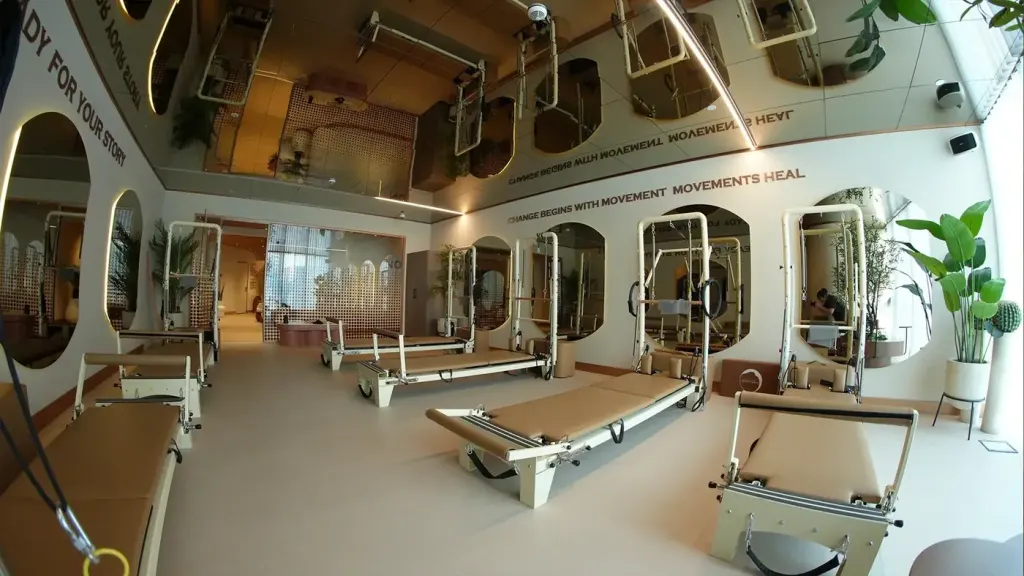
What Is a Balanced Body Reformer? Springs, Carriage and What the Settings Mean
A technical yet easy-to-follow guide to the parts of a Balanced Body reformer, the logic of its spring system and how settings are adjusted for each person.
Can People with a Herniated Disc Do Reformer Pilates? Safe Moves and What to Avoid
Is reformer pilates safe with a herniated disc? We cover safe movement categories, what to avoid, medical clearance and a sample physiotherapist-guided start.
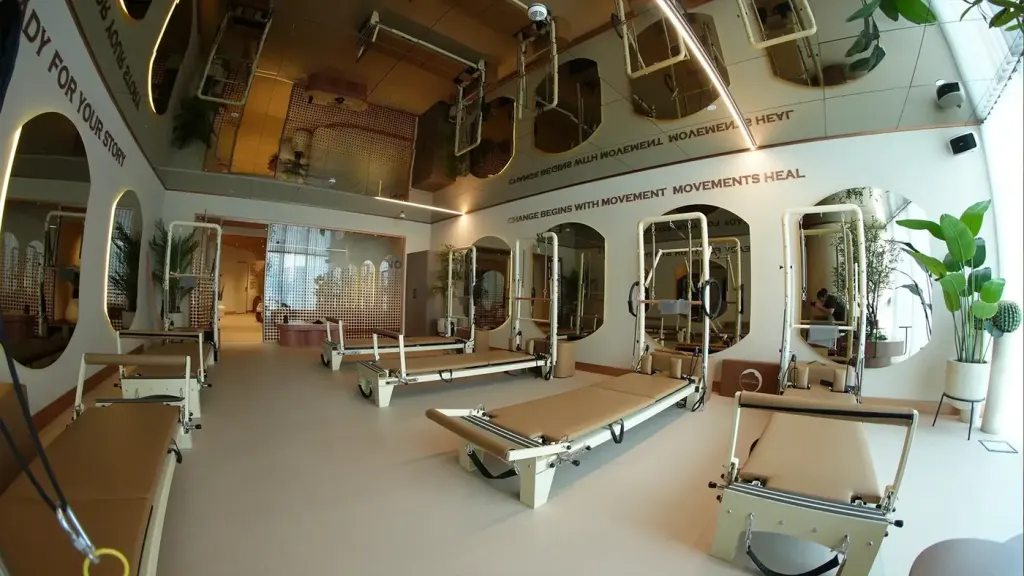
10 criteria to consider when choosing a reformer pilates studio in Beytepe
The 10 criteria to check when choosing a reformer Pilates studio in Beytepe, from equipment and class size to instructors and membership flexibility.
