
What Is a Balanced Body Reformer? Springs, Carriage and What the Settings Mean
A technical yet easy-to-follow guide to the parts of a Balanced Body reformer, the logic of its spring system and how settings are adjusted for each person.
The first time you step into a reformer studio, the machine can look a little intimidating: springs, straps, bars, rails… Understanding what a Balanced Body reformer is and how it works closes the gap between you and the equipment and increases what you get out of your sessions. In this article we introduce the parts of the machine one by one, explain the logic of the spring system, describe how adjustments are made for each person, and explain why Balanced Body's equipment is preferred in professional studios around the world.
Who is Balanced Body and why does it matter?
Balanced Body is a manufacturer with many years of history in pilates equipment, chosen by numerous professional studios and training institutions worldwide. Reformers built with precise engineering, durable materials and consistent spring resistance standards mean reliability for instructors and participants alike. A reformer's quality shows in many details, from how smoothly the carriage glides to the precision of the springs and the solidity of the frame.
The main parts of a reformer
| Part | Function |
|---|---|
| Carriage (platform) | The moving section that glides on the rail and on which the user stands or sits |
| Springs | The source of resistance; offer different tension levels according to colour code |
| Footbar | A height-adjustable bar used for pushing movements with the feet |
| Shoulder rests | Padded supports that keep the body stable in supine positions |
| Straps | Bands held by the hands or feet that provide resistance for arm and leg movements |
| Frame/rail | The fixed frame the carriage glides along |
| Headrest | An angle-adjustable section supporting the head and neck in supine positions |
How does the spring system work?
The springs are the heart of the reformer. Each spring is marked with a different colour that indicates its resistance level; as a general tendency, light colours such as yellow and red represent light resistance, while dark colours such as blue and black represent heavy resistance. However, because this coding can vary by manufacturer, it is important to learn the colour-resistance relationship from your instructor at each studio. Springs have an interesting property: in some movements a heavy spring makes the work easier, while in others a light spring demands much more control. This is the key point that sets the reformer apart from an ordinary weight machine.
The carriage: the centre of movement
The carriage is the sliding platform you stand, sit or lie on. Because it is attached to the springs, it moves against spring resistance when pushed or pulled. A quiet, smooth glide is a sign of both the machine's quality and your own form; a noisy or jerky movement usually indicates a loss of control. On Balanced Body reformers the carriage travels along the rail on a precise bearing system and delivers a consistent feel of resistance even with long-term use.
The footbar and height settings
The footbar is the basis of many movements, especially the footwork series. Its adjustable height allows people of different heights and leg lengths to work at the correct angle. An incorrectly set footbar can place unnecessary load on the knee or hip joint, so it is important for your instructor to check the settings against your body measurements in every session.
Straps: the key to arm and leg work
Straps are attached to the hands or feet and provide resistance for movements performed with the arms or legs. Strap length is adjustable, and this setting directly changes the angle and difficulty of the movement. Using the straps may feel confusing in the first sessions, but after a few classes it becomes second nature.
How reformer settings are personalised
- By height and limb length: Footbar height and strap length are adjusted.
- By experience level: Spring resistance is chosen to suit the purpose of the movement.
- By health status: Shoulder rest and headrest settings are changed for people with lower back, neck or shoulder sensitivity.
- By goal: Heavy springs and a slow tempo are preferred for strength work, light springs and a flowing tempo for endurance work.
Getting these settings right is a precondition for reformer pilates being both safe and effective. For the general principles and benefits of reformer pilates, take a look at our Reformer Pilates page.
What sets Balanced Body apart from other reformers?
There are many reformer manufacturers on the market, but not all of them offer the same level of precision and durability. Balanced Body reformers are regarded as a standard that professional studios turn to for carriage glide quality, spring consistency and structural solidity. On cheap or home models the carriage may move jerkily and spring resistance may vary, which negatively affects both safety and the quality of results. One of the advantages of training in a professional studio is that these technical details have already been thought through.
Equipment in the O'Wellness Beytepe Reformer Pilates studio
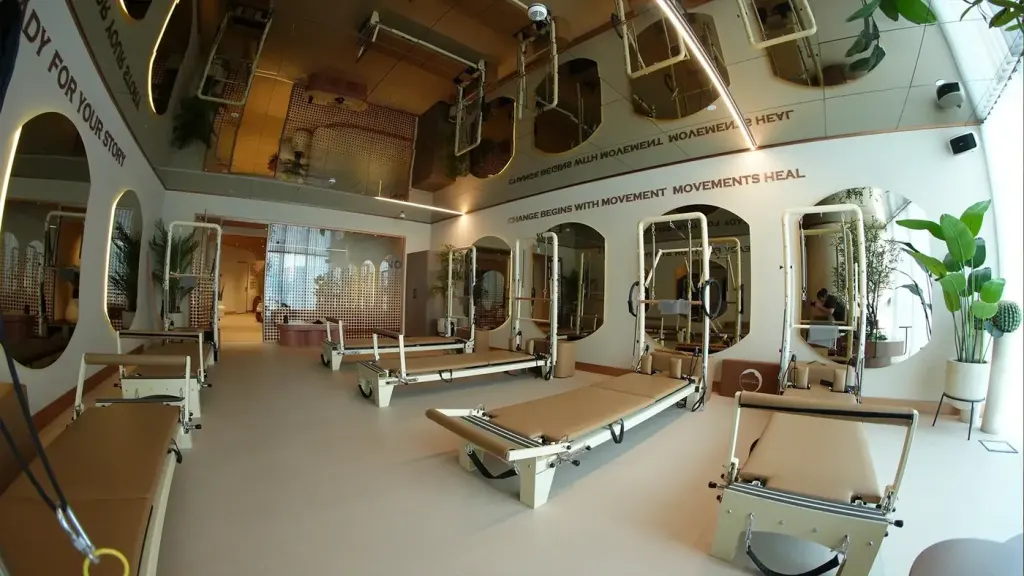
Our Reformer Pilates studio in the Yaka Beytepe complex is equipped with Balanced Body reformers. Each session is limited to a maximum of 6–8 people, so the instructor can check each participant's footbar height, strap length and spring resistance individually. Regular maintenance of the machines ensures consistent resistance and quiet, fluid movement, which means a safe and predictable training experience for beginners and advanced participants alike.
Things to watch when using the machine for the first time
- Check the straps: Make sure the strap is attached correctly before use.
- Confirm the springs: Check that the number and colour of springs your instructor recommended are attached.
- Test the carriage slowly: Feel the resistance by pushing the carriage gently before starting the movement.
- Adjust the head and shoulder rests: Make sure your neck and shoulders are comfortable.
Common technique mistakes
One of the most common mistakes beginners make is choosing the number of springs not for the purpose of the movement but to make it look harder. This both breaks form and increases injury risk. Another common mistake is leaving the straps slack, which can cause a sudden jolt during the movement. Releasing the carriage quickly and without control can also harm both the machine and your joints. Carefully following your instructor's guidance on using the machine is very important for your safety and your results.
Why does reformer maintenance matter?
On a reformer that is not maintained regularly, the springs can lose tension over time, the carriage bearings can wear and the straps can fray. This both raises the safety risk and lowers the quality of training. In professional studios, regular checks of the machines, periodic replacement of springs and consistent maintenance are the guarantee of user safety and a consistent exercise experience.
Combining reformer knowledge with other classes
Once you understand the mechanics of the reformer, you can carry the principles of control and alignment you have learned into classes such as Mat Pilates in the O'Soul studio. When planning your week, you can see suitable times on our weekly schedule page and get to know our team, who know the machine mechanics well, on our coaches page.
Reformer types: studio, home and clinical models
Manufacturers such as Balanced Body produce reformer models for different purposes. Studio reformers have a reinforced frame and wider spring options for intensive, continuous use. Home models are usually more compact and foldable, designed with individual use in mind. Clinical or rehabilitation models may have additional safety features and finer resistance increments. The machines used at O'Wellness Beytepe are professional studio models designed for busy group classes and one-to-one sessions.
How spring number and combinations affect movement
A reformer usually has four to five springs, which can be used in different combinations. For example, two light springs create a different feel of resistance and a different stability demand than a single medium spring. Instructors change the spring combination according to the target muscle group and the purpose of the movement. This flexibility is one of the main reasons the reformer can be used across such a wide range, from rehabilitation to advanced performance work.
Developments in machine technology
In recent years reformer manufacturers have focused on improving carriage bearing systems to achieve quieter, smoother movement. Some models have also started using micro-adjustment systems that allow much finer control of spring tension. Although these developments improve the user experience, the basic principle remains the same: exercise centred on the core muscles, performed on a moving platform with controlled resistance.
How understanding the machine improves training quality
Participants who understand how the reformer works perform movements more consciously and internalise the instructor's cues more quickly. For example, knowing why the cue to release the spring with control matters means it is applied as a logical principle rather than a memorised rule. Over time this awareness turns into safer, more effective and more enjoyable training.
Commonly confused terms in reformer equipment
- Reformer versus Cadillac (trapeze table): The Cadillac is a separate pilates apparatus that works with overhead bars and springs; it offers a different movement repertoire from the reformer.
- Reformer versus Chair: The pilates chair is a more compact machine focused on balance and strength work; it does not offer as wide a range of movements as the reformer.
- Carriage versus platform: The two terms are often used interchangeably; both refer to the sliding moving part.
Frequently asked questions
Why is the Balanced Body reformer considered higher quality than other brands?
Its production to professional standards in carriage glide, spring consistency and structural durability makes the brand a name that studios prefer.
Do spring colours mean the same resistance on every reformer?
Although there is a general tendency, the relationship between colour and resistance can vary by manufacturer, so it is important to get the correct information from your instructor at each studio.
Can I adjust the reformer settings myself?
In the first sessions it is recommended that your instructor makes the adjustments; as you gain experience you will be able to make the basic settings yourself.
Where can I train on a Balanced Body reformer in Beytepe, Ankara?
The O'Wellness Beytepe Reformer Pilates studio in the Yaka Beytepe complex is equipped with Balanced Body reformers, and sessions run with a maximum of 6–8 people.
How many people can use one reformer at the same time?
Each machine is designed for one person; group classes are run with several machines in the same studio.
To get to know Balanced Body reformers up close, schedule your free facility tour and trial session via our contact page.
Related posts
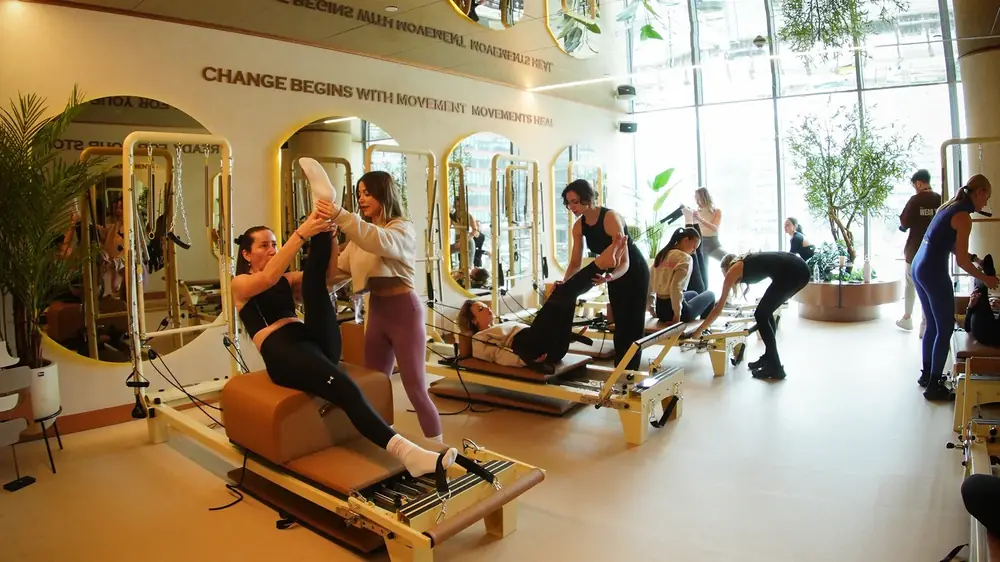
Does Reformer Pilates Help You Lose Weight? The Facts on Calories, Muscle and Body Composition
Does reformer pilates help you lose weight? A realistic answer covering calorie burn, muscle mass, metabolism and body composition, plus the right combinations for weight management.
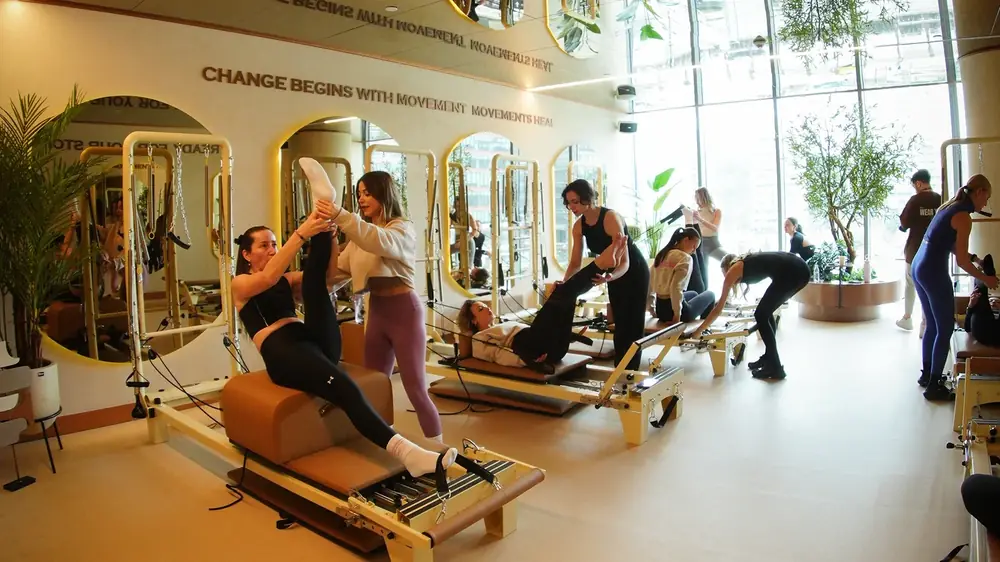
Reformer Pilates for Poor Posture: Movements for Kyphosis and Lordosis
We explain the reformer movements that target kyphosis and lordosis in a pilates approach to poor posture, a sample program and the points to be careful about.
Reformer Pilates for Scoliosis: An 8-Week Approach to Spinal Symmetry
With adjustable springs and one-sided work, Reformer Pilates supports muscular balance around a scoliotic spine. We look at an 8-week staged framework.
