
Is Muscle Soreness After Reformer Pilates Normal? Recovery Tips
Muscle soreness after Reformer Pilates is usually a harmless adaptation response. We explain the causes, how to recognise pain that needs attention and the methods that speed up recovery.
If you felt an unexpected burning in your legs while walking down the stairs the day after your first Reformer Pilates class, you are not the only one. Muscle soreness after Reformer Pilates is a common and mostly harmless reaction, especially among beginners and those returning after a long break. Still, knowing which pain is ordinary and which needs attention is important if you want to keep up your exercise habit. In this article we explain the physiological cause of this soreness, how to tell ordinary muscle soreness from pain that needs attention and practical methods that speed up recovery.
The scientific name for this pain: DOMS
In sports science this delayed soreness, which appears 24-72 hours after exercise, is called delayed onset muscle soreness (DOMS). When a muscle meets a load it is not used to, especially eccentric contraction (the muscle producing force while lengthening), microscopic damage occurs in the muscle fibres and the body responds with an inflammatory reaction. Because Reformer Pilates works the muscles both as they shorten and as they lengthen against the controlled resistance of the springs, it is entirely expected for it to trigger this response, particularly in beginners.
Why does Reformer Pilates in particular cause DOMS?
Many movements on the reformer include an eccentric phase in which the muscle lengthens under load; slowly bringing the leg back against the spring in footwork or returning the carriage under control in long stretch are examples. This controlled deceleration creates more micro-strain in the muscle fibres than fast, explosive movements. In addition, because the reformer isolates deep core muscles and hip stabilisers that are rarely used in daily life, soreness in these areas can feel more pronounced.
Where is soreness felt most?
| Area | Why |
|---|---|
| Inner thigh (adductors) | Continuous activation in movements such as footwork and leg circles |
| Abdominals (rectus and obliques) | Repeated isometric load in the Hundred and core series |
| Hips (gluteal muscles) | Extension work in bridges and side-lying leg series |
| Upper back and shoulders | Scapular stabilisation in the strap series |
Distinguishing ordinary soreness from pain that needs attention
Knowing this difference helps you understand when you can carry on and when you should stop and get assessed; when in doubt, it is always safer to be cautious.
- Ordinary DOMS: A dull, diffuse ache or stiffness felt in the belly of the muscle that eases with movement and resolves on its own within 24-72 hours.
- Pain that needs attention: Sharp, stabbing or electric-shock-like pain; pain concentrated in one spot; swelling, redness or bruising; pain that worsens with movement or lasts longer than a week.
If you notice any of the signs in the second group, it is important to stop exercising and consult your doctor; it could be a sign of injury.
Methods that speed up recovery
1. Light movement (active recovery)
Rather than staying completely still, a short walk, easy cycling or low-intensity stretching supports recovery by increasing blood flow to the muscles. Loading the same muscle group heavily again while soreness is severe is not recommended.
2. Hydration and nutrition
Drinking enough water and getting enough protein are the fundamental elements that support muscle repair. A balanced meal after training helps the inflammatory process run its natural course.
3. Heat and cold
A hot shower can reduce muscle tension and boost circulation, while cold can be preferred to ease an acute feeling of swelling. You can try both depending on personal preference.
4. Gentle stretching
Stretching sore muscles softly, without forcing them, can bring relief. Static stretches should be performed below the pain threshold, within a range that feels comfortable.
5. Sleep
A large part of muscle repair takes place during deep sleep. Regular and sufficient sleep is one of the most important factors directly determining how fast you recover.
A step-by-step recovery protocol
- 0-24 hours: Light movement, plenty of water and balanced nutrition. A hot shower can help if soreness is intense.
- 24-48 hours: An easy walk or low-paced cardio; gentle stretching for the sore areas.
- 48-72 hours: Soreness usually starts to fade in this window; the same muscle group can be trained again at light intensity.
- After 72 hours: If the pain is still severe or getting worse, a medical assessment is recommended.
Preventive steps to reduce DOMS
- Starting gradually: Working with low to moderate spring resistance in the first classes limits sudden micro-damage.
- Attending regularly: Muscles adapt to repeated stimuli; DOMS clearly decreases over time in members who come regularly (this adaptation is known as the "repeated bout effect").
- Warming up before class: Low-intensity opening movements such as footwork prepare the muscles.
- Cooling down after class: Not skipping the stretching at the end of class reduces sudden muscle tension.
A typical experience
The experience of a member trying Reformer Pilates for the first time, who has not exercised regularly for a long while, usually goes like this: they feel no discomfort during class, but the next morning notice clear stiffness in the inner thighs and abdomen. Walking downstairs or getting up from a chair may become harder. This is a typical DOMS picture and usually eases markedly by the third day. Our instructors suggest such a member continue in the second class with lower spring resistance and fewer reps; by the third and fourth weeks the same movements cause much less soreness. This is a classic example of the adaptation called the "repeated bout effect": each time the muscle meets the same stimulus again, the damage and inflammatory response become a little milder.
Who experiences more severe DOMS?
- People who have been inactive for a long time: Because the muscle-tendon unit is not used to working under load, soreness may be more noticeable in the first classes.
- Those coming from another sport: Someone who only does cardio, for example, may not be used to the isometric and eccentric loads on the reformer.
- Those returning after a long break: Because the muscles have lost part of their earlier adaptation, soreness can become prominent again in the first classes after a break.
- People learning new movements: An unfamiliar movement pattern can cause more micro-damage to muscle than a familiar one.
A practical way to tell DOMS from a real injury
A simple check is to see whether the pain is symmetrical: DOMS is usually felt on both sides and diffusely in the muscle groups that were trained. Pain that is one-sided, concentrated around a joint or suddenly sharpens with movement may point to a soft tissue or joint problem rather than muscle soreness. Also, while DOMS eases as the days pass, in a genuine injury the pain may stay the same or increase. If in doubt, consulting your doctor is the safest course so you do not take risks.
The link between nutrition and recovery
It is generally accepted in physiology that adequate protein after training supports muscle repair. Adequate carbohydrate, meanwhile, helps refill muscle glycogen stores. The most sensible approach is to ignore exaggerated claims that a particular food or supplement "cures" DOMS and to focus on balanced, varied nutrition. You can get support from our dietitian for a nutrition plan tailored to you.
When should you take a break from class?
Continuing class with mild to moderate DOMS is generally safe; your instructor can lighten the spring resistance or exercise selection for that day. However, if there is joint pain, swelling or a clear restriction in range of motion, it is wiser to skip a class and, if necessary, get assessed by our sports physiotherapist.
Supporting recovery with other classes
On sore days, choosing a low-intensity, low-impact activity rather than staying completely still can make recovery easier. Gentle, stretch-focused classes such as Deep Stretch Yoga in the O'Soul studio help you maintain range of motion without tiring the muscles. Once the soreness has fully passed, you can support your mobility with a Mobility & Stretching class. Joining high-intensity classes such as O'Hiit while DOMS is severe is not recommended.
Not confusing chronic pain with DOMS
By definition DOMS is temporary and rarely lasts more than a week. Pain that persists for months, comes and goes or is retriggered by specific movements may indicate a chronic musculoskeletal problem rather than muscle soreness; in that case you should get a medical or sports physiotherapy assessment before continuing with Pilates. We recommend that members with a history of chronic back, knee or shoulder pain take their first sessions one-to-one in the Private Reformer Pilates format at low intensity.
Realistic expectations for beginners
Muscle soreness after the first 2-3 classes is extremely common and usually decreases markedly toward the third or fourth week. It is a sign that your body is adapting to new movement, not an indicator of failure. Being patient and attending regularly speeds up both adaptation to soreness and movement quality. Many members notice by their fifth or sixth class that a session of the same intensity now leaves far less soreness; this is concrete proof that the body has got used to the new movement pattern.
Recovery support at O'Wellness Beytepe
In O'Wellness Beytepe's Reformer Pilates studio, equipped with Balanced Body reformers and limited to 6–8 people per session, our instructors closely monitor beginners' spring resistance and reps and increase them gradually; this approach lowers the risk of excessive DOMS. For post-class recovery, light stretching, plenty of water and good sleep help the muscles relax. If your soreness lasts longer than expected, you can be assessed by our sports physiotherapist. You can find the fundamentals of Reformer Pilates on our Reformer Pilates page.
Frequently asked questions
My soreness has not gone away three days after my first reformer class. Is that normal?
Pain that lasts longer than three days, does not ease or gets worse may be beyond the normal limits of DOMS. In that case we recommend consulting your doctor.
Can I go back to class while my muscles are sore?
With mild to moderate soreness, usually yes; let your instructor know so the spring resistance can be lightened. With sharp or joint-related pain, a break from class is recommended.
Can I take painkillers?
Over-the-counter painkillers can be used in some cases, but regular use is not recommended and may mask an underlying problem. If the pain persists, consult your doctor.
What recovery options are there after Reformer Pilates in Ankara Beytepe?
Light stretching, the Mobility & Stretching class and Deep Stretch Yoga can support recovery, and you can also get sports physiotherapy support at O'Wellness Beytepe.
I never get sore. Is that normal?
Yes, not everyone experiences DOMS to the same degree; in members who attend regularly the muscles adapt, so soreness decreases over time or may not be felt at all. This does not mean the class is ineffective.
Get in touch to manage your recovery the right way; receive personalised advice from our instructors during your free trial session.
Related posts
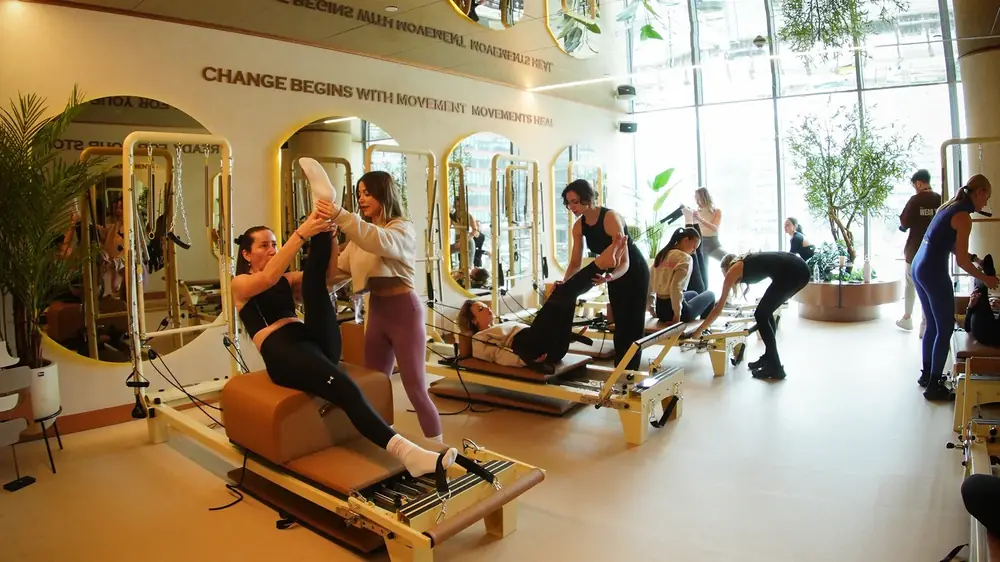
Laptop Shoulders: Posture Support with Reformer Pilates
Hours of leaning toward a screen can carry the shoulders forward and the head ahead. We explain how reformer pilates' controlled pulling and opening movements can support posture.
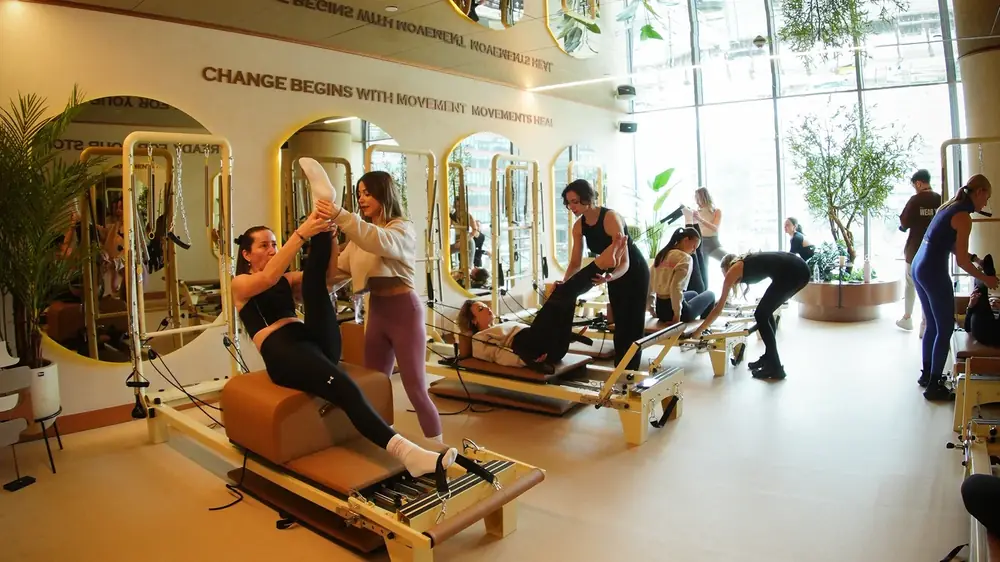
Reformer Pilates Levels: What Changes at Beginner, Intermediate and Advanced?
We explain Reformer Pilates levels through spring resistance, movement speed and repertoire complexity, and when to move up to the next level.
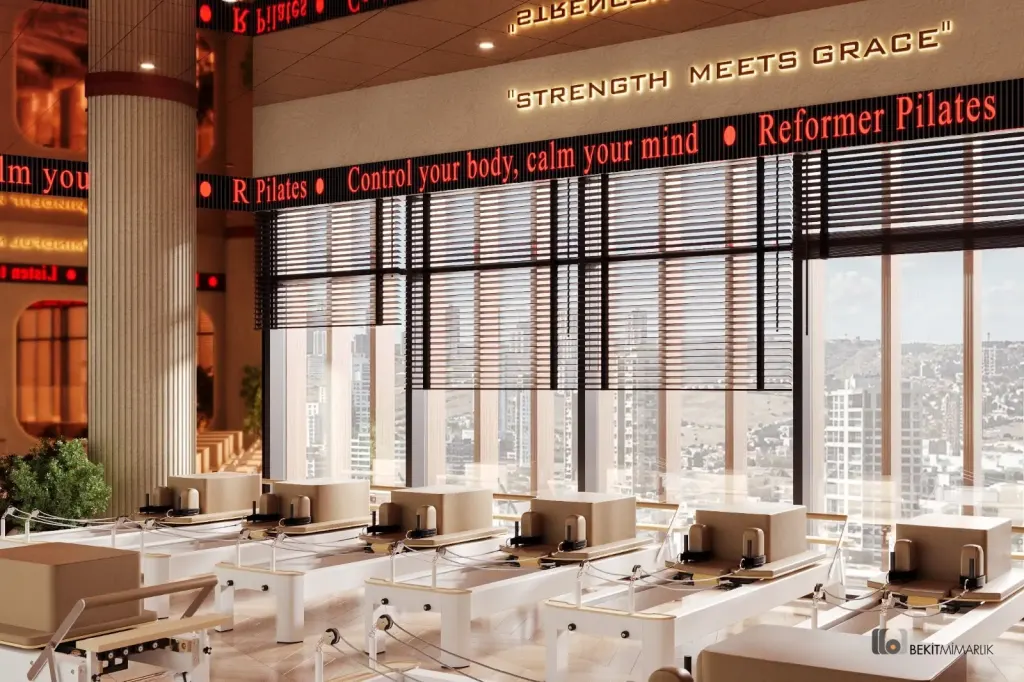
Reformer Pilates for Desk Workers: Neck, Shoulder and Hip Balance
What long sitting does to the neck, shoulders and hips, and the support Reformer Pilates can offer for these imbalances.
