
Reformer Pilates for Desk Workers: Neck, Shoulder and Hip Balance
What long sitting does to the neck, shoulders and hips, and the support Reformer Pilates can offer for these imbalances.
For those who spend eight, nine or even ten hours of the day in front of a screen, the shoulders round forward, the neck juts out, the hips shorten and the back stiffens. The tiredness you feel on the way home is not only mental; it is also the result of muscles working in the same position for hours. If you work along the Cayyolu, Umitkoy or Eskisehir road corridor in Ankara with a busy schedule, this picture may feel familiar.
Reformer Pilates can be a good complement to this picture, because it moves the spine, balances the shoulder girdle and works the core while lengthening the hips. In this article we explain what role the Reformer can play for desk workers, which movements stand out and what extra measures you can take during the office day. Our Beytepe Reformer studio will open very soon; founding membership pre-registration is under way.
What long sitting leaves in the body
In a seated position the hip flexors stay shortened. The gluteal muscles remain passive for long periods. The chest muscles pull forward and the upper back muscles are stretched. The neck juts forward to see the screen, and every centimeter of forward shift adds load to the neck muscles. These changes do not form in a day; they become habits over years.
| Area | Effect of sitting | Reformer goal |
|---|---|---|
| Neck | Forward drift, tension | Neck length, shoulder girdle control |
| Shoulders | Rounding forward | Scapular stability, chest opening |
| Upper back | Tendency to hunch | Thoracic spine mobility |
| Hip flexors | Shortening | Lengthening and hip opening |
| Gluteal muscles | Inactivity | Activation and strength |
| Lower back | Fatigue | Support from the core |
The table summarizes general tendencies. Every body is different, so it helps to discuss your posture and daily habits with your instructor in the first session.
Why is the Reformer suitable for desk workers?
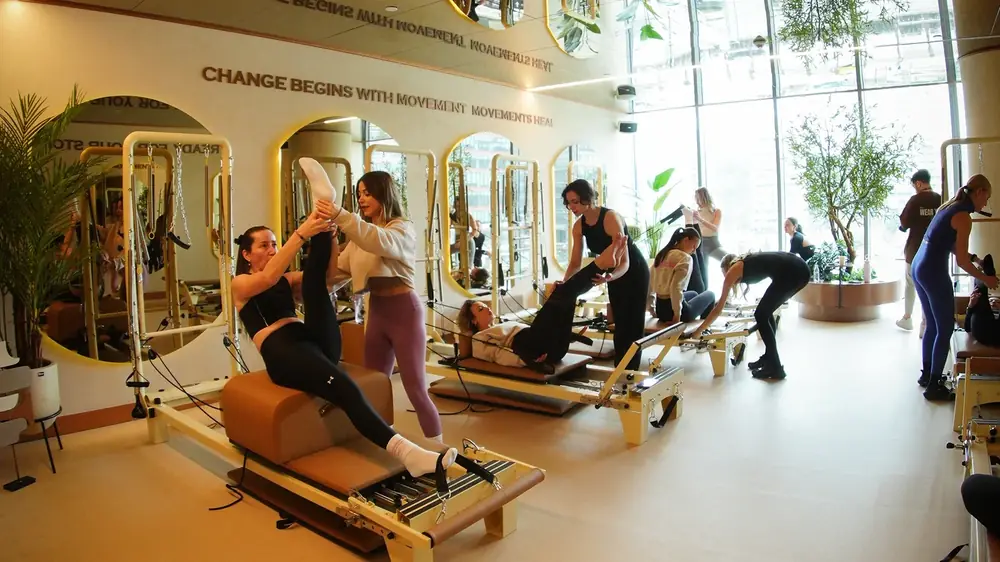
On the Reformer you work in different positions: lying on your back, on your front, on your side and on your knees. This variety offers new movement paths to a body that stays in one position all day. Spring resistance challenges the muscles safely while the movement of the carriage provides gentle support to the joints. Small-group or one-to-one structure also allows the instructor to notice and correct postural faults.
Movements for the neck and shoulder girdle
- Arm series: Movements with straps strengthen the shoulder girdle and stabilize the shoulder blade.
- Chest-opening variations: Carry rounded shoulders back.
- Spine extension movements: Mobilize the thoracic spine.
- Prone back work: Strengthens the back extensors and lower trapezius.
- Neck length work: Lengthening the back of the neck by gently tucking the chin.
In neck and shoulder work, the aim is not to strain muscles but to re-teach proper sequencing. Keeping the shoulders away from the ears, drawing the shoulder blades gently down and back and keeping the neck long are the three core goals of this work.
Hip flexors and gluteal muscles
Long sitting shortens the front of the hip while numbing the back. Lunge-like movements, extensions done on the knees and bridge variations on the Reformer help correct this imbalance. The front of the hip lengthens as the back works, which can support lower back comfort by preventing an exaggerated lumbar curve.
A weekly plan that fits a work schedule
| Day | Session | Focus |
|---|---|---|
| Monday | Reformer (50 min) | Shoulder girdle and thoracic spine |
| Tuesday | 10-min office break | Hip and neck mobility |
| Wednesday | Reformer or strength | Hips and core |
| Thursday | Walking | Active rest |
| Friday | Reformer (50 min) | Full-body balance |
| Weekend | Nature walk | Outdoors and relaxation |
Two or three Reformer sessions a week is a sustainable start for most people. Before increasing sessions, watch how your body responds. Depending on workload you can place sessions at lunch or after work; check the weekly schedule page for current class times.
Micro-breaks you can do at the office
While a Reformer session happens a few times a week, desk habits cost you hours every day. Small breaks reduce that cost. Standing up each hour for a minute or two of movement can often be a more effective support than one long exercise session.
- Stand up and gently push the hips forward to open the chest (30 seconds).
- Lift the shoulders toward the ears and release (5 repetitions).
- Tuck the chin slightly and lengthen the neck (5 repetitions).
- Place one hand on a wall and open the chest (20 seconds each side).
- Do ankle circles and walk a few steps.
Stress, breath and shoulder tension
A busy work pace affects not only posture but muscle tone too. Under stress the shoulders rise, the jaw clenches and breathing becomes shallow. Over time this turns into chronic tension. The flowing work on the Reformer, where breath is matched to movement, draws attention to the body and makes this tension easier to notice. Even noticing how many times your shoulders rise during a session gives valuable awareness for catching yourself during the day.
What can you expect in the first session?
In the first session the instructor usually gets to know you briefly, asking about your work routine, pain areas, past injuries and goals. Then they introduce basic positions, the parts of the Reformer and breath patterns. It matters not to rush at this stage. In the first weeks the goal is not to feel very tired but to learn the movements correctly.
- Wear comfortable, fitted clothing that does not slip.
- Prepare Pilates socks or the footwear the studio recommends.
- Avoid a heavy meal before the session; a light snack is enough.
- Mention shoulder and neck tension to the instructor when coming from work.
- Silence your phone and arrive mentally.
Progress and expectations
Because desk habits form over years, expecting a big change in a few sessions is not realistic. Most people first gain awareness: they notice how they sit, check their shoulders and begin to feel their breath. Then movements become easier and strength increases. With regular attendance you may see this change reflected in your posture through the day. Results vary from person to person and cannot be guaranteed.
Extra notes for remote workers
If you work from home, opportunities to move may shrink even more; the commute walk disappears and the few steps between kitchen and desk become your only movement. You then need to place conscious movement in your day: small changes such as taking calls standing, going outside at lunch and using a surface you can work at while standing add up. Planning weekly Reformer sessions as a fixed calendar item is the most practical way to stay consistent.
A small reminder: doing the same two-minute break every day builds more habit than one long session a month. Add the breaks to your calendar or phone reminders, start with just two movements if you struggle in the first weeks, and add variety over time.
Ergonomics tips
- The top edge of the screen should be at or slightly below eye level.
- Elbows at about 90 degrees with relaxed shoulders.
- Feet flat on the floor; use a small support if needed.
- Consider back support behind the lower back.
- When using the phone, bring it to eye level rather than bending the neck.
When should you see a specialist?
If neck and shoulder pain is accompanied by numbness or tingling in the arms, severe headaches or pain that wakes you at night, get a physician's evaluation before starting exercise. Reformer is not a treatment method; it is a supportive movement practice. If you would like to work with a sports physiotherapist, you can find this option among our private services.
Reformer and strength training together
For desk workers the ideal balance is combining the posture and control work the Reformer offers with strength training in the fitness area. Loading the back, hip and leg muscles supports posture. Having the Reformer studio and the fitness area in the same complex makes after-work planning easier.
Remember: the goal is not a perfect posture but a more varied and less painful day. Posture is less a fixed shape than the ability to change positions often and move comfortably between them. The best sitting position is the next one.
Does Reformer Pilates cure desk-related aches?
It does not cure them, but if practiced regularly and correctly it can bring relief by supporting postural awareness and muscle balance. If pain persists, consult your physician.
How many sessions a week are enough?
Two or three sessions a week is a sustainable start for most people. Supporting them with daily micro-breaks is helpful.
Will I get the same result from Mat Pilates?
The two methods complement each other. The Reformer offers spring support and resistance, while mat work relies on body weight. You can combine both according to your goal.
Can I do Reformer during lunch?
It depends on session length and the schedule to be announced when the club opens. You can follow the weekly schedule page for current information.
Which movements should I avoid for neck pain?
Avoid movements that strain the neck by pulling the head, and tell your instructor in advance; movements are adapted to the person.
You cannot undo the effects of desk work with a single session, but with regular, conscious and varied movement you can balance habits that work against you. You can contact us for founding membership pre-registration.
Related posts

How to Measure Progress in Reformer Pilates: Spring Load, Control and Logs
How do you track progress in Reformer Pilates through form, control, breath and spring load? A guide to plateaus and tracking logs.
The Reformer Short Box Series: Trunk Control on Top of the Box
The short box series is a set of trunk movements performed seated on a box placed on the reformer. We explain the movements, the setup, and the common mistakes.
Reformer Pilates for Scoliosis: An 8-Week Approach to Spinal Symmetry
With adjustable springs and one-sided work, Reformer Pilates supports muscular balance around a scoliotic spine. We look at an 8-week staged framework.
