
Strength Training Guide: Core Principles and a 12-Week Plan for Beginners
How to start strength training, which movements matter most and how to build a plan for measurable results in 12 weeks: a complete guide from O'Wellness Beytepe.
Strength training is one of the most rewarding investments you can make in muscle mass, bone density, metabolism, posture and overall quality of life. Even so, a large share of gym newcomers either get injured or lose motivation within the first three months because they do not see the results they expected. Behind this there is almost always the same trio: there is no plan, technique has not been established and progress is not measured. In this guide we explain, step by step, the approach we follow with new members at O'Wellness Beytepe.
Why does everyone need strength training?
From the age of 30, roughly 3–8 percent of muscle mass is lost every decade, and this loss accelerates markedly after 60; medicine calls this sarcopenia. Strength training is the best-proven method to slow this process and even reverse it. Muscle tissue is also metabolically active: more muscle means burning more energy even at rest and controlling blood sugar better. The positive effects on bone density, joint stability, low back pain, sleep quality and mood are backed by a broad scientific literature. In short, strength training is not a bodybuilding hobby; it is the infrastructure of health.
Fundamental movement patterns
Instead of memorising hundreds of exercises, learning six basic movement patterns is enough; every programme you will encounter is really built from variations of these patterns.
| Pattern | Example exercises | Main muscles |
|---|---|---|
| Squat | Goblet squat, back squat, leg press | Quadriceps, glutes, core |
| Hinge | Romanian deadlift, kettlebell swing, hip thrust | Hamstrings, glutes, back |
| Push | Push-up, bench press, overhead press | Chest, shoulders, triceps |
| Pull | Row, lat pulldown, pull-up | Back, biceps, rear delts |
| Lunge (single leg) | Split squat, step-up, walking lunge | Legs, glutes, balance |
| Carry / core | Farmer's carry, plank, Pallof press | Core, grip, shoulders |
Progressive overload: the one rule of progress
Muscles only develop when they are pushed slightly beyond the load they are used to. You create this small surplus with three variables: load (lifting heavier), volume (more sets or reps) and density (shorter rest, cleaner technique). A practical rule for beginners: if you reach the top of the target rep range with clean technique in every set of an exercise, increase the load by 2.5–5 percent in the next session. If technique falls apart when you add weight, it is still too early to progress.
How many sets and reps?
- Strength: 3–5 sets × 3–6 reps, 2–3 minutes of rest between sets (for advanced lifters).
- Hypertrophy (muscle mass): 3–4 sets × 8–12 reps, 60–90 seconds of rest.
- Endurance: 2–3 sets × 15–20 reps, 30–60 seconds of rest.
Beginners are advised to stay in the 8–12 rep range for the first 12 weeks; in this range technique settles in and the risk of injury stays low. Total weekly volume should be kept at around 10–16 sets per muscle group.
Full body or split?
If you train 2–3 days a week, a full body programme in which you work every pattern each session is the most efficient choice; each muscle group is stimulated 2–3 times a week, which is the ideal frequency for beginners. Those training four or more days a week can move to an upper/lower split. More divided programmes such as push/pull/legs are aimed at the high volume needs of advanced athletes.
12-week starter plan
The plan below runs three days a week (for example Monday, Wednesday and Friday), and each session lasts 50–60 minutes. Every workout starts with the 8-minute dynamic warm-up described in the warm-up section.
Phase 1 — Technique and habit (weeks 1–4)
- Goblet squat 3×10
- Romanian deadlift (dumbbell) 3×10
- Push-up or incline push-up 3×8–12
- Seated cable row 3×12
- Split squat 2×10 (each leg)
- Plank 3×30 s and farmer's carry 3×30 m
The goal of this phase is to perform every movement in a controlled way and through the full range of motion. The load you use should make the last two reps of each set challenging.
Phase 2 — Load progression (weeks 5–8)
- Back squat or leg press 4×8
- Trap bar deadlift 3×6–8
- Dumbbell bench press 3×8–10
- Lat pulldown 3×10 and single-arm row 3×10
- Hip thrust 3×10
- Pallof press 3×12 and dead bug 3×10
Phase 3 — Consolidation and testing (weeks 9–12)
- Phase 2 exercises continue; the load rises by 2.5–5 percent every week.
- In week 11, volume is reduced by 30 percent (deload week).
- In week 12, 5-rep max tests are done for squat, deadlift, press and row, and the results are compared with the day-one measurements.
At O'Wellness Beytepe you can follow this plan one-to-one with personal training, or support it with group classes such as Total Body.
Warm-up and cool-down
Do not warm up with static stretching. Our recommended 8-minute dynamic warm-up is: 2 minutes of light cardio (bike or rower), hip circles, cat-cow, the world's greatest stretch, band pull-aparts, glute bridges and then two light warm-up sets of the first exercise. For the cool-down, 5 minutes of walking and 30-second static stretches for the major muscle groups are enough. Adding one Mobility & Stretching or Deep Stretch Yoga session per week speeds up recovery.
A note for women: the fear of bulking up
Testosterone levels in women are about one tenth of those in men, so lifting heavy does not create a bulky look; on the contrary, it produces a firm and toned physique. Strength training is especially important for women in terms of preserving bone density, countering the muscle loss that accelerates around menopause and supporting metabolism. Programmes are shaped by the person's goal, not by gender.
Nutrition and recovery
Muscle growth is triggered in the gym, but the actual building happens in the kitchen and during sleep. Without 1.6–2.0 grams of protein per kilogram per day, enough total calories and 7–9 hours of sleep, even the best programme will not work. You can find more detail in our nutrition and recovery articles, and the dietitian service at O'Wellness Beytepe aligns your nutrition plan with your training.
Measuring progress
Log every session: the exercise, the load used, sets and reps, and your perceived exertion on a 1–10 scale (RPE). Take a body composition measurement and photos every four weeks, and do 5RM tests every 12 weeks. The scale alone can be misleading; your weight may stay the same while you gain muscle and lose fat.
7 common mistakes
- Following a different programme every session, which makes progress impossible to measure.
- Adding load before technique is established.
- Neglecting leg and back patterns and training only chest and arms.
- Getting lost in your phone between sets and stretching rest periods.
- Not eating enough protein.
- Skipping deload weeks; volume should be reduced every 8–10 weeks.
- Dropping cardio completely; two short cardio sessions a week support recovery and heart health.
How muscles grow: why does it work?
Understanding how strength training works makes it easier to stick with a programme. When a muscle fibre works under more tension than it is used to, small structural damage occurs at a microscopic level. While repairing this damage, the body rebuilds muscle proteins such as actin and myosin thicker and stronger; this process, called muscle protein synthesis, largely takes place in the 24–48 hours after training. During the same period the nervous system adapts too, and the brain learns to send stronger, better synchronised signals to the relevant muscle fibres. Most of the rapid strength gain in the first weeks comes not from muscle growth but from this neural efficiency. When bone tissue is loaded, osteoblast activity increases and bone mineral density is supported over time; this effect is particularly valuable for women and people past middle age. The positive effect of strength training on insulin sensitivity and blood sugar balance also comes from muscle being an active metabolic organ. All of these mechanisms depend on one condition: sufficient stimulus, sufficient rest and consistency. If you have a specific health concern, we recommend consulting your doctor before you start.
Free weights or machines? Choosing equipment at Beytepe
The strength and cardio area of O'Wellness Beytepe, together with the functional area featuring sleds, kettlebells and TRX, is designed for strength and core work; dumbbells, kettlebells, barbells, resistance bands and machines are all under one roof. The real question here is not which is better, but which to use at which stage.
| Criterion | Free weights | Machines |
|---|---|---|
| Balance and stabilisation | High demand, more muscles involved | Low demand, movement on a fixed track |
| Learning curve | Longer, technique is decisive | Short, learned quickly |
| Suitability after injury and for beginners | Suitable with supervision | Usually a safer starting point |
| Isolated muscle work | Limited | High (e.g. leg extension, lat pulldown) |
| Advanced load progression | Almost unlimited potential | Limited by machine capacity |
Practical advice: learn the basic patterns with machines and light free weights during the first 4–6 weeks, then gradually increase the share of free weights. In personal training sessions our coaches tailor equipment choices to your goal.
Programme variations by level
Beginner (0–6 months of experience)
At this stage the priority is technique and movement quality. A full body programme 2–3 days a week, an 8–12 rep range, mostly machine-based exercises and plenty of practice reps are recommended. Load increases should be limited to 2.5–5 percent per week.
Intermediate (6 months to 2 years of experience)
Technique is now established; next come volume and variety. A four-day upper/lower split, mixed rep ranges (3–6 and 8–12) and regular deload weeks suit this stage. The share of free weights can be increased.
Advanced (more than 2 years of experience)
Because progress slows, more detailed periodisation is needed: a 5–6 day push/pull/legs split, block periodisation made up of strength, hypertrophy and power blocks, and regular 1RM/3RM tests. At this level, support from personal training or the Athletic Performance service prevents progress from stalling.
Adaptations for over-40s and special situations
The benefits of strength training do not decline with age; they become even more important, but the programme must be adapted to age and health history. For members over 40, the warm-up should be longer, load should increase more slowly and more time should go to mobility; the Mobility & Stretching class is a good complement here. In women going through menopause, bone loss can accelerate, so load-bearing movements such as squats, hinges and carries should sit at the centre of the programme. People who have had back, knee or shoulder surgery, live with chronic joint problems, are pregnant or postpartum, or have a history of cardiovascular disease should always consult their doctor before starting and, if necessary, progress under the guidance of a physiotherapist. The sports physiotherapist service at O'Wellness Beytepe works with our coaches to keep the programme within safe limits in such cases.
Who should avoid or postpone strength training?
- People with uncontrolled high blood pressure or a recent heart condition should avoid high-intensity loading without their doctor's approval.
- Those with an acute musculoskeletal injury, such as recovering from a sprain, tear or fracture, should not load the affected area without full recovery and approval from a doctor or physiotherapist.
- People with a fever, excessive fatigue or incomplete recovery after surgery should postpone training.
- These are temporary restrictions; once the health situation is clear, strength training can begin with a gradual return programme.
Combining with group classes
Strength training is effective on its own, but combined with O'Wellness group classes both motivation and results improve. If you lift three days a week, you can develop your cardiovascular capacity by adding short, intense sessions such as Tabata or O'Hiit on the days in between. For those who want to deepen core stability, the Crunch & Core class in the O'Rise studio is a good complement. On recovery days, choosing Vinyasa Yoga or Deep Stretch Yoga in the O'Soul studio instead of heavy loading speeds up muscle repair while improving flexibility. You can balance your week by checking class times on our weekly schedule page.
Glossary
- Progressive overload: The principle of gradually increasing load, volume or density over time to keep exposing the body to a new stimulus.
- RPE (Rate of Perceived Exertion): A subjective 1–10 difficulty scale used to track training intensity.
- Deload: A recovery week in which volume or load is deliberately reduced to shed accumulated fatigue.
- 1RM / 5RM: The maximum load that can be lifted for 1 or 5 reps of a movement, respectively.
- Hypertrophy: Muscle growth resulting from an increase in muscle fibre diameter.
- Sarcopenia: Age-related loss of muscle mass and strength.
Combined with the other disciplines at O'Wellness Beytepe, strength training forms the foundation of a holistic fitness strategy. Our general approach to group classes, our facility and Yaka Beytepe's location close to the Çayyolu–Ümitköy corridor are covered on our blog and about page. For a founding membership pre-registration and a free trial session, see our membership page.
Common technical errors and how to fix them
The list of seven mistakes above focused on programming errors; below you will find the technical faults that commonly occur during movements and how to correct them.
Knees caving in during the squat
The knees should track slightly outward in the direction the toes point. To fix it, place your feet shoulder-width apart and slightly turned out, and use the cue of pushing the knees out on the way down. A common cause of this fault is weakness in the hips and gluteus medius; banded lateral walks help.
Rounded back in the deadlift and hip hinge
Rounding of the lumbar spine increases the risk of disc injury. Start the movement with the chest up, the abdomen lightly braced and the hips pushed back; the weight should move from the hips, not the knees. Keep the load at a level you can complete without technique breaking down.
Shoulder impingement in the bench and overhead press
Shoulders shrugging up towards the ears can lead to impingement. Before the movement, pull the shoulder blades back and down and keep that position throughout.
Using momentum in rows and pulls
Swinging the torso to move the weight takes the target muscles out of the exercise. Reduce the load, perform the movement in a controlled way through full range and keep your torso still.
Additional ways to measure progress
Functional signs in daily life are just as valuable as numerical tracking. More energy, better sleep, everyday tasks such as climbing stairs or carrying heavy shopping becoming easier, and less joint pain are indirect but reliable signs that the programme is working. On the numerical side, the most practical measures are total weekly load lifted (sets × reps × weight), an increase in reps on a given exercise, and waist, hip and arm circumference. Photos taken every four weeks provide a much more reliable visual reference than the scale. A body composition analysis that shows body fat and muscle mass separately helps maintain motivation, especially when your weight stays the same but your physique is changing.
Alternative 4-week transition programme: returning after a break
When returning to the gym after a holiday, injury or busy period at work, starting straight with your old loads increases injury risk. The four-week transition plan below helps you safely regain lost conditioning.
| Week | Load | Volume | Focus |
|---|---|---|---|
| 1 | 50–60% of previous max load | 2 sets per exercise | Relearning technique |
| 2 | 60–70% | 3 sets per exercise | Range of motion and control |
| 3 | 70–80% | 3–4 sets per exercise | Starting load progression |
| 4 | 80–90% | 4 sets per exercise | Return to the normal programme |
After this transition you can move on to the 12-week plan at the start of this article or to the variation that suits your level. If you are unsure, scheduling a one-to-one assessment session with our coaches is the safest option.
How do facilities affect training quality?
What makes strength training sustainable is not only the programme but also the environment. Alongside the strength and cardio area, O'Wellness Beytepe has a functional area with sleds, kettlebells and TRX, plus Reformer Pilates, O'Soul and O'Rise studios. Relaxing your muscles with a Mobility & Stretching class after a heavy session helps you start the next day fresher. The Yaka Beytepe complex car park and the few-minute distance to Hacettepe University's Beytepe campus, Çayyolu and Ümitköy are practical advantages, especially for members who train after work.
Breathing and intra-abdominal pressure: an overlooked detail
During a heavy squat, deadlift or overhead press, correct breathing technique directly affects both performance and lower back safety. You inhale before entering the hardest part of the movement, create gentle inward pressure with the abdominal muscles, forming a natural belt that supports the spine from within, and exhale at the easiest point of the movement. This approach, close to the Valsalva manoeuvre, is particularly important in heavy sets of 3–6 reps. People with blood pressure issues should not overdo this technique and should seek guidance from their coach or doctor if necessary. With light and moderate loads, meaning 8 reps and above, normal continuous breathing is enough. Because breathing directly affects stability in core and carry movements, it is also practised systematically in the Crunch & Core class.
Maintaining strength without equipment and while travelling
One of the most common things that breaks programme continuity is travel or temporarily being unable to get to the gym. Instead of stopping completely during these periods, you can follow a bodyweight maintenance programme: three rounds of squats, push-ups, reverse lunges, planks and glute bridges, 12–15 reps per exercise, 2–3 times a week. This approach does not build muscle mass, but it preserves most of your existing gains and makes it easier to pick up where you left off when you return. For breaks longer than two weeks, we recommend following the four-week transition programme above.
Detailed comparison of full body and split programmes
| Feature | Full body | Upper/Lower split | Push/Pull/Legs |
|---|---|---|---|
| Suitable days per week | 2–3 days | 4 days | 5–6 days |
| Weekly frequency per muscle group | 2–3 times | 2 times | 1–2 times |
| Volume per session | Low–moderate | Intermediate | High |
| Suitable level | Beginner | Intermediate level | Advanced level |
| Flexibility (tolerance for missed days) | High | Intermediate | Low |
Whichever structure you choose, lasting results depend more on sticking with the programme than on training frequency. You can build the setup that best fits your calendar by checking the O'Wellness Beytepe weekly class schedule; the club is open 06:00–23:00 on weekdays and 08:00–23:00 at weekends.
How sleep, stress and recovery affect your programme
No matter how well a training plan is designed, insufficient sleep and chronic stress directly limit muscle development. Growth hormone secretion increases during sleep, and most muscle repair happens in this period; people who regularly sleep less than six hours show noticeably slower strength gains. Chronic stress raises cortisol levels, delaying recovery and disrupting appetite and sleep patterns. So when evaluating a strength programme, you need to look not only at sets and reps but at your overall lifestyle. Taking one full rest day a week, avoiding overtraining and, when needed, adding low-intensity, relaxation-focused yoga sessions in the O'Soul studio improves the quality of recovery. If insomnia or chronic fatigue persists, consult your doctor to check whether there is an underlying health issue.
Staying motivated: what to do during plateaus
Plateaus, when loads stop increasing or measurements stop changing, are inevitable in every strength journey. In such a situation, the first three variables to check are sleep, nutrition and recovery; a plateau is often a lifestyle signal rather than a training problem. On the programme side, if you have used the same exercises and rep ranges for 8–10 weeks, a small variation such as a different squat variant, a new rest period or a tempo change can restart progress. When motivation dips, switching to a week focused on group classes for a short time works better than abandoning the programme; a different stimulus such as O'Ride Cycle or Step Cardio refreshes both body and mind. Our coaches can suggest an assessment session to review your programme together during a plateau.
Frequently asked questions
When will I see results?
Strength gains driven by nervous system adaptation appear within 2–3 weeks, visible muscle changes within 8–12 weeks and clear changes in body composition within 3–6 months.
At what age can you start?
You can start from age 13–14 under supervision; there is no upper age limit. For members over 60, the programme is built around movement quality and balance rather than load.
Do I need a personal trainer?
It is not essential, but learning technique with a coach during the first 4–8 weeks significantly reduces injury risk and wasted time in the years that follow. At O'Wellness Beytepe you can start with a free facility tour and trial session.
Should I choose free weights or machines?
Machines offer a safer entry point for beginners; increasing the share of free weights once technique is established brings greater gains in the long run. Both types of equipment are available in the strength area and functional area at Beytepe.
Where do I start strength training in Beytepe?
During the free facility tour and trial session at O'Wellness Beytepe, a movement screening is carried out and a starter programme matching your level is suggested. The club is a few minutes from Hacettepe's Beytepe campus and the Çayyolu–Ümitköy corridor.
To make the right start in strength training at Beytepe, contact us through our contact page or message us on WhatsApp at +90 536 908 08 00, and we will do your movement screening together.
Related posts
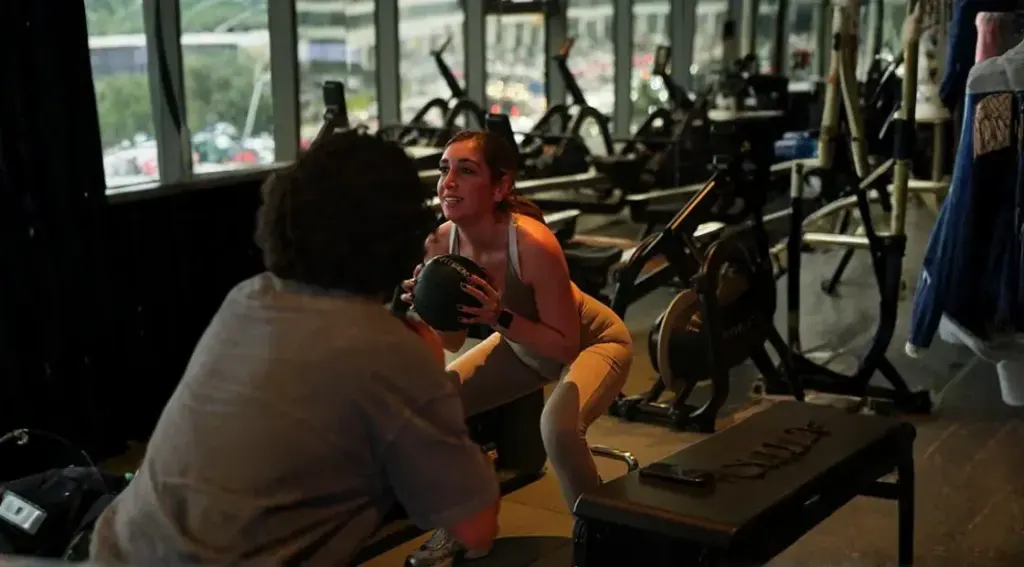
The First 4 Weeks for Gym Beginners: What to Do and What to Avoid
Don't spend your first month wandering or overdoing it. A week-by-week starter guide from the O'Wellness Beytepe coaches.
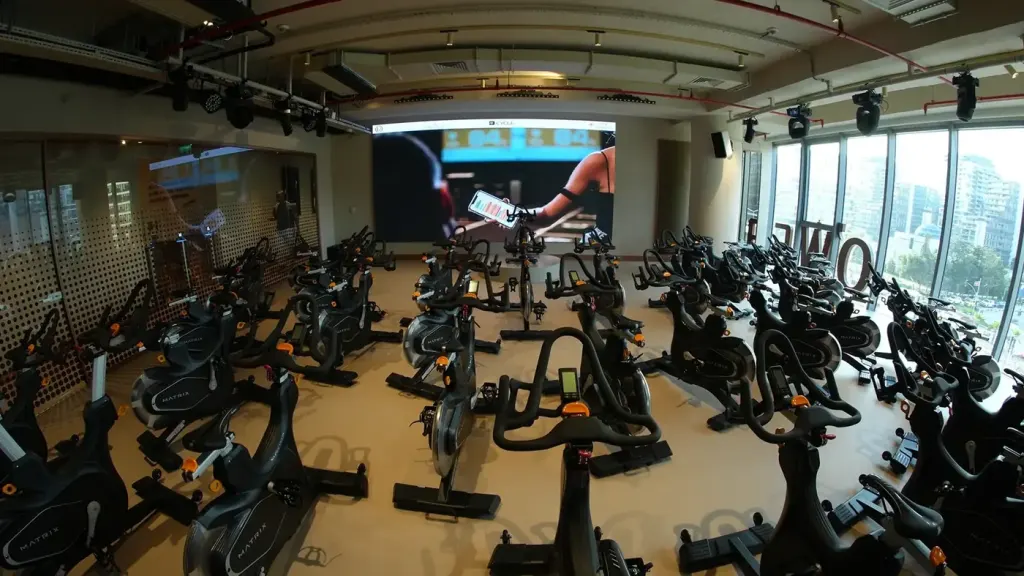
What Is Progressive Overload? The Science Behind Strength Gains
The body only adapts to loads slightly beyond what it is used to. The physiology of progressive overload, its four variables and how to apply it step by step.
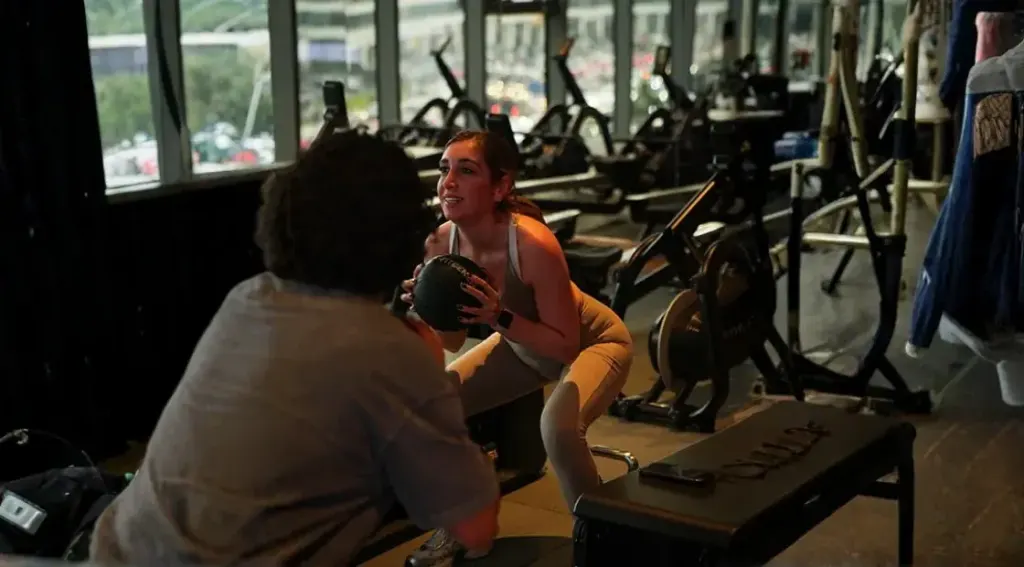
12 Questions to Ask When Choosing a Personal Trainer in Beytepe
Before choosing a personal trainer in Beytepe, it pays to ask about certification, experience, programming approach and facilities. 12 key questions for finding the right trainer in western Ankara.
