
What Is Progressive Overload? The Science Behind Strength Gains
The body only adapts to loads slightly beyond what it is used to. The physiology of progressive overload, its four variables and how to apply it step by step.
Why does someone who repeats the same weight for the same reps for months stand still, while someone who makes a small increase every week keeps getting stronger? The answer lies in a single principle: progressive overload. The body only adapts when it faces a load slightly beyond what it is used to. In this article we explain the physiological logic of progressive overload and how to apply it to a real training programme, step by step.
The physiology behind progressive overload
Muscles and the nervous system develop by adapting to the stress they encounter. When you perform a movement with a certain load over and over, the body gets used to it and the same effort no longer produces the same stimulus. For development to continue, the stress has to increase gradually; this is called the overload principle. Progressive overload means making that increase in a controlled, sustainable way without raising the risk of injury.
Four ways to increase the load
Progressive overload does not only mean lifting heavier. It can be applied by increasing one or more of the following variables.
| Variable | Description | Example |
|---|---|---|
| Load (intensity) | The weight lifted | Going from 40 kg to 42.5 kg on the squat |
| Volume | Total sets × reps | Moving from 3 sets to 4 sets |
| Density | Doing the same work with shorter rest | Cutting rest between sets from 90 to 60 seconds |
| Movement quality | More control and a fuller range of motion at the same load | Full-depth squat instead of a half squat |
When and how much should you increase?
The basic rule is this: if you can reach the top of the target rep range for an exercise with clean technique, increase the load by 2.5–5 percent in the next session. Say you are working towards 10 reps and complete all three sets of 10 with good form; it is time to progress. If technique breaks down or the last reps are a severe grind, staying at the same load for another week is safer.
The risks of progressing too fast
Increasing the load too quickly creates stress that outpaces the muscles' rate of adaptation, leading to broken technique, excessive strain on joints and connective tissue, and therefore a higher risk of injury. Muscle tissue adapts to load relatively quickly, while tendons and ligaments strengthen more slowly. This situation, where the muscle is ready but the joint is not yet, is one of the most common causes of injury. That is why a gradual 2.5–5 percent increase is a safe range for most beginner and intermediate athletes.
Deload: stepping back is part of progress
Constantly rising load and volume eventually exceed the body's capacity to recover. To clear this build-up, a deload week is scheduled every 6–10 weeks: volume is reduced by 30–50 percent, while load can stay the same or drop slightly. Although a deload week may look like a loss of performance at first, it paves the way for stronger progress in the weeks that follow.
How to keep a progressive overload log
- For each exercise, record the date, load, sets and reps, and perceived exertion (RPE 1–10).
- Check your last entry before the next session; if you hit the target reps, increase the load.
- Every four weeks, review overall progress (total load lifted and rep counts).
- Plan a deload week every 6–10 weeks.
Dealing with a plateau
Getting stuck at the same load for a few weeks is normal and usually stems from insufficient recovery, lack of sleep or low protein intake. If you cannot increase the load, first try changing volume (adding a set) or density (shortening rest). Reviewing your nutrition and sleep before changing the programme entirely is usually a more effective first step; see the nutrition articles on our blog for details.
Different rates for beginners and advanced lifters
Progressive overload does not move at the same pace for everyone. Because the nervous system adapts quickly in beginners, small load increases are possible every week, or even every session for some exercises, during the first 8–12 weeks. At the intermediate level this pace slows and increases usually come every 2–3 weeks. At the advanced level a single load increase can take months, and other variables such as volume and density become more decisive. So the answer to why you are not progressing as fast as before is usually not a problem but a natural slowing of adaptation.
Common mistakes
- Only increasing load and never changing volume: Adding weight constantly while keeping sets fixed eventually breaks technique.
- Skipping the deload week: Constantly rising load leads to accumulated fatigue and a performance plateau.
- Not logging progress: Without a history of load and reps, when to progress becomes guesswork.
- Continuing to add load despite broken technique: One of the most common mistakes that directly increases injury risk.
- Trying to progress every exercise at once: Pushing several lifts in one session can exceed recovery capacity; spreading increases across exercises in turn is safer.
Exercise-specific progressive overload examples
| Exercise | Beginner | Target after 4 weeks | Method of progression |
|---|---|---|---|
| Goblet squat | 3×10, 8 kg | 3×10, 12–14 kg | Load increase |
| Push-up (knees down) | 3×8 | 3×12 or standard push-up | Rep or variation increase |
| Seated row | 3×12, light resistance | 3×12, moderate resistance | Load increase |
| Plank | 3×20 s | 3×40 s | Duration increase |
Which programmes use progressive overload?
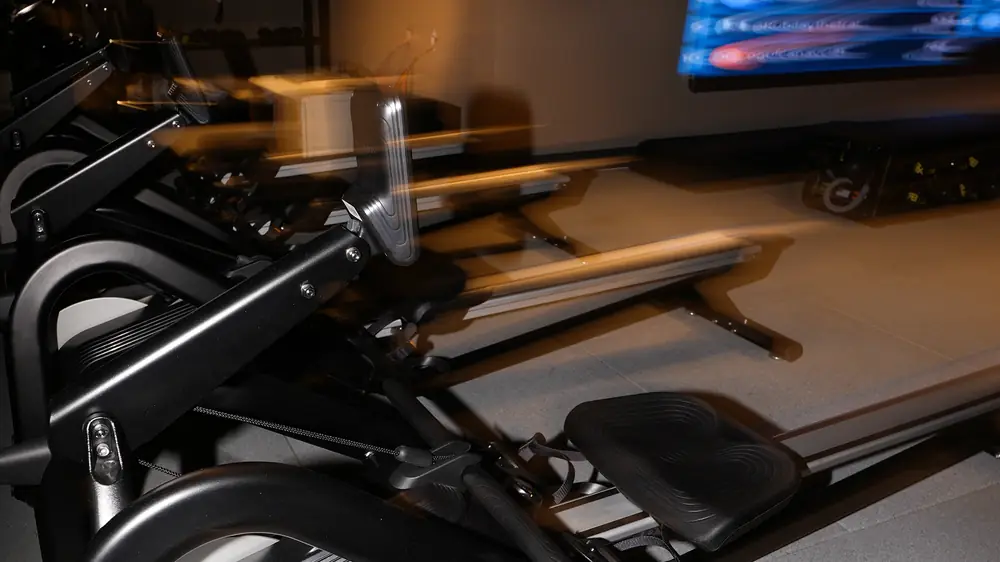
This principle applies equally to full body and split programmes; the only difference is which exercises you add load to and how often. At O'Wellness Beytepe, load is tracked for every exercise in personal training sessions, and group classes such as Total Body are also built around gradually increasing difficulty. The same goes for reformer work: on the Balanced Body equipment in our Reformer Pilates studio, progressive overload is applied by gradually increasing spring resistance.
A special note for women and beginners
Progressive overload is a physiological principle that applies regardless of sex, and the same adaptation mechanism works in women. Avoiding load increases out of fear of bulking up slows development unnecessarily. You can find more on this in the strength training guide on our blog.
Does progressive overload only apply to free weights?
No, the principle applies to every type of resistance. With bodyweight exercises you progress by increasing difficulty (for example moving from knee push-ups to standard push-ups) or by extending reps or time. With resistance bands, resistance rises with thicker bands or a shorter grip. In Reformer Pilates, spring resistance is increased gradually; on machines you add weight plates, and with dumbbells and barbells you add kilograms directly. With functional equipment such as TRX and kettlebells, the same principle applies by changing angle, tempo or weight. Whatever equipment you use, the logic is the same: creating a controlled stimulus slightly beyond your current capacity.
Structured progression models
Some structured programmes, such as linear progression models, include small pre-set load increases for each session; this reduces decision fatigue and improves consistency, especially for beginners. More experienced athletes use undulating models, applying different load and rep combinations on different days of the same week, for example heavy and low reps on Monday, light and high reps on Friday. Which model suits you depends on your experience level and goal; we recommend deciding this together with a coach.
The mental side: patience and consistency
Progressive overload is a process that makes sense over months, not weeks. In the first weeks the increases may look small or even unnoticeable at times, but the cumulative effect creates a clear difference in strength and muscle after 3–6 months. Rather than expecting quick results, focusing on slightly beating the previous session each time both protects motivation and keeps injury risk low. Long-term consistency is worth far more than a single perfect workout.
Common misconceptions about progressive overload
Some people see progressive overload as lifting heavier every session; however, keeping the load the same while improving technique or range of motion in some sessions is also a form of progress. Another misconception is that more weight is always better; increasing too fast brings more loss than gain. Finally, progressive overload is often thought to apply only to strength athletes. Yet the same principle holds for those training for weight management, general health or rehabilitation, because muscle and bone tissue develop through the same adaptation mechanism whatever the goal.
Progressive overload at home or with minimal equipment
People with limited access to gym equipment can still apply progressive overload. With bodyweight exercises, load can be increased by changing reps, sets, range of motion and tempo (slowing the movement down). For example, moving from knee push-ups to standard push-ups and then to feet-elevated push-ups provides a gradual increase in difficulty. This method keeps the same scientific basis for those training outside the gym.
Practical application by age and experience
| Group | Frequency of increases | Priority variable |
|---|---|---|
| Beginner (0–6 months) | Weekly or per session | Load and technique quality |
| Intermediate (6 months–2 years) | Every 2–3 weeks | Balance of load and volume |
| Advanced (more than 2 years) | Monthly or cyclical | Volume, density, periodisation |
| Over 50 or post-rehabilitation | Slow and controlled | Movement quality and joint tolerance |
Frequently asked questions
Should I increase the load every session?
No; increase when you reach the top of the target rep range with clean technique. This usually happens every one or two weeks.
What should I do if I cannot increase the load?
Try increasing volume (an extra set) or density (shorter rest), and review your sleep and protein intake.
Should I skip training entirely during a deload week?
No; training continues during a deload week, but volume is reduced by 30–50 percent. It is not complete rest but a controlled step back.
Can I continue progressive overload if I have joint pain?
With sharp or persistent joint pain, pause load increases and consult your doctor; focus on movement quality until the pain subsides. The sports physiotherapist service at O'Wellness Beytepe can also support you during this time.
How is load tracked at O'Wellness Beytepe?
In personal training sessions your coaches record the load and rep history for every exercise, so the timing of increases is clear.
For a programme that applies progressive overload correctly, get in touch with O'Wellness Beytepe in Beytepe, Ankara; let us start together with a free facility tour and trial session.
Related posts

What Is a Plateau and How Do You Break It? What to Do When Strength Stalls
Been lifting the same weight for weeks? The four main causes of a plateau, the deload week and a step-by-step protocol to get strength moving again.
Unilateral Training: Why Single-Leg and Single-Arm Work Builds Balanced Strength
The two sides of the body are rarely equally strong. Single-leg and single-arm exercises reveal that gap and build balanced strength, better balance and sturdier joints.

How Many Reps to Build Muscle? Hypertrophy, Strength and Endurance Ranges
How many reps should you do to build muscle, and how are rep ranges, set counts and rest times set for hypertrophy, strength and endurance? An O'Wellness Beytepe guide.
