
Yoga blocks, straps and bolsters: a guide to props
Blocks, straps and bolsters are not shortcuts; they close the gap so the movement works the right muscles. Where to use them and how to choose them.
Yoga props are tools that help people with limited flexibility, or restriction in a particular area, reach a target pose more safely and effectively. Items such as blocks, straps and bolsters are not there to make things easy, but to close the gap so that the movement works the right muscle group. In this article we explain what each prop does, how it is used in which poses and what to look for when choosing one.
Why use props?
A pose looking correct on paper does not always mean it is the most beneficial practice. If someone with limited flexibility cannot reach the floor with their hands, using a block instead of forcing it by rounding the back keeps the spine neutral and works the target muscle group, such as the hamstrings, more safely. The real contribution of props is not to make movement easier but to improve its quality and safety.
Yoga block
It is a rectangular tool usually made of foam, cork or wood. Because it can be used at three different heights, flat, upright and on its long edge, it lets you adjust the distance gradually.
Uses
- Triangle pose (Trikonasana): a block under the lower hand lets the torso lengthen sideways without collapsing forward.
- Seated forward fold: a block under the hips tilts the pelvis forward and stops the lower back rounding.
- Bridge pose (restorative variation): a block under the sacrum gives a passive opening of the lower back without active holding.
- Balance work: lightly touching a block in poses such as tree pose provides extra balance support.
Yoga strap
It is usually made of woven cotton or nylon, with buckle or loop-ended models. Its basic job is to act as an extension of your arm when your hand cannot reach your foot.
Uses
- Supine leg stretch (Supta Padangusthasana): a strap looped around the foot allows the hamstring to be stretched safely.
- Gomukhasana arms: if the hands do not meet, holding a strap between them works the shoulder joint within a safe range.
- Butterfly pose: a strap looped from around the waist to the feet supports the spine while folding forward.
Bolster
A bolster is a long, padded cushion used mostly in restorative yoga and deep stretching classes. By passively carrying the body's weight, it allows the muscles to relax completely.
Uses
- Supported child's pose: a bolster placed between the torso and thighs gives soft support to the chest and abdomen.
- Supported reclined opening (Supta Baddha Konasana): a bolster along the spine lets the ribcage open passively.
- Restorative resting positions: placed under the knees or legs, it reduces pressure on the lower back.
Which prop, when?
| Prop | Main purpose | Typical user |
|---|---|---|
| Block | Closing the gap, alignment support | Beginners and practitioners with limited flexibility |
| Strap | Arm extension, safe range of motion | People with limited shoulder or hip range |
| Bolster | Passive support, deep relaxation | Those seeking restorative yoga and stress management |
Step by step: forward fold with blocks
- Stand with your feet hip-width apart.
- Bend your knees slightly and fold your torso forward.
- Place two blocks at their highest setting just in front of your hands.
- Put your hands on the blocks and keep your spine long and your back flat.
- Gradually lower the block height as your flexibility improves.
Using props by level
Beginners are usually advised to use more prop support, which ensures both that the right muscle group works and that practice is safe. At intermediate level the need for props may decrease, but they are still useful in challenging poses such as deep backbends and advanced balances. Even advanced practitioners keep using bolsters in restorative classes, because the purpose of this prop is not challenge but deep relaxation.
Common mistakes
- Seeing props as a sign of weakness: using props is not a lack of skill but a way of doing the movement correctly and safely.
- Choosing the wrong block height: a block that is too low can spoil the intended alignment and reduce the benefit.
- Gripping the strap too tightly: an overly tight grip can restrict the natural flow of the movement and the breath.
- Placing the bolster wrongly: if the support point is off, for example under the upper back instead of the lower back, the intended relief does not happen.
What to look for when choosing props
Foam blocks are popular because they are light and comfortable for beginners, while cork blocks are sturdier and more durable. With straps, D-ring buckle models make adjustment easier. When choosing a bolster, firmness matters; one that is too soft may not give enough support. In the O'Soul studio at O'Wellness Beytepe these props are ready for use in classes, so you do not need to bring your own.
Combining with related classes
Prop-supported work is used extensively in Deep Stretch Yoga and Mobility & Stretching classes. For those who prefer a more dynamic flow, blocks and straps are also used when needed in Vinyasa Yoga and Balanced Yoga classes. For general information on class structure, take a look at our group classes page.
In practice at O'Wellness Beytepe
In classes in the O'Soul studio, our trainers suggest props according to each participant's range of motion and show correct placement. This allows beginners and advanced practitioners to work at their own level in the same class. For our general approach to mobility, see our recovery guide.
Yoga towel and non-slip mat
Although they are discussed less than blocks, straps and bolsters, a non-slip mat and a yoga towel that controls sweat also matter for safety. As you sweat more, a standard mat can become slippery, which creates risk especially in balance poses such as tree pose and half moon. A specially textured towel laid over the mat absorbs moisture and preserves grip. For people who practise for long periods in Ankara's hot summer months or in high-tempo classes, this simple item is as practical a safety measure as a block or strap.
Eye pillow and blanket
Used in restorative yoga and deep relaxation sections, an eye pillow applies light pressure that helps relax the muscles around the eyes and calm the mind. A thin, lightly padded blanket can be used both to keep the body warm and to give extra soft support under the joints. Because body temperature drops especially during savasana, a light cover noticeably increases comfort.
Storing and caring for props at home
Because foam blocks can be affected by moisture, store them in a dry place after use. Check straps regularly and replace them if the buckle mechanism is worn. Air bolsters and blankets periodically and, if possible, choose models with washable covers. Regular care maintains hygiene and extends the life of your props.
Alternatives without props
You may not always have access to proper yoga props; in such cases everyday household items can serve as a temporary solution. A thick book can replace a block, a belt or long scarf can replace a strap, and a tightly rolled blanket can replace a bolster. These options are not ideal but help you keep up a regular practice; in the studio we recommend working with the real equipment.
Props and progress
The need for props may decrease over time; as flexibility and range of motion improve, the block height can be lowered or the strap shortened. Noting this change weekly lets you see your progress in concrete terms. However, in some practices such as restorative work and deep relaxation, props may remain a permanent choice regardless of level; this is not regression but a conscious way of practising. Talking this over with your trainer helps you build a prop plan suited to your goals. What matters is to see props not as a goal but as a tool for a safe, sustainable practice.
Frequently asked questions
Does using props mean I am not doing real yoga?
No; using props is a long-established part of yoga and ensures movements are done safely and effectively. Experienced practitioners use props regularly too.
Which prop should I buy first for home practice?
A pair of blocks is usually the most versatile starting prop; adding a strap afterwards is enough for most basic poses.
Can I do restorative yoga without a bolster?
Yes; similar support can be created with folded blankets or cushions, although a bolster offers steadier, purpose-made support.
Where can I take prop-supported yoga classes in Beytepe, Ankara?
In the O'Soul studio of O'Wellness Beytepe, in the Yaka Beytepe complex, blocks, straps and bolsters are ready for use in classes; current class times are on the weekly schedule.
Do props completely prevent injury?
Props help reduce risk but are not a guarantee on their own; correct technique and respect for personal limits are always essential.
Get in touch to try our prop-supported yoga classes; let us plan your free facility tour and trial session together.
Related posts
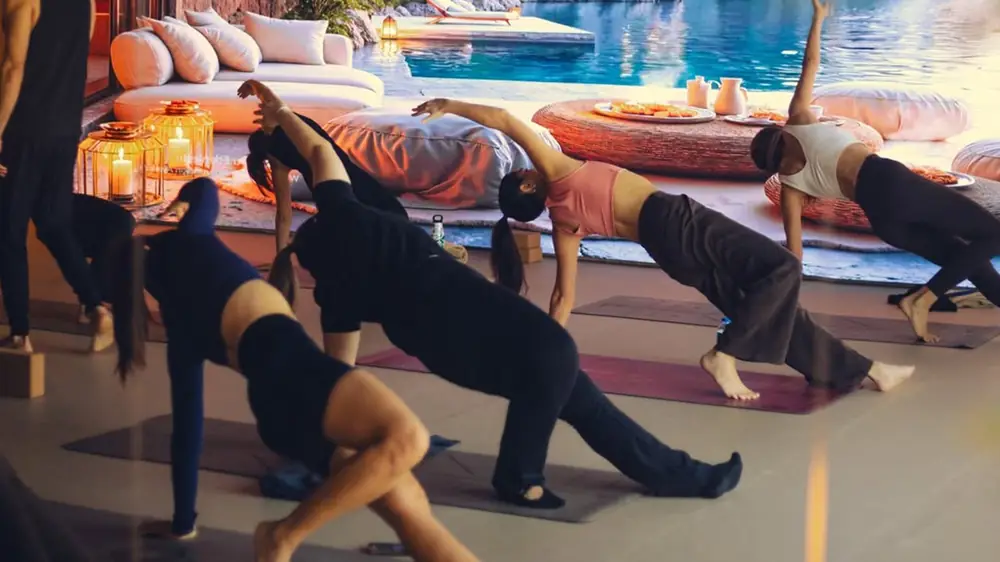
Shoulder Stability in Yoga: Protecting the Shoulders in Downward Dog, Plank and Chaturanga
In vinyasa flows the shoulders bear load hundreds of times. We explain how to protect and strengthen the shoulders with scapular control and correct alignment.
Hamstring Flexibility: Why You Can't Touch Your Toes and What to Do About It
Not reaching your toes does not always mean short hamstrings. We explain the possible causes of tightness, a simple test and a safe stretching plan.
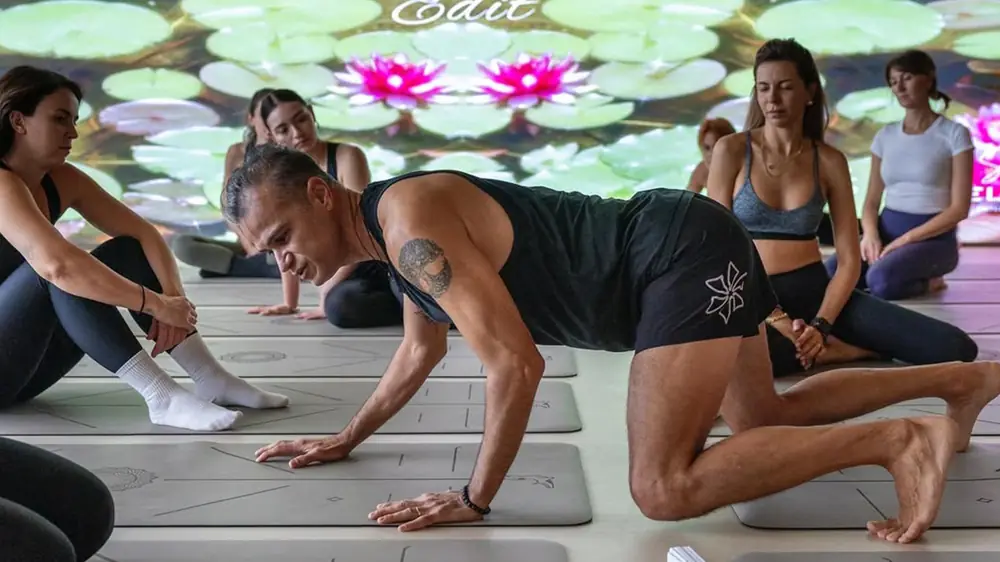
How Does Flexibility Improve? Static, Dynamic and PNF Stretching Compared
How can flexibility be developed? Static, dynamic, ballistic and PNF stretching, when to use each, and a sample weekly program.
