
What Is a Total Body Class? A Full-Body Workout in One Session
Unlike split programmes, a Total Body class trains every major muscle group with compound moves each session. Here is how it is structured and scheduled.
If your time is limited and you want to work your legs, back, chest, shoulders and core together in a single session, total body training may be exactly what you are looking for. Unlike split programmes that divide the body into regions spread across the week, it is a strength class that trains all the major muscle groups with compound movements in every session. In this article we explain how Total Body classes at O'Wellness Beytepe are designed, who they suit and how to fit them into your weekly programme.
The difference between total body and split training
In split programmes that come from bodybuilding, each day of the week is assigned to separate muscle groups; for example, chest and triceps on Monday and back and biceps on Tuesday. In the total body approach, each session combines squat, push, pull and core movements and the body works as a whole. For people who can only give 2-3 days a week to training and want a balanced, efficient stimulus each time, this is a very practical solution. In a group class format, this structure is performed in the right order and with proper form under a trainer's guidance.
Structure of a Total Body class
| Minutes | Section | Content |
|---|---|---|
| 0-8 | Warm-up | Joint mobility, light cardio, activation drills |
| 8-20 | Lower-body block | Squat, lunge and hip thrust variations |
| 20-32 | Upper-body block | Push (push-up, shoulder press) and pull (row) movements |
| 32-40 | Core and stability | Plank variations, rotational movements |
| 40-45 | Cool-down and stretching | Heart rate returns to normal, static stretching |
What equipment is used?
Total Body classes mostly use a mix of dumbbells, resistance bands, kettlebells and bodyweight movements. The choice of equipment depends on the muscle group targeted and the day's class theme; some sessions emphasise weight-focused strength work, while others feature more functional, dynamic movements.
Level variations
Beginner level
We recommend that beginners work with light weights or bodyweight only and focus on movement technique. At this stage, details such as squat depth and lunge stride length matter more than the number of reps. Asking the trainer for form checks in the first weeks lowers injury risk when weights increase later and helps you progress faster in the long run.
Intermediate level
Once the basic movement patterns are in place, the goal is to gradually increase the weight while maintaining the rep count. At this stage the trainer may use intensity techniques such as supersets, where two movements are performed back to back without rest; this allows more work in the same time.
Advanced level
For experienced participants, intensity can be increased through weight, tempo changes such as slow lowering and explosive lifting, and shorter rests. For those seeking a stronger cardio component, HIIT or O'Hiit classes can be considered as the next step combining strength and cardio.
Common mistakes
- Increasing the weight too quickly: adding load before form is settled strains the knees and lower back unnecessarily, especially in squats and lunges.
- Leaving the core passive: not lightly bracing the abdomen during push and pull movements increases the load on the lower back.
- Mistiming the breath: the general rule is to exhale during the effort phase (lifting, pushing) and inhale during the preparation phase; the reverse harms performance and safety.
- Only pushing on your favourite movements: skipping the class's overall structure and only putting effort into comfortable sections leads to unbalanced development.
- Cutting the warm-up short: starting compound movements directly with heavy load increases the risk of joint and muscle injury.
Who is it not suitable for?
Total Body is a good starting or maintenance format for most people. However, if you have a herniated disc, a serious shoulder or knee problem, uncontrolled blood pressure or recent surgery, you should consult your doctor before starting. During pregnancy, you may continue with your doctor's approval and with certain movements modified, particularly core exercises performed lying on the back; be sure to inform your trainer.
How is progress measured?
Progress in Total Body can be tracked by the weight you use increasing over time, being able to do more reps with the same weight or finishing the same set of movements with less rest. Improvements in technical elements such as squat depth and lunge balance are important indicators even if they are not numerical; do not ignore these qualitative observations. Noting your weights and reps every few weeks lets you see your development in concrete terms.
Fitting it into your weekly programme
Total Body is balanced enough to repeat 2-3 times a week. A sample week could be built like this: Monday Total Body, Tuesday O'Ride Cycle, Wednesday Total Body, Thursday Mobility & Stretching, Friday Total Body or a lower-body-focused Booty Class, and Vinyasa Yoga at the weekend for recovery. Those who want a more personal strength programme can consider the Personal Training option among our private services.
Fundamental movement patterns: why these four keep coming back
Total Body classes are designed around movement patterns rather than muscle groups. The basic patterns the body uses in daily life and sport fall into four categories: in the lower body, squatting and hinging at the hips (hip hinge; for example hip thrust and deadlift variations), and in the upper body, pushing (push-up, shoulder press) and pulling (row and lat pulldown-type movements). A Total Body session brings these four patterns together, strengthening the movement patterns you use in everyday life. The aim is not just to grow certain muscles but to develop functional strength and movement quality.
How tempo and rep ranges are set
How many reps a movement is performed for and at what tempo depends on the day's goal. A strength-focused block might use 6-10 reps with moderate to heavy load, while an endurance-focused block might use 15-20 reps with lighter load. Trainers usually use both approaches in different blocks within the same class to develop strength and endurance together. On the tempo side, slowing the lowering phase (for example, taking 3 seconds to go down) extends the muscle's time under tension and provides a different stimulus; this technique is mostly used at intermediate and advanced levels.
Effects on posture and daily life
Regular pulling movements have been reported to help balance the forward-rounded shoulder posture that comes with desk work and long screen time. Similarly, strengthening the core and hip muscles creates a base that supports the lower back during everyday bending and lifting. These effects vary from person to person; if you have an existing postural problem or chronic pain, planning your programme with our sports physiotherapist is safer, as the movements can be adapted to you.
The link with nutrition
For those who want to maintain or build muscle mass, supporting strength-focused classes such as Total Body with adequate protein intake is important. Rather than give a precise gram figure, we recommend meeting our dietitian for a personalised plan. Eating a protein-containing meal in the first hours after training is a widely accepted practice that supports muscle repair.
How to balance Total Body with other classes
Although Total Body provides a general strength stimulus, people who want to focus more on certain areas can add extra classes to their programme. Those who want to emphasise the glutes and hamstrings can add Booty Class, those who want more core endurance can add Crunch & Core, and those who want to support flexibility and posture can add Reformer Pilates to their weekly plan. In this way the general foundation of Total Body is complemented by targeted classes for a more holistic result; what matters is keeping weekly variety rather than sticking to a single format.
Total Body at O'Wellness Beytepe
Total Body classes at O'Wellness Beytepe take place in the O'Rise studio, equipped with strength and core equipment. Check our weekly schedule page for current days and times, and our group classes page to see all class formats side by side. The Yaka Beytepe complex car park and its proximity to the Çayyolu-Ümitköy corridor make regular attendance easier.
Adapting to age and fitness
Because weight and tempo can be adjusted individually, Total Body can be adapted to a wide age range. Middle-aged and older participants can choose joint-friendly variations, such as standard lunges instead of jumping lunges, with reps and weight increased gradually. For young, experienced participants, intensity can be raised with supersets, tempo changes and heavier loads. What matters is sticking to the principle of choosing a weight that makes the last few reps challenging without breaking form; regardless of age and experience, this principle is the foundation of safe progress and brings steady improvement in both strength and movement quality over time.
Frequently asked questions
Which is more effective, a Total Body class or split training?
Both are effective when done correctly. Total Body is a practical, balanced option for people who can only train a few days a week; split programmes suit those who train more days a week and want to focus on specific muscle groups.
What clothing and equipment should I bring to a Total Body class?
Comfortable sportswear, trainers and a water bottle are enough; weights and other equipment are ready in the studio.
When are Total Body classes held at O'Wellness Beytepe?
Current days and times are on our weekly schedule page; the club is open 06:00-23:00 on weekdays and 08:00-23:00 at weekends.
How long does muscle soreness last, and is it normal?
Muscle soreness the next day is normal, especially for beginners or after increasing weight, and usually eases within 48-72 hours. If the pain lasts longer or becomes sharp in a joint, rest and consult your doctor if necessary.
Do you have any advice for beginners?
In the first few classes, focus on technique with light weights or bodyweight only, and do not hesitate to ask the trainer for form checks.
To try a Total Body class with a free trial session and see how it feels in your body, simply get in touch with us.
Related posts
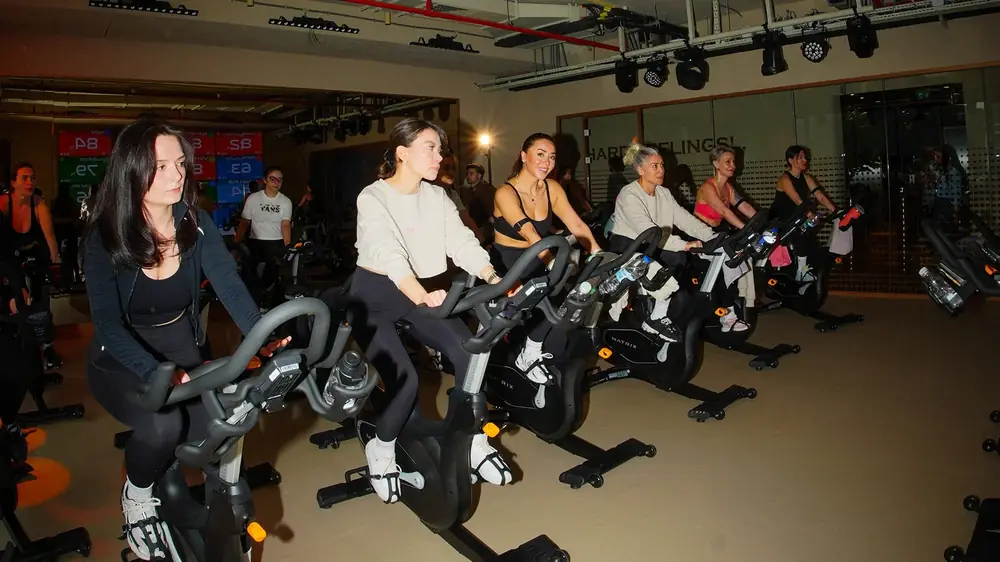
Bike Setup for Cycle Class: Saddle, Handlebar and Pedal Position
If a spinning bike is set up wrongly, performance drops and the risk of knee and back pain rises. We explain saddle, handlebar and pedal setup step by step.
Choosing Your Spot in a Group Class: Front Row or Back Row? Finding the Right Place in the Studio
Where you stand in the studio affects how much you get from the class and how comfortable you feel. We look at front, middle and back rows, with tips for beginners.
Group Classes Guide: Formats, Levels and the Right Class for You in Beytepe
Compare the class families at O'Wellness Beytepe by intensity, level and goal; this guide includes a four-week beginner plan and weekly combinations.
