
Returning to Exercise After Injury: A Guide to Gradual Loading and Pain
A rushed comeback can lead to re-injury. We explain how to interpret pain and the principles of gradual loading.
Returning to exercise after a sprain, a muscle strain or a long period of pain is as important as the healing itself. When rushed, re-injury of the same area is a common scenario; when overly cautious, fitness and confidence are lost unnecessarily. In this article we explain the general principles of a gradual return after injury, how to interpret pain, and how a return plan can be structured. The text is general information; for diagnosis and treatment, consult your physician and physiotherapist.
First, clearance from a physician or physiotherapist
The first step of any return plan is knowing what the injury is and what stage you are at. Telling yourself it has passed can be misleading, especially with joint, ligament and lower back complaints. Reduced pain does not necessarily mean the tissue has fully healed. That is why, at the first consultation, it is worth asking clearly which movements are allowed and which are still too early.
- Which movements are fully allowed and which are restricted?
- What level of pain is acceptable?
- Which symptoms mean I should stop training and seek help again?
- When and in what steps can I increase load?
- Which extra strengthening and mobility work should I do?
Tissue healing and the logic of returning
Tissues heal at different speeds. Muscles generally recover faster because of good blood flow, while tendons and ligaments adapt more slowly. That is why feeling good does not necessarily mean the tendon is ready for new load. A return plan relies on gradually rebuilding the tissue's capacity to tolerate loading.
The basic idea here is applying controlled stress to the tissue. A period of complete rest may be necessary, but long inactivity reduces muscle strength and range of motion. In modern rehabilitation approaches the aim is to reintroduce movement as early and safely as pain and healing allow; the timing is determined by the specialist who evaluates you.
How to interpret pain: the traffic light approach
During a return, neither ignoring pain entirely nor fearing every twinge is right. A simple framework used in many rehabilitation programs is to think of pain in three colors. This framework is a personal guide and does not replace your specialist's instructions.
| Color | What you feel | General approach |
|---|---|---|
| Green | Mild tightness or discomfort that settles during or right after movement | Can usually continue; there should be no increase the next day |
| Yellow | Moderate pain that affects movement or carries into the next day | Reduce load and volume, simplify the movement, talk to a specialist |
| Red | Sharp, sudden or worsening pain; swelling, numbness, weakness, locking | Stop training and see a physician without delay |
How the area feels the next morning matters as much as how it felt during the session. If an area that seemed fine at the end of training swells and stiffens overnight, the load was too much for that day. Simply noting this feedback is very valuable data when deciding the next step.
Stages of a gradual return
The stages below show a general logic; their duration depends on the type and seriousness of the injury and your personal situation. To move to the next stage, criteria must be met, not just a date on the calendar.
- Protection and range of motion: regaining pain-free movement and protecting the surrounding area.
- Basic strength: strengthening the area with isolated, low-load work at a controlled tempo.
- Functional strength: returning to multi-joint movements such as squat or push and pull patterns with light loads.
- Dynamic loading: gradually adding higher-load activities such as speed, jumping, change of direction or running.
- Return to full training: approaching previous program volume while continuing to monitor.
Change one variable at a time when progressing
The most common mistake when returning is raising weight, reps, speed and frequency all at once. When something goes wrong it becomes impossible to tell which one caused it. Changing a single variable and observing for a few sessions is both safe and informative.
- Increase the reps first, then the weight.
- Establish a controlled tempo first, then speed.
- Keep weekly session count steady first, then raise frequency.
- When adding a new movement, reduce the volume of an older one.
- Assess how you feel the next day after every step.
Ways to maintain fitness meanwhile
An injury usually affects one area, not the whole body. If there is a problem in the lower limb, upper body work is often possible, and if the problem is in the upper limb, leg and core work often can continue; but clarify the limits with your specialist. That way strength, fitness and routine are not lost entirely, and psychologically the feeling of not having quit is preserved.
Mobility, breathing and balance work also remain valuable during the injured period. Low-impact options, for example controlled Reformer Pilates movements or gentle yoga flows, may suit some people, but permission is needed first. Movements must be adapted so they do not stress the injured area.
The mental side: fear, impatience and confidence
Many people returning from injury swing between two extremes: pressure to be back to normal immediately on one side, and fear that the same spot will be damaged again on the other. Both reduce decision quality. In the first case load rises quickly, in the second movement is restricted more than necessary. Setting small, measurable goals opens a balanced path between the two.
Keeping a training log is also very useful here: when you record which movement you did at what weight, the pain level and how you felt the next day, you see progress concretely. It is a tool that reduces fear and supports patience.
Habits that reduce the risk of re-injury
- Do not skip the warm-up; prepare the relevant joints and muscles gradually.
- Do not neglect sleep, protein and total energy intake; they support recovery.
- If technique breaks down on tired days, end the set early.
- Do not drop the strengthening exercises after saying you are healed.
- Spread training load evenly across the week instead of sudden jumps.
- If the same complaint returns, ask for a reassessment.
Differences by type of activity on return
Every activity places a different load on tissues. Sports involving running and jumping apply repeated impact to tendons and joints; strength training offers more controlled and adjustable loading; rotational sports challenge the spine and shoulder in different directions. That is why it makes sense on return to start with easily adjustable, controlled movements and leave more unpredictable activities for last.
- Strength training: usually the first choice because weight, reps and tempo can be adjusted one at a time.
- Low-impact cardio: walking or easy cycling supports circulation and fitness.
- Running and jumping: added in short intervals after the walking and strength stages go smoothly.
- Racket and team sports: considered in the last stage because they involve change of direction and sudden acceleration.
Support areas at O'Wellness Beytepe
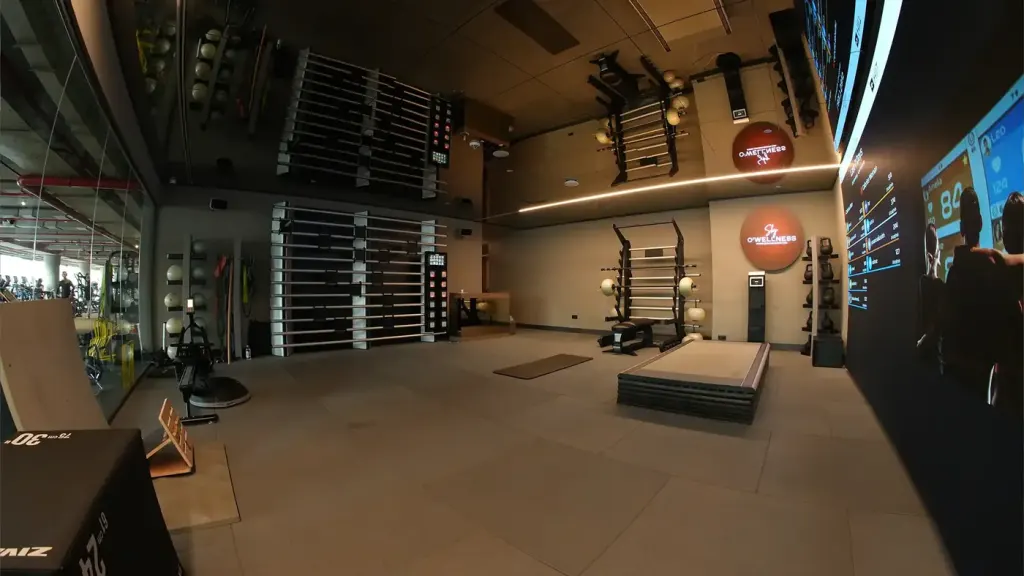
During the pre-opening period, O'Wellness Beytepe is being structured with spaces and services that will support the return process. The Sports Physiotherapist service is planned as a separate option for assessment focused on injury prevention and rehabilitation. Personal Training and Private Reformer Pilates offer one-to-one support for those who want movements tailored to themselves.
The functional area, strength and cardio equipment and the mobility classes in O'Soul provide different tools for the different stages of gradual loading. After clarifying the limits and clearance with your physician, you can contact us to build your program together. Founding member pre-registration is currently open.
Can I return to exercise before the pain is completely gone?
It depends on the type of injury and the level of pain. Mild discomfort that eases with movement may be acceptable in some cases, but your physician's or physiotherapist's assessment is needed to decide. Stop training if the pain is sharp, increasing or wakes you at night.
What percentage of my old load should I start with?
There is no fixed percentage that applies to everyone. The general principle is to start clearly below your previous load, at a point that preserves technique quality, and to progress according to the next-day response. The specialist who evaluates you will set the exact figure.
Should I stop training completely while injured?
In most cases no; working the healthy areas may be possible. But it depends on the type of injury and the limits should be clarified with a specialist. Some injuries may require a short period of complete rest.
Why does the same area keep getting injured?
Common reasons include a rushed return, incomplete strengthening, technique issues, inadequate recovery and sudden load increases. For recurring complaints it is appropriate to see a healthcare professional for a thorough assessment.
Returning from injury requires patience and a systematic approach. Specialist clearance, gradual loading, increasing variables one at a time and listening to your body's feedback are the core steps for reducing the risk of re-injury. The pages below may help you build your program together.
Related posts

Muscle Soreness (DOMS): Causes and Relief
The answer to how muscle soreness goes away lies in the right recovery methods. We explain the causes of DOMS, how long it lasts and how to ease it, step by step.
Sedentary Living and "Sitting Disease": Getting Back on the Move
Long hours at a desk quietly affect posture, circulation and energy. In this article we explain the possible harms of a sedentary lifestyle and a gradual plan for getting back on the move.

Returning to Exercise After Illness: Training After the Flu or a Cold
When and how to return to exercise after flu or a cold? We explain the principles of a safe and gradual return to training.
