
Club Life: A Member’s Typical Week at Yaka Beytepe
What does a member's week look like at a multi-format club? Three weekly templates for Yaka Beytepe, time windows during the day and habits that keep you consistent.
Club life is much more than lifting weights twice a week. When group classes, Reformer Pilates, functional training, mobility work and social spaces come together, going to the gym stops being a chore and becomes the part that structures your day. In this article we share how a member's week might look at a multi-format club such as O'Wellness Beytepe in Yaka Beytepe, Ankara, how it can be adapted to a busy workload and three weekly templates for different goals.
What does a multi-format club offer?
Unlike gyms limited to a single equipment floor, a comprehensive club lets you build a weekly programme from several components:
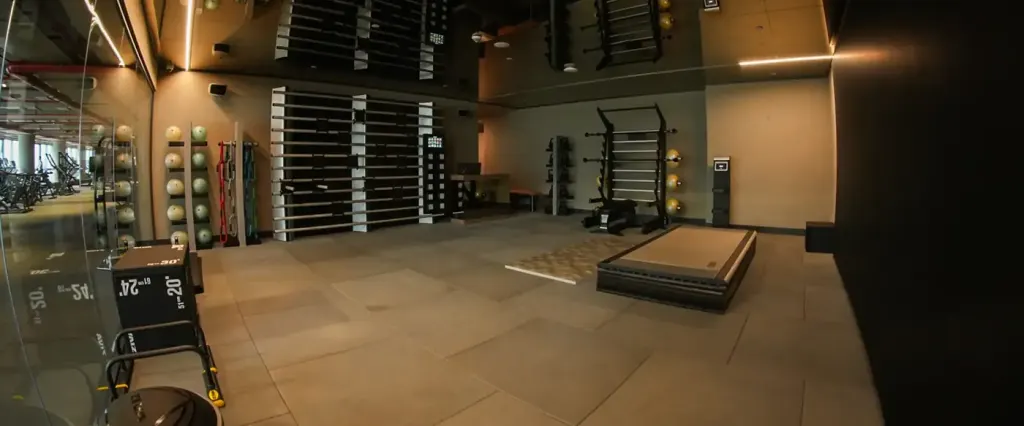
- Strength area: free weights, racks and machines.
- Cardio section: treadmills, rowers, bikes and climbers.
- Group class studios: classes such as HIIT, cycle, total body and crunch & core in O'Rise.
- Reformer Pilates studio: capped classes on Balanced Body equipment with a maximum of 6–8 people per session.
- Functional area: athletic and functional work with sleds, kettlebells and TRX.
- Mobility and yoga: flexibility and recovery work in the O'Soul studio.
This variety frees the programme from one-dimensional loading and supports consistency.
Template 1: 4 days a week, balanced programme
For someone with a desk job who is aiming for both strength and general fitness.
Monday — Lower body strength and mobility
- 10 minutes of dynamic warm-up and mobility.
- Squats, Romanian deadlifts, split squats, hip bridges and core (50 minutes).
- 10 minutes of easy cycling or walking as a cool-down.
- 10 minutes of stretching and mobility.
Wednesday — Group class
- 45 minutes of HIIT or O'Ride Cycle.
- 10 minutes of stretching and mobility.
Thursday — Upper body strength
- 10 minutes of shoulder warm-up and band work.
- Rows, lat pulldowns, chest press, face pulls and arm accessories (50 minutes).
- Core block (10 minutes).
Saturday — Reformer Pilates and recovery
- A 50-minute Reformer Pilates class.
- 20–30 minutes of mobility or gentle stretching in the O'Soul studio.
- Plenty of water and rest.
Template 2: 3 days a week, time-limited programme
For someone with a packed calendar who still wants to stay consistent.
Tuesday — Full body strength (45–55 minutes)
- A squat variation, rows, chest press, hip bridges and planks.
- 3 sets of each exercise; keeping rest short to compress the session.
Thursday — Lunchtime group class (30–45 minutes)
- A short-format HIIT or Total Body class.
- Shower and back to work; practical for a lunch break from workplaces on the Eskişehir road.
Weekend — Reformer or mobility and the outdoors
- A Reformer Pilates or Deep Stretch Yoga class.
- Optionally a padel match at O'Padel Beytepe or a long walk around Lake Eymir.
- Light stretching and a long recovery window.
Template 3: 5–6 days a week, advanced programme
For those with a training history and good recovery capacity.
- Monday: Heavy lower body strength.
- Tuesday: Sled and kettlebell conditioning set in the functional area, plus shoulder stability work.
- Wednesday: Pull-focused upper body strength.
- Thursday: Active rest; mobility class and light cardio.
- Friday: Group class (HIIT or Cardio Kickbox) or full body strength.
- Saturday: Reformer Pilates and long, low-intensity cardio or padel.
- Sunday: Full rest or a walk.
Time windows during the day
Practical time slots for people working in Beytepe and the business districts along the Eskişehir road:
Morning (07:00–09:00)
- Advantages: The club is at its quietest, the rest of the day is free and the chance of building a habit is high.
- Caution: Morning training is not sustainable without enough sleep.
- Suitable formats: Strength, functional work and mobility.
Lunchtime (12:00–14:00)
- Advantages: A mental reset in the middle of the day and a concentration boost for the afternoon.
- Caution: Time is limited; 30–45 minute formats are needed.
- Suitable formats: Short HIIT, express strength, 30 minutes of cardio.
Evening (18:00–21:00)
- Advantages: Body temperature and performance are usually at their daily peak.
- Caution: This is the busiest slot; class bookings are needed.
- Suitable formats: Group classes and strength training.
- Tip: The club usually gets noticeably quieter after 20:30; being open until 23:00 on weekdays lets you use the late hours too.
Recovery rituals
The most underused advantage of a multi-format club is its recovery facilities.
- Active rest: 20–30 minutes of easy cycling or brisk walking the day after a heavy leg session.
- Sleep and fluids: Sleeping 7–9 hours a night and drinking water regularly through the day are core components of recovery.
- Mobility: The last 8–10 minutes of every session.
- Yin or restorative yoga: Once a week, a counterbalance to a busy week.
- Body composition measurement: Once a month under the same conditions, to track progress.
The community dimension
The social component should not be underestimated in making club life sustainable. Getting to know the group that comes at the same time, being part of a community that regularly attends a class or finding a training partner significantly increases attendance.
- Regularly attending the same group class creates familiar faces.
- In-club events and challenge programmes create a cycle of motivation.
- A natural familiarity develops among those who play regularly on the O'Padel Beytepe courts.
- Continuity with the same coach helps personalise the programme.
8 practical habits that keep the week on track
- Packing your bag the night before: Preparation time is the biggest obstacle to morning training.
- Booking classes in advance: A class that occupies a slot in your calendar is far stronger than a maybe.
- Fixing your days: Not leaving which days of the week are training days open to change.
- A flexible backup plan: Knowing in advance what you will do if a class is cancelled.
- A 45-minute minimum version: Keeping a shortened version of the programme ready for when time is tight.
- Prioritising sleep: Not stealing training time from sleep.
- Planning nutrition: Thinking ahead about your post-workout meal.
- Logging progress: A simple notebook or app; visible progress fuels motivation.
Scaling the programme down during busy periods
When work gets busy, scaling the programme down instead of dropping it completely gives far better results in the long run.
- Drop from four days a week to two, but do not stop completely.
- Compress sessions to 30 minutes; 3–4 compound exercises are enough.
- Choose group classes; 45 minutes go by productively without the burden of making decisions.
- Protect your sleep; a short walk or light stretching break provides both recovery and a mental pause.
- Keep up mobility; the more time you spend at a desk, the greater your need for mobility.
Conclusion
At a multi-format club, your weekly routine becomes both more resilient and more enjoyable because you are not tied to a single type of training. Balancing strength, group classes, functional training and recovery according to your own calendar, scaling the programme down rather than dropping it in busy periods and booking classes into your calendar in advance are the practical foundations of sustaining club life. To build your own weekly template at O'Wellness Beytepe, a short planning session with our coaches gets results much faster than losing time to trial and error.
Related posts

15 Questions to Ask When Choosing a Fitness Membership
15 practical questions to ask reception or yourself when choosing a gym membership; a decision guide from location to membership terms for Beytepe and west Ankara.
Keeping Your Training Motivation Through Ankara's Dark Winter Days
Short days, cold mornings and early sunsets test any training habit. How to protect motivation through structure rather than willpower alone.

Lockers, Towels and Parking: A Daily Club Use Guide
A practical guide to how everyday details such as lockers, towels and parking work at O'Wellness Beytepe, and what members should keep in mind.
