
Cardio or Weights? Finding the Right Balance for Fat Loss and Health
Cardio and strength training do different jobs. We explain how to set the right ratio, order and weekly split for your goal.
It is the question beginners ask most often: cardio or weights, which should come first? The right answer is "both, but in different ratios depending on your goal". In this article we use concrete examples to explain how to set those ratios, when each should take priority and how to combine the two in one programme without conflict.
They don't do the same job
Cardio and strength training trigger different adaptations in the body, so one cannot replace the other. Cardiovascular training increases the amount of blood the heart pumps, lung capacity and mitochondrial density. Strength training develops muscle fibre cross-section, neuromuscular efficiency and bone density. For fat loss both contribute to a calorie deficit, but in different ways: cardio burns more calories during the session, while strength training raises resting metabolism by preserving or building muscle mass.
Which is more effective for fat loss?
Without a calorie deficit, no type of training will make you lose fat; nutrition is therefore always the first factor. Still, consider two scenarios with the same deficit: someone who only does cardio loses weight but also some muscle mass, which slows metabolism and makes regaining weight easier. Someone who adds strength training largely preserves muscle mass, and more of the weight they lose comes from fat tissue. That's why our advice to anyone aiming for fat loss is never to neglect strength training: strength should be the foundation and cardio the complement.
Why cardio is essential for heart health
Although strength training contributes indirectly to heart health, regular aerobic activity has a separate and complementary effect on blood pressure, resting heart rate, the HDL/LDL balance and vascular elasticity. For general health, at least 150 minutes of moderate or 75 minutes of vigorous cardiovascular activity per week is recommended. Spreading this over 2–4 sessions rather than one long session is easier for both adaptation and sustainability.
Weekly split by goal
| Goal | Strength training | Cardio |
|---|---|---|
| Fat loss | 3 days a week, full body | 2 moderate + 1 short high-intensity session a week |
| Muscle gain | 3–4 days a week, hypertrophy-focused | 1–2 short sessions a week (for heart health) |
| Cardiovascular health | 2 days a week, full body | 3–4 days a week, moderate pace |
| General fitness / sustainability | 2–3 days a week | 2–3 days a week, mixed pace |
Same day or separate days?
Doing both on the same day is possible and time-efficient, but order matters. If strength is your priority, lift first and do cardio afterwards; starting weights with tired muscles breaks technique and raises the risk of injury. If cardio performance is your priority (for example, preparing for a run), you can reverse the order. If you'd rather not do them back to back, you can split the week like this: Monday strength, Tuesday cardio, Wednesday strength, Thursday rest or light cardio, Friday strength and one cardio session at the weekend.
Is high-intensity interval training (HIIT) a middle ground?
HIIT alternates short, high-intensity efforts with rest periods; it improves cardiovascular capacity while triggering less muscle loss than long steady cardio. But HIIT does not replace strength training; because it doesn't apply resistance with weights, its effect on muscle mass and bone density is limited. The O'Hiit and Tabata classes in O'Wellness Beytepe's O'Rise studio are an efficient option for people short on time, blending cardio gains with strength elements.
Three common mistakes
- Doing only cardio for fat loss and dropping strength training altogether; this speeds up muscle loss.
- Undermining recovery from strength training with excessive cardio; long cardio every day can slow muscle growth.
- Abandoning cardio completely; cardiovascular health is a goal independent of muscle mass and shouldn't be neglected.
How to combine both at O'Wellness Beytepe
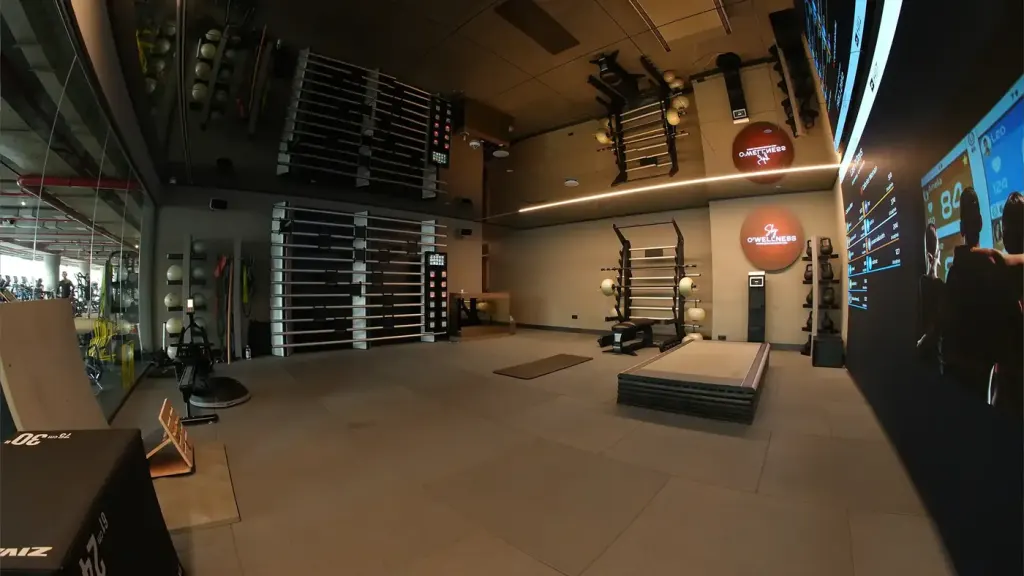
Alongside the strength and cardio area, our club offers Total Body classes and a functional area with the sled, kettlebells and TRX for strength, and O'Ride Cycle, Step Cardio and Cardio Kickbox classes for cardiovascular capacity. If you'd rather plan your programme with a coach than build it alone, you can use our Personal Training service.
Who should prioritise cardio, and who should prioritise strength?
For people who lead a sedentary life, have low endurance or carry cardiovascular risk factors, low-to-moderate intensity cardio provides a safe starting point; they should move into strength training gradually and consult a doctor first if they have an underlying health condition. For people at risk of muscle loss, low bone density or sarcopenia, especially those over 40, strength training should come first, with cardio in a supporting role. For athletes, or anyone with a specific performance goal such as a running race, the split is tailored to that goal.
LISS or HIIT: the difference between types of cardio
Cardio is not one thing: long, low-to-moderate intensity work (LISS, low intensity steady state) and high-intensity interval work (HIIT) serve different purposes. LISS covers 30–60 minute activities at a conversational intensity, such as brisk walking on a treadmill, steady cycling or swimming. Because its recovery cost is low, it can be added almost every day without clashing with strength days. HIIT is a 15–25 minute format that alternates short high-intensity bouts with active rest; it is time-efficient but has a high recovery cost, so it is recommended not to exceed 2 sessions a week or to stack it on strength days. For fat loss, a mix of 2 LISS + 1 HIIT sessions a week is a balanced approach for both sustainability and calorie burn.
How the cardio-strength balance changes with age
| Age group | Priority | Note |
|---|---|---|
| 20–35 | Flexible balance based on goal | Recovery capacity is high; intense combinations are well tolerated |
| 35–50 | Strength-led, cardio in support | Muscle loss begins; strength training should take priority |
| 50+ | Strength + low-impact cardio | Joint-friendly cardio (cycling, walking, swimming) should be chosen and balance work added |
For members over 50 we recommend joint-friendly options such as O'Ride Cycle or a stationary bike instead of high-impact cardio like running or jumping HIIT; if you enjoy swimming, you can also use pool facilities elsewhere in Ankara (there is no pool in Beytepe). Strength training remains a priority for bone density and balance.
Equipment and setting
Where you train also affects the outcome. Running outdoors puts load on the joints and depends on the weather; in Ankara's harsh winter or on hot summer middays, cycling or a treadmill indoors offers a more controlled setting. In strength training, free weights and machines complement each other: free weights work the stabilising muscles more, while machines give beginners a safe entry point. At O'Wellness Beytepe the strength and cardio area and the functional area are side by side, so you can build your whole programme in one place.
How should you measure progress?
On the cardio side, progress is tracked by lasting longer at the same intensity, covering the same distance faster or a falling resting heart rate over time. On the strength side, you track the load lifted, sets × reps volume and technique quality. To assess both together, we recommend a body composition measurement every four weeks, simple performance tests (for example, cycling time over a set distance and a 5-rep max squat) and a training log. For detailed methods, see the fitness and strength articles on our blog.
Conclusion: cooperation, not competition
Seeing cardio and strength training as rivals is the wrong way to look at it; they develop different systems, and when done together both appearance and health outcomes improve markedly. Build your weekly programme around your goal, don't drop either one completely, and leave enough room for recovery.
How does nutrition affect the balance?
Whatever the type of training, nutrition determines most of the result. Strength-focused programmes have a higher protein requirement (1.6–2.0 g per kilogram), because muscle repair and growth depend on protein synthesis. In cardio-focused programmes, carbohydrate timing becomes more critical; adequate glycogen stores before long aerobic sessions directly affect performance. A practical approach for those who do both is to pay a little more attention to protein on strength days and to carbohydrate timing on long cardio days. For a personal plan, you can get support from our dietitian service.
Don't neglect recovery
Recovery is what people who train cardio and strength hard together overlook most often. Too little sleep, chronic stress and skipped rest days lead to performance plateaus, constant fatigue and a higher risk of injury. Plan at least one full rest day a week, aim to keep your sleep within 7–9 hours and, if needed, make use of recovery tools such as Mobility & Stretching classes and a foam roller.
Frequently asked questions
Does fasted cardio speed up fat burning?
Fat oxidation may be slightly higher during fasted cardio, but the effect on total fat loss over 24 hours is not meaningful. Overall calorie balance is what counts.
Does cardio cause muscle loss?
Excessive, prolonged cardio can contribute to muscle loss, especially combined with inadequate protein intake. A moderate amount of cardio is not a problem within a strength programme supported by enough protein.
Can I do both with the same membership at O'Wellness Beytepe?
The strength and cardio area and group classes are the core facilities of our club. You can find out which classes and extra services, such as Reformer Pilates, are included in each membership option on our membership page.
If I have a heart or joint condition, which should I prioritise?
In this case the programme should be individual. Consult your doctor, then build a safe starting plan with our instructors or sports physiotherapist at O'Wellness Beytepe.
Fill in the contact form to build your personal cardio-strength balance with us and schedule your free trial session.
Related posts

How to Do a Romanian Deadlift (RDL): A Hinge Guide for Hamstrings and Glutes
The RDL is one of the most effective ways to learn the hip hinge and strengthen the posterior chain. We walk through setup, technique, common errors and progressions.
Triathlon Preparation: Balancing Swimming, Cycling and Running
A triathlon preparation guide: weekly distribution of the three disciplines, swim options in Ankara, bike and run sessions, transitions and a 12-week framework.

How Many Reps to Build Muscle? Hypertrophy, Strength and Endurance Ranges
How many reps should you do to build muscle, and how are rep ranges, set counts and rest times set for hypertrophy, strength and endurance? An O'Wellness Beytepe guide.
