
Dance-Style Classes and Coordination: The Brain-Body Connection
Classes built on rhythm and step patterns improve coordination, balance and focus. Here is which classes at Beytepe deliver this benefit and what to watch out for.
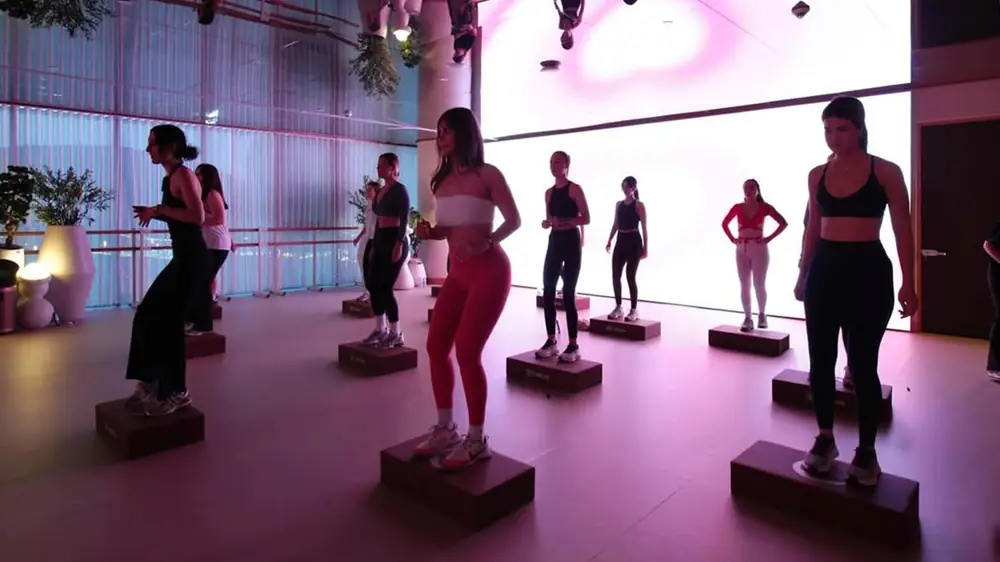
When people talk about the benefits of dance fitness, calorie burn and a fun training atmosphere usually come to mind first. Yet one of the most valuable things a class built on rhythm and step patterns gives your body is coordination. Every class that forces you to tie steps to music, music to breath and breath to movement is a workout that strengthens the line of communication between your brain and your body. Although the O'Wellness Beytepe class schedule has no format officially called a dance class, tempo- and step-pattern-based classes such as Step Cardio and Cardio Kickbox are the closest equivalents for this coordination benefit.
What is coordination, and why is it more than muscle strength
Coordination can be defined as different muscle groups, sense organs and the nervous system working in harmony to carry out a movement smoothly, fluidly and on time. When you squat, it is not only the strength of your leg muscles that matters but also whether your knee, hip and ankle move in the right order and at the right angle. In rhythm-based classes the equation gets another layer: a time frame (the tempo of the music) and often a change of direction are added to the movement. That is why coordination is a motor skill that is independent of pure strength and has to be developed in its own right.
The brain-body connection: how motor learning works
When you first try a new step pattern, the movement is choppy, deliberate and slow; at this stage the brain plans every step consciously. As repetitions accumulate, the pattern becomes more automatic in the nervous system and conscious effort fades. This is a well-known phenomenon among general motor learning principles. In rhythm-based classes this learning process is constantly triggered because combinations change from time to time, direction changes and tempo changes. This keeps the brain from slipping into autopilot and gives regular practice to attention, processing speed and memory-movement pairing. If you have a particular health condition, it is recommended to consult your doctor before starting a new training program.
Attention and multitasking
In a Step Cardio or Cardio Kickbox class you have to follow several things at once: the order of your foot placement, your arm movement, the tempo of the music and often the instructor’s next cue. This multitasking structure is useful in daily life too; scanning your surroundings while walking through a crowd and still keeping up a conversation, for example, relies on a similar mental capacity.
Memory-movement patterns
Repeating combinations builds procedural memory, a type of memory that does not require conscious recall. Just as you never forget how to ride a bike, people who attend regularly start to remember basic step patterns without effort over time. That makes it easier to settle into the flow of the class more quickly.
Step Cardio and Cardio Kickbox: structural differences in coordination
Although both classes are rhythm based, their coordination demands show up in different ways. In Step Cardio, the challenge comes largely from moving the feet in the right order on and around the step, with changes of direction and height. In Cardio Kickbox, punch and kick combinations demand upper and lower body coordination at the same time; the lower body manages balance and weight transfer while the upper body strikes at a different rhythm.
| Class | Coordination demand | Key skill |
|---|---|---|
| Step Cardio | Foot sequence, change of direction and height | Spatial awareness, lower body rhythm |
| Cardio Kickbox | Upper-lower body synchronization | Balance, weight transfer, reaction speed |
| O'Ride Cycle | Tempo tracking, cadence changes | Sense of rhythm, endurance-focused concentration |
| Booty Class | Repetitive patterns matched to tempo | Muscle memory, lower body control |
The cycle-based O'Ride Cycle class has no step combinations, but because it requires matching cadence (pedal speed) changes to the tempo of the music, it trains your sense of rhythm in a similar way. Booty Class, meanwhile, combines repetitive movement patterns with tempo and offers a coordination workout based more on muscle memory.
Why coordination matters for general health and daily life
The benefits of coordination training reach well beyond the studio walls. Maintaining balance and reaction speed is considered an important component of reducing fall risk, especially at older ages. The reflexes we use when climbing stairs, changing direction in a crowd or dodging an unexpected obstacle can be supported by regular coordination training. Improved multitasking can also be seen as a side effect that supports mental flexibility at work and in everyday planning.
How a Step Cardio class unfolds minute by minute
The flow below shows the general structure of a typical 45-50 minute Step Cardio session. The order of combinations may vary by instructor, but the time distribution stays similar.
| Minutes | Section | Content |
|---|---|---|
| 0-8 | Warm-up | Simple step-up movements, low tempo, joint mobility |
| 8-15 | Teaching the base combination | The new step pattern is shown piece by piece at slow tempo |
| 15-35 | Main block | Combinations are linked together and the tempo is fully synchronized with the music |
| 35-42 | Increasing intensity | Difficulty rises with arm movements or jumping variations |
| 42-50 | Cool-down and stretching | Heart rate comes down; static stretches for the lower body and hip area |
Level variations: beginner and advanced
For beginners
In your first classes, following the basic step unit rather than the whole combination should be the priority. In Step Cardio, stepping up and down is enough; in Cardio Kickbox, learning the basic form of punches and kicks at low tempo is enough. Practicing direction changes with simplified, low-repetition combinations gives the nervous system time to adapt.
For advanced participants
For experienced participants the complexity of the combination is raised: longer step sequences, quick direction changes and arm and leg movements joined at different rhythms are added. At this level the goal is no longer just to perform the movement correctly but to keep form and fluidity despite an accelerating tempo.
Common mistakes
- Focusing too much on steps and losing form: While trying to remember the combination correctly, letting knee, back or shoulder alignment slip can put unnecessary load on joints over time; accuracy should come before speed.
- Pushing the music tempo: Trying to match the tempo before you are familiar with the combination slows coordination learning and reinforces wrong movement patterns; asking the instructor for a simpler variation when needed is more effective.
- Holding your breath: Forgetting to breathe while concentrating on a complex step sequence hurts both performance and attention.
- Working without visual reference: Watching the mirror or the instructor speeds up learning on new combinations; standing near the front in your first classes can help.
- Quitting after a mistake: Missing a step is a natural part of learning; rejoining at the next repetition of the combination is far more useful than giving up.
Who it is not suited to, and who should be careful
Rhythm-based classes that involve steps and changes of direction require extra care for people with serious balance problems, inner-ear balance disorders or an acute ankle or knee injury. In these cases, always consult your doctor or sports physiotherapist before starting. In later stages of pregnancy, because of changes in balance, avoiding jumping and rapid direction changes and choosing a more controlled format may be more appropriate. If you feel dizziness, sudden shortness of breath or unusual pain, it is important to stop the class and let your instructor know.
Weekly combination suggestion
Rather than spreading a coordination-focused class across the whole week, balancing it with strength and stretching work gives a more holistic result. A sample week could look like this: Monday Step Cardio, Tuesday strength work with Total Body, Wednesday Cardio Kickbox, Thursday recovery with Mobility & Stretching, Friday O'Ride Cycle, and on the weekend Deep Stretch Yoga or full rest, depending on preference. This structure gives enough recovery time for the neural fatigue coordination classes bring while not neglecting strength and flexibility development.
How to measure progress
Measuring coordination progress differs from measuring strength or endurance gains; here, instead of a number of kilos or repetitions, fluidity and accuracy are the main indicators. Completing a combination flawlessly on the first try, matching the tempo with less conscious effort, learning a new combination in fewer repetitions and feeling less mental fatigue at the end of class are practical signs that coordination is improving. These indicators become clearly noticeable over time, especially for people who attend regularly.
Why training in a group class differs from training alone
Although it is possible to learn steps at home with a video, an instructor’s live feedback makes an important difference in coordination learning. The instructor breaks the combination into parts, adjusts the pace to the level of the class and corrects a participant whose form slips on the spot. The visual reference a group setting offers, being able to watch the person in front of or next to you, is a factor that speeds up learning, especially for beginners. Experiencing the music in a live setting with a strong sound system also boosts motivation compared with a workout done in front of a screen.
Where rhythm-based classes fit at O'Wellness Beytepe
At O'Wellness Beytepe, inside the Yaka Beytepe complex, Step Cardio, Cardio Kickbox and O'Ride Cycle are part of the O'Wellness class schedule and are held in the O'Rise studio. You can see the days and times of these classes on the weekly schedule page and browse our group classes page to build a combination that suits your goal. After an intense coordination session, a Mobility & Stretching class can support recovery. The club operates 06:00-23:00 on weekdays and 08:00-23:00 on weekends; we recommend checking the current class times.
Tips for preparing for your first class
- Choose sports shoes that let you move comfortably and do not restrict your ankle.
- In your first class, position yourself not in the very front row but somewhere in the middle where you can see the instructor and the mirror comfortably.
- Do not aim to learn the entire combination the first time; following the basic step is enough.
- Keep your breathing steady and breathe in a natural rhythm along with the movement.
- Mild muscle fatigue after class is normal; if you feel joint pain, tell your instructor.
Frequently asked questions
Are the benefits of dance fitness only calorie burn, or does coordination really improve?
No. One of the most important contributions of classes built on rhythm and step patterns is the development of motor skills such as coordination, balance and attention; this effect is an accepted phenomenon supported by general motor learning principles.
Is there a dedicated dance class at O'Wellness Beytepe?
There is no format under the name dance, but rhythm- and tempo-focused classes such as Step Cardio, Cardio Kickbox and O'Ride Cycle provide a similar coordination benefit.
I have no coordination at all. Can I still join these classes?
Yes, coordination is a skill that can be developed later; in your first classes it is enough to follow the basic step and get used to the combinations over time.
I have a balance problem. Should I take these classes?
If you have a serious balance problem or an inner-ear balance disorder, you must consult your doctor before starting a class.
Where can I join these classes in Ankara?
The classes are held at O'Wellness Beytepe in the Yaka Beytepe complex; you can check our weekly schedule page for current times and contact us for founding membership pre-registration and a free trial session.
To experience the effect of rhythm-based classes on coordination yourself, you can fill in the form on our contact page and plan your free trial session.
Related posts

Heart Rate Zones: Finding the Right Intensity in Group Classes
What are heart rate zones, how are they calculated and which group class at O'Wellness Beytepe matches which zone? A guide to finding the right intensity with heart rate tracking.

Movement Modification in Group Classes: How to Adapt to Your Own Level
How do different levels work side by side in one class? Adapt movements with regression, progression and the pain-versus-effort distinction.
Benefits of Step Aerobics: How a Step Cardio Class Works
We explain the cardio, leg strength and coordination benefits of step aerobics, the structure of Step Cardio and first-class tips from O'Wellness Beytepe.
