
Core Strength with Reformer Pilates: Engaging the Transversus Abdominis Correctly
In pilates, the real target for core strength is not the visible abs but the deep transversus abdominis. We explain how to activate it correctly and which reformer exercises help.
When we say we are working our core, we usually think of the six-pack muscles (rectus abdominis); yet in the philosophy of core strength in pilates, the real target is the transversus abdominis, a muscle that cannot be seen but forms the foundation of spinal stability. In this article we look at what this deep muscle does, how to activate it correctly and which reformer exercises target it.
What is the core, and is it only the abs?
The core covers the entire muscle system between the rib cage and the pelvis: the rectus and transversus abdominis at the front, the obliques at the sides, the multifidus and erector spinae at the back, the diaphragm above and the pelvic floor muscles below. These muscles work like a cylinder, supporting the spine from every direction. Focusing only on the visible front abdominal muscles means neglecting the other walls of this cylinder and often creates an imbalance that contributes to lower-back pain.
Why is the transversus abdominis important?
The transversus abdominis is a muscle deep in the abdomen that wraps around horizontally like a corset. When it contracts, it raises intra-abdominal pressure and stabilises the spine from within. Various studies have shown that in people with chronic lower-back pain the timing of this muscle's activation is disturbed, meaning it works with or after the movement instead of preceding it. One reason pilates and reformer exercises are often recommended for back health is that they teach you to activate this muscle consciously and on time.
How can you feel the transversus abdominis?
Noticing this muscle for the first time is hard for most people because it is not used consciously in daily life. A simple awareness exercise: lie on your back, bend your knees and place both hands just inside your hip bones. Cough lightly; you will feel a slight hardening under your fingers, which is the transversus abdominis contracting. In pilates breathing, you learn to activate this muscle consciously by drawing the belly gently in and up as you exhale (the cue being to draw your belly toward your belt).
Why is the reformer effective for training this muscle?
- Instant feedback: In movements where the carriage must stay still, if the core is working weakly the platform moves in an unwanted way, showing whether the muscle is activating correctly.
- Scalable difficulty: By raising spring resistance, the core's stabilising task can be made progressively harder.
- Functional positions: Working in different positions such as seated, side-lying and kneeling mimics the core's multidirectional job in daily life.
- Integration with breath: Reformer movements are by nature done in sync with the breath, reinforcing the habit of the transversus abdominis working together with breathing.
Basic reformer exercises
The Hundred
A pulsing arm movement performed lying on your back with the upper body slightly lifted; it trains core endurance and breath-movement coordination.
Core activation with footwork
Consciously activating the transversus abdominis during footwork with the feet on the bar builds the habit of this muscle working in the background in every movement.
Plank variations
A plank on the carriage with hands or forearms works the entire core cylinder at once; the carriage staying still is the sign of correct activation.
Anti-rotation work with the straps
During a one-arm pulling movement, the core has to work in the opposite direction to stop the torso rotating; this transfers directly to everyday asymmetric movements such as carrying a bag.
A sample four-week progression
| Week | Focus | Sample exercise |
|---|---|---|
| 1 | Awareness | Transversus abdominis activation with breath, light footwork |
| 2 | Static stabilisation | Short planks, hundred preparation position |
| 3 | Dynamic stabilisation | Anti-rotation pulls, full hundred |
| 4 | Integration | Core control in standing, functional movements |
Core strength is not limited to the abs
A strong core also requires adequate activation of the back muscles (especially the multifidus and erector spinae). Light extension movements performed face-down on the reformer target this often-neglected back wall. Focusing only on forward-bending movements can lead to unbalanced development of the core cylinder; a well-designed programme therefore includes flexion, extension and anti-rotation work together.
Synchronising breath and core activation
In pilates breathing, the exhale is usually matched to the moment of effort, which is when the core is needed most. In the hundred, for example, breath is taken in and out rhythmically while the arms pump up and down; this rhythm keeps the transversus abdominis in continuous, low-intensity activation. Breathing randomly or holding the breath altogether breaks this continuity and can cause the core to switch off.
The role of core strength in athletes
In sports with rotational movement such as padel, tennis and golf, and in running, core stability acts as a power-transfer centre that passes force efficiently to the arms and legs. A weak core can let energy leak through the torso and indirectly cause compensatory loading on the back, hips or knees. For this reason athletes usually plan reformer core work together with movement patterns specific to their sport.
Common mistakes
- Holding the breath: Trying to activate the core by holding your breath mismanages intra-abdominal pressure and reduces the effect.
- Squeezing only the visible muscles: Over-tightening the rectus abdominis while neglecting the transversus results in superficial activation.
- Pulling the belly in too far: Over-drawing the belly triggers a tense posture, not natural core activation.
- Using maximum effort in every movement: Core stabilisation is usually a continuous activation of low-to-moderate intensity; maximal bracing is not always needed.
Who should be careful
- People who have recently had abdominal surgery should get their surgeon's approval before starting exercise.
- People with diastasis recti (separation of the abdominal muscles) should prefer modified movements under expert supervision instead of classic core exercises.
- If there is severe lower-back pain or a neurological symptom (numbness or weakness in the leg), a doctor's evaluation is needed first.
How is progress measured?
Progress in core strength is assessed through longer plank times, less lower-back fatigue in daily life (when lifting something or standing for a long time) and the carriage stability observed by the trainer. Rather than a numerical core test, consistency in movement quality is the real indicator.
A sample case flow
When a member who works at a desk and has mild chronic lower-back pain starts the programme, the first week focuses only on breath and transversus abdominis awareness. In the second week, short planks and hundred preparation positions are added. In the third week anti-rotation pulls come in. By the end of the fourth week the member reports feeling less fatigue in the lower back after standing for long periods and feeling more secure in daily movements.
Carrying core strength into daily life
The activation pattern learned on the reformer can also be applied consciously outside the session: small habits such as lightly activating the core on the exhale when lifting something from the floor or keeping the pelvis neutral while standing for a long time support back health at a daily level. To ease this transition, our trainers usually share practical tips at the end of a session based on one or two everyday examples.
Differences by age and level
For beginners, core work starts with low spring resistance, short durations and frequent breaks; the aim is first to learn the correct activation pattern. At advanced level, the core is challenged with dynamic, multidirectional movements (rotating, carrying a one-sided load). For members over 50, core work is usually combined with the goal of improving balance and reducing fall risk; in this group stabilisation movements take priority over fast dynamic ones.
Equipment and technical details
In core-focused work, spring choice varies with the aim of the movement: in stabilisation movements (such as the plank) a medium-heavy spring helps hold the carriage still, while in dynamic movements (such as the hundred) lighter springs preserve flow. Strap length determines the arm's range of motion in anti-rotation movements.
Combining with related classes
Those who want to support core strength beyond the reformer can join the Crunch & Core class. To develop overall trunk stability holistically, Mat Pilates classes can be planned together with reformer sessions. For core work integrated into performance in athletes, the Personal Training and Athletic Performance options under our specialist services can be considered.
Core-focused reformer work at O'Wellness Beytepe
In our Reformer Pilates studio at Yaka Beytepe, with Balanced Body equipment and groups of at most 6-8 people per session, each participant's core activation is followed individually by the trainer. Those who want to work one-to-one also have the Private Reformer Pilates option. For information about our trainer team, visit the trainers page.
The breath test as part of core assessment
Our trainers apply a simple breath and core test to some members in the first session: lying on the back, they observe how the abdominal wall moves during belly breathing. Excessive bulging of the belly forward or the chest moving dominantly can be a sign that the transversus abdominis is not engaging enough. This simple observation helps determine the starting point of the programme.
Frequently asked questions
Does training the transversus abdominis burn belly fat?
No, spot fat reduction is not physiologically possible. Training this muscle improves core stability and posture; changes in appearance are related to overall calorie balance and total-body training.
Should core work be done every day?
The deep core muscles need recovery like any other muscle. Two to three focused sessions a week, together with light daily activation awareness, are usually enough.
I have lower-back pain; can I do core work?
With mild, chronic lower-back pain, properly guided core work is usually beneficial and often recommended. With severe or newly started pain, it is important to consult your doctor first.
Why choose O'Wellness Beytepe for core-focused Reformer Pilates in Beytepe?
Small groups, trainers who follow each participant individually and Sports Physiotherapist support in the same club provide an environment focused on teaching core activation correctly.
In conclusion, core strength is less about the tightness of the visible muscles than about the deep muscles working with the right timing; the controlled environment of the reformer offers a favourable space to learn that timing. Over time this awareness moves from a conscious effort to an automatic habit and quietly accompanies your daily movements.
Related posts
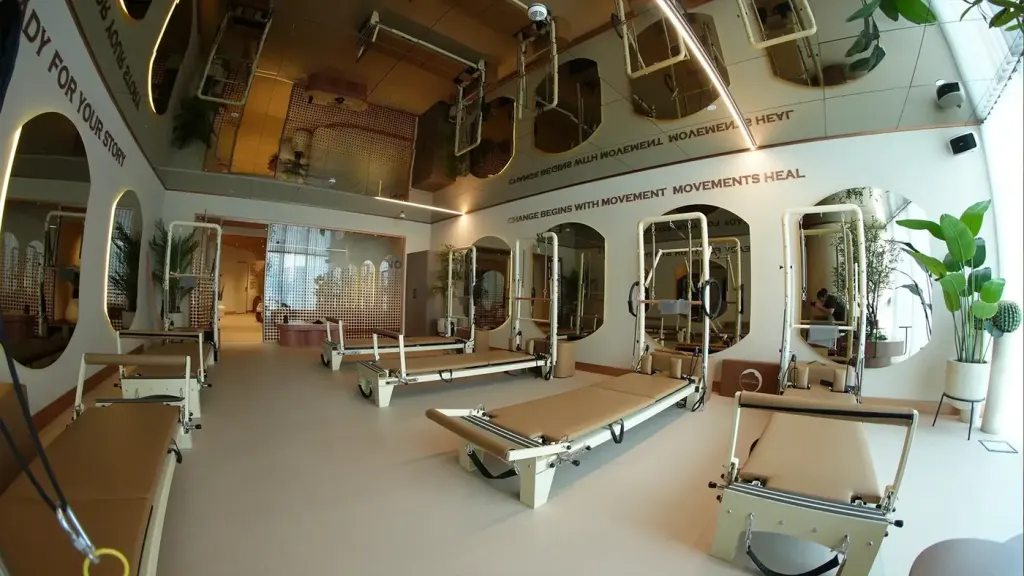
10 criteria to consider when choosing a reformer pilates studio in Beytepe
The 10 criteria to check when choosing a reformer Pilates studio in Beytepe, from equipment and class size to instructors and membership flexibility.
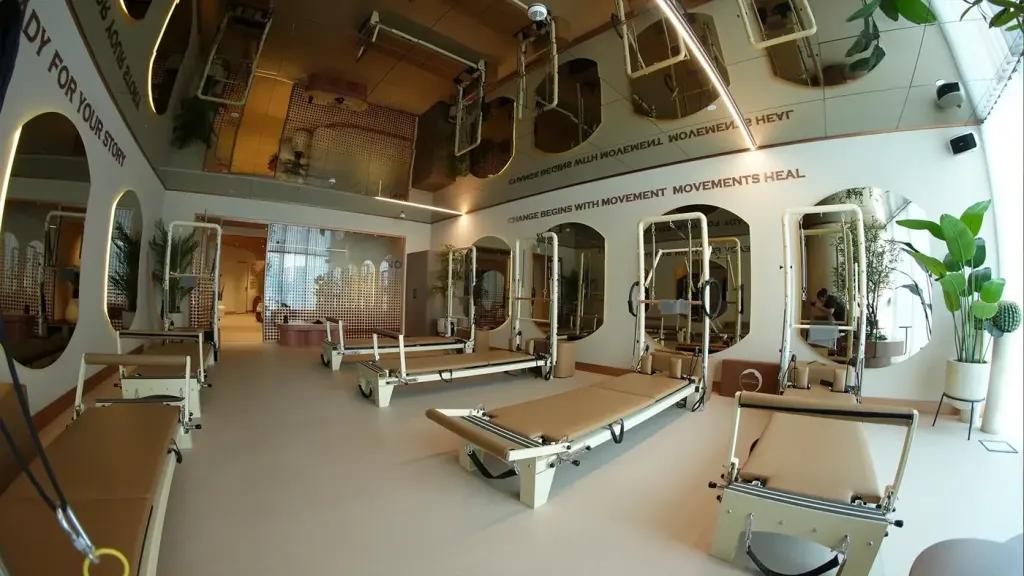
How Many Days a Week Should You Do Reformer Pilates? Programme Tips by Level
Reformer Pilates frequency depends on your level, goal and recovery capacity. Recommendations by level, sample plans and a step-by-step progression protocol.
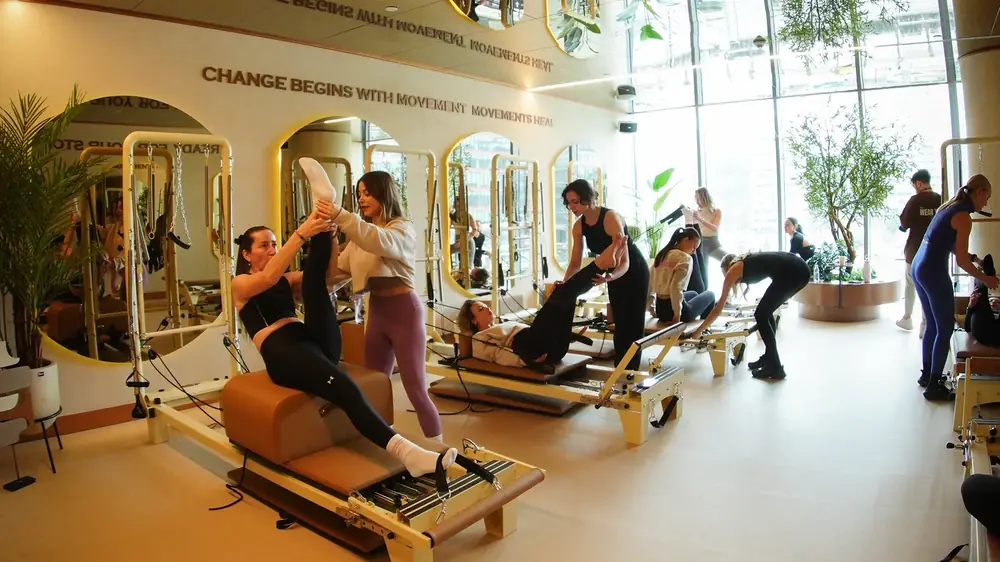
Reformer Pilates for Men: Why Strength Athletes Are Turning to the Reformer
Why are strength athletes turning to the reformer? We explain its contribution to mobility, deep core control, asymmetry correction and eccentric control.
