
Choosing a Workout Time Around Travel: A Guide for Çankaya, Çayyolu and Ümitköy
A practical method for choosing a workout time based on travel time, daily energy and busy hours.
For people living in Ankara, especially along the Çankaya, Çayyolu and Ümitköy line, choosing a workout time is not only personal preference but also a matter of transport and time management. At busy hours of the day, the time spent on the road can exceed the time set aside for exercise. This guide explains practical ways to choose a training time while accounting for travel to and from the club. We do not quote specific travel times because every person's route and day differ. Instead we offer a method that lets you decide from your own data.
Travel time is part of the workout
For someone planning three sessions a week, spending an extra hour per session on getting to and from the club adds up to a serious time cost per month. That cost is one of the most common reasons people drop a program. When planning, think of the total session time as travel, preparation, training, shower and return. If that total looks unsustainable, you need to cut the session count or change the time.
Map your own congestion pattern
For two weeks record your travel times to the club or your target location at different hours. A simple note is enough: day, time, approximate duration. After two weeks you will clearly see which hours are easy and which are burdensome for you. Trusting your own data rather than general belief makes planning decisions sturdier.
- Test weekday morning, midday, after-work and late evening slots.
- Note the duration and your fatigue level each time.
- Evaluate weekend mornings in a separate column.
- After two weeks pick your three easiest time windows.
Pros and cons of different time windows
| Time slot | Advantage | Disadvantage |
|---|---|---|
| Early morning | Done before the day starts, clear mind | Hard to wake up, longer warm-up needed |
| Lunch break | Splits the day, gives energy | Limited time, preparation can be hard |
| After work | Releases daily stress | Gym and roads may be crowded |
| Late evening | Calmer environment | Intense training close to bedtime may affect sleep |
| Weekend | Unhurried session | May clash with social plans |
No time window in the table is absolutely best. The right time is the one you can sustain. Also, the club's busy hours will be observed after opening, so trying different times in the first weeks is useful.
Managing busy hours
In every gym certain hours can be busier than others. Waiting for equipment in a crowd disrupts the flow of training. The way to manage it is to keep your order flexible: if a station is taken, move to an alternative movement or do a superset. Write your program by movement, not by machine; for example think "a hip-dominant leg exercise" rather than "leg press".
- If a station is occupied, start with a different movement.
- Use supersets to make good use of idle time.
- Book ahead for classes that need reservations.
- Leave an extra 10 minutes for sessions that fall in busy hours.
Adjusting session length to travel time
When the commute is long, cutting the number of sessions while keeping quality is often more sustainable than shortening every session. For example, on days when the road is a burden you can do a dense 45-minute full-body session, and on easier days schedule a long session or group class. For short sessions focus on effective choices: compound movements, supersets and short rests.
Transport options and parking
The Yaka Beytepe complex has a car park. Its location on Kanuni Sultan Süleyman Boulevard aims to make access easier from the Çayyolu and Ümitköy line and from around the Hacettepe Beytepe campus. Because public transport routes and stops can change over time, we recommend checking current information from the relevant official sources.
If you will come by car, add parking and walking time to the session plan. If you live within walking or cycling distance, you can treat the trip as part of the warm-up.
Training after work and on the way to work
For people whose office is on the Çayyolu or Ümitköy side, an after-work session reduces the friction of going out again, because going home and leaving again is often the first step to cancelling a workout. Putting your gym bag in the car in the morning is a small habit that minimizes that friction.
For morning training, packing the bag the night before works the same way. Account for shower and preparation time and leave a safety margin so you are not late for work.
Building a new routine at Yaka Beytepe
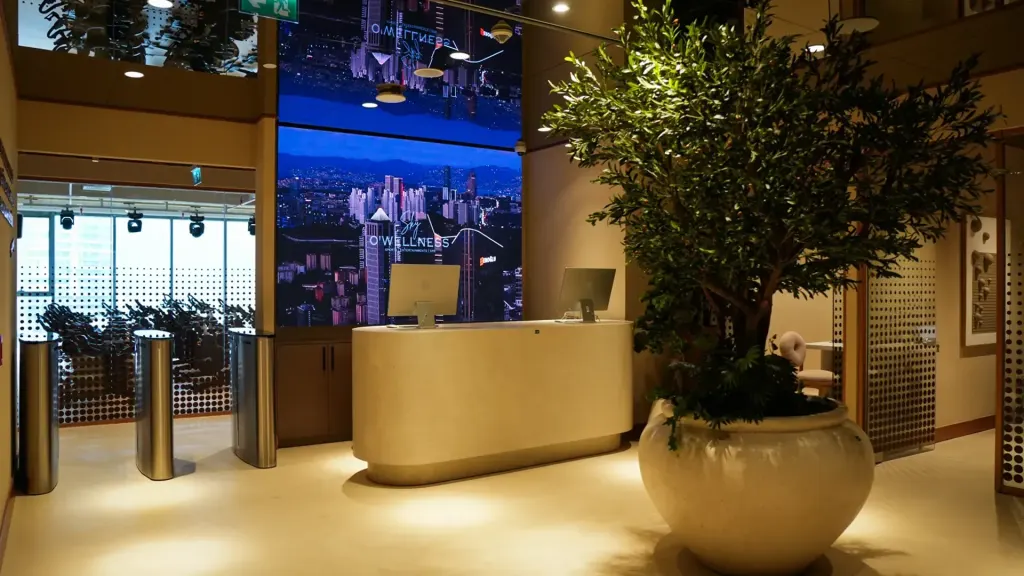
O'Wellness Beytepe is getting ready to open in the Yaka Beytepe complex; opening is very soon and there is no exact date yet. Once weekday and weekend programs are published you can see class times on the weekly schedule page. Those who leave a founding membership pre-request get the chance at the pre-opening introduction to see the facility and judge how well it fits their own time plan.
Sleep routine and chronotype
Some people have more energy in the morning, others in the evening. This tendency is called chronotype and can be considered when choosing a workout time. But work and life conditions often override it, so aim for the feasible time instead of the ideal one. What matters is not sacrificing sleep at the time you choose.
If you train intensely late at night and have difficulty falling asleep, try moving the session a little earlier or lowering intensity in the evening. In morning training the body can take longer to warm up after waking; extend your warm-up.
Fixed time or flexible time?
A fixed time makes it easier to form a habit; the brain associates a given time with training. Working life can be unpredictable, though. The sturdiest approach is a primary fixed slot and a backup slot. For example Tuesday evening could be primary and Wednesday morning the backup. That way a meeting that crushes one session does not collapse the plan.
- Set a primary and a backup time for each session.
- Block training on your calendar like a meeting.
- Prepare your gym bag in advance.
- When you use the backup slot, see it as the plan working, not as failure.
The first-month trial period
The first month at a new club can be treated as a trial period. Visit at different times and observe crowd levels, class times and travel durations. At the end of the fourth week decide which hours suit you best and fix your program on those data.
Common mistakes
The most common mistake in choosing a workout time is making an ideal but unsustainable plan. Someone who aims to wake at five every morning but is sleep-deprived all week soon quits the program. Another mistake is ignoring travel time altogether; a session that looks like 45 minutes in the plan can really take two hours.
- Planning without accounting for travel, preparation and shower.
- Keeping all sessions at the same intensity.
- Not setting a backup slot.
- Forcing early rising at the cost of sleep.
- Insisting on a single time slot in the first weeks.
The fix is to build the plan on real data, define a backup slot and count the first month as a trial. When a time does not work, treat it not as a personal failure but as a parameter to adjust. Small adjustments often give more lasting results than big plans.
Finally, think about what comes after sessions: shower, meals and the trip home affect your sleep routine. Someone who returns late at night may struggle to recover the next morning. So a good rule when planning is to leave a 60 - 90 minute buffer after the session.
A similar calculation applies to those who live near the club: even if the road is short, preparation and shower time determine the real length of the session. If you can come on foot or with a short drive, you can keep the plan more flexible and use small gaps in your day. For example, on a day when a meeting is cancelled you can do a 30-minute session right away.
Another way to cut travel time is to combine sessions. Planning strength plus a short stretching or sauna session on the same day can save time compared with coming separately. However, ask your physician about sauna or steam use after a demanding workout according to your health status.
What is the best time to train?
There is no single best time for everyone. The best time is the one you can sustain, given your sleep, work schedule and travel time.
Is training at busy hours inefficient?
If you write your program by movement rather than machine and stay flexible, you can train effectively even at busy hours.
Is there parking?
Yes, the Yaka Beytepe complex has a car park. For current usage conditions you can contact us.
How many sessions per week are sustainable despite travel time?
It varies by person. Record your own travel times for two weeks and calculate the total; for many people 2 - 3 sessions a week is a good start.
Choosing a workout time should be a decision that accounts for travel time and your energy through the day. A small two-week log lets you decide with data instead of guesses. When Yaka Beytepe opens we can find the hours that best suit your own routine together.
Related posts
Getting to Yaka Beytepe: Metro, Bus and Parking Guide
How do you reach the Yaka Beytepe complex by car, the M2 metro or bus? A practical guide to getting to O'Wellness Beytepe from Ankara's western corridor.
Rain and Wind Plan B: A Guide to Indoor Training in Beytepe
When the weather turns, your motivation does not have to. Here are practical ways to switch to indoor training when your outdoor plan gets rained out.

Home and Club Movement for Hybrid Workers: A Weekly Strategy in Ankara
A practical hybrid-work structure that treats home and office days separately and combines club training with daily movement.
