
Home and Club Movement for Hybrid Workers: A Weekly Strategy in Ankara
A practical hybrid-work structure that treats home and office days separately and combines club training with daily movement.
Remote and hybrid work has significantly reduced how much many people move during the day. When the natural walking, stairs and transit movement of commuting disappears, most of the day can be spent in front of a screen. For hybrid workers living around Çayyolu, Ümitköy and Beytepe in Ankara, this requires new planning. This guide proposes a structure that treats days at home and days at the office differently and combines club training with home movement.
The movement cost of hybrid work
A person working from home can take very few steps on days without a commute. The small distances between kitchen, desk and bed do not replace daily movement. That is why you need to plan movement consciously on home days. Office days, on the other hand, can be tight on time because of the commute and long meetings.
As a result two different day types call for two strategies: spreading movement through the day on home days, and fitting training into after work or lunchtime on office days.
Home-day and office-day strategies
| Day type | Core problem | Strategy |
|---|---|---|
| Home day | Very little natural movement | Short movement breaks spread through the day, a lunchtime walk |
| Office day | Time pressure, commute | Short but intense session, after work or lunch break |
| Weekend | Lack of structure | One longer strength session and one active rest |
Movement breaks on home days
Take a 2 - 3 minute micro break every 45 - 60 minutes. During these breaks you can stand up and do hip and shoulder mobility, a few squats or wall push-ups. In total, 5 - 8 small breaks through the day noticeably raise total movement and can help ease neck and back tension.
- Take phone calls standing or walking.
- Take a 15 - 20 minute walk at lunch.
- If your desk is adjustable, work standing from time to time.
- Add 5 minutes of stretching at the end of the workday.
Time pressure on office days
Planning a long session on office days is often unrealistic. Instead schedule a dense 40 - 45 minute session or a 30-minute group class. If the session is close to the end of the office day, going directly to the club without going home prevents loss of motivation.
If you are considering a lunchtime workout, it has to be close to the office, so assess your office location and the distance to the club realistically. If the trip is long, after work may make more sense than lunchtime.
A sample weekly structure
- Monday (office): 45-minute full-body strength session.
- Tuesday (home): lunchtime walk and micro breaks.
- Wednesday (office): group class, for example Total Body or HIIT.
- Thursday (home): 20-minute mobility and bodyweight session.
- Friday (home or office): optional Reformer Pilates or short strength.
- Weekend: one longer strength session and one active rest.
This structure is only an example. Shift it according to your own meeting calendar, commute and energy. What matters is at least two strength stimuli per week and some movement every day.
Home workspace and posture
An ergonomic setup matters for long hours at a screen. Screen at eye level, elbows at roughly 90 degrees and feet on the floor are generally accepted principles. But the best posture is a changing posture: not staying in the same position for long may matter more than the ergonomic setup itself.
Equipment-free mini workouts at home
- Squat: 2 sets x 12 - 15 reps.
- Wall or kneeling push-up: 2 sets x 8 - 12 reps.
- Glute bridge: 2 sets x 12 - 15 reps.
- Plank: 2 x 20 - 40 seconds.
- Hip opening and shoulder circles.
These mini circuits do not replace club training, but they keep movement continuous on home days. If you feel pain, stop and consult a health professional if needed.
Social connection and motivation
One side effect of working from home is less social interaction. Group classes and training partnerships can provide both motivation and social connection. A fixed weekly class or an appointment with a friend helps sustain the routine.
For hybrid workers at Yaka Beytepe
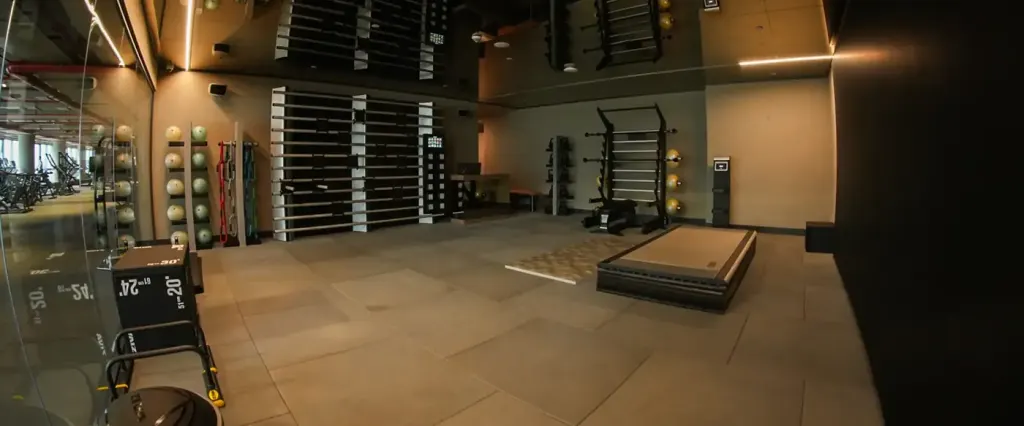
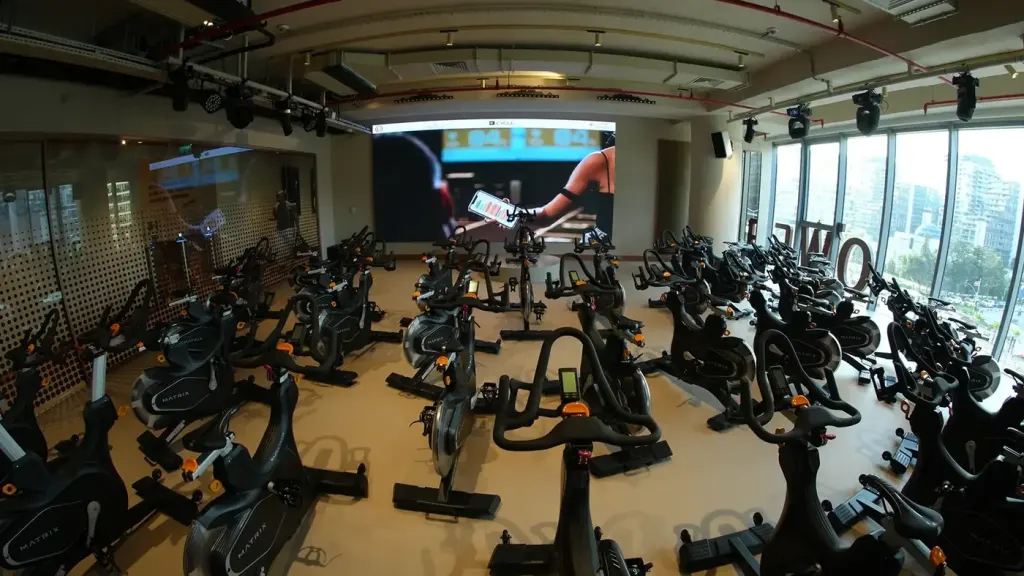
O'Wellness Beytepe is getting ready to open in the Yaka Beytepe complex; opening is very soon and there is no exact date. Founding membership pre-requests are being accepted. Group classes, the strength and cardio area and the Reformer Pilates studio aim to provide a variety of formats that adapt to your different day types. The complex car park and the location close to the Çayyolu–Ümitköy line aim to make after-work sessions easier.
Meeting load and energy management
Back-to-back video meetings create both physical and mental fatigue. On those days, if your energy is low, lower the intensity instead of skipping training. A light walk, mobility or a short yoga session can help calm the mind in the evening. Mark heavy meeting days on your calendar in advance and plan a lighter session for them.
Taking a short standing break in the middle of meetings supports both focus and circulation. If possible, shorten half-hour meetings to 25 minutes and leave a 5-minute movement gap.
Nutrition and hydration routine
Proximity to the kitchen when working from home can increase snacking. Regular meal times, keeping a water bottle at the desk and protein-containing snacks help here. Eating lunch away from the screen with a short break supports digestion and mental rest. If you need a specific nutrition plan, working with a dietitian makes sense.
Small rules for sustainability
- Make at least one movement break per day a rule.
- Aim for at least two strength sessions per week.
- If you miss a session, move it to another day that week rather than doubling up.
- Do a short monthly review and update the routine if needed.
Common mistakes
The most common mistake of hybrid workers is counting home days as completely free days. When movement is not planned at all, only a few hundred steps may be taken by the end of the day. The second is using time pressure on office days as an excuse to skip training entirely. The third is overloading the weekend: cramming all the week's sessions into two days raises injury and fatigue risk.
- Not planning movement on home days.
- Skipping the session entirely on office days.
- Cramming all training into the weekend.
- Never breaking up long sitting periods.
- Not adjusting intensity on heavy meeting days.
The solution is to give each day type a small but clear task: a walk for the home day, a short session for the office day, a balanced strength block for the weekend. Regular small steps are far more lasting in the long run than zero-or-hundred behavior.
At the end of the week do a two-minute check: how many strength sessions did I do, on how many days did I take movement breaks, which day was hard? This simple habit helps you plan the next week more realistically.
A change of place is also a training tool. Working one day a week from a café, library or coworking space rather than home can increase the walk to get there and social contact. This small change lightens the inactivity created by the tendency to stay at home.
Sleep routine matters too. Working from home can blur start and finish times, and screen time stretching late can disturb sleep. Setting a fixed finish time and following it with a short walk or stretching acts as an end-of-work ritual and eases the transition into the evening.
Once you have set up this structure you do not need to reinvent it every week. Experiment in the first weeks, fix what works and adjust the rest when needed.
Remember that the goal is not a perfect week but a consistent average. Even doing half the plan in a week is worth far more than doing nothing. Building a routine takes time; be patient with yourself in the first weeks and notice small wins.
How many steps should I take per day when working from home?
No single number applies to everyone. Regular movement and walking spread across the day is a practical way to raise total movement. Consult your physician about your own health.
Is strength training needed on home days?
Not required. Two strength sessions a week can be a starting point for general goals; on home days short mobility and light sessions may be enough.
Is a lunchtime workout effective?
Yes if it is short and planned. It is important to consider meal timing after the session and your time to return to work.
Which group classes suit hybrid workers?
Total Body, HIIT, Mobility & Stretching and Reformer Pilates can address different needs. Choose according to your goal.
Hybrid work can make regular movement harder, but it can be managed with the right strategy. Micro breaks on home days, short intense sessions on office days and one longer weekend session provide an adequate framework. You can get to know Yaka Beytepe before opening through a founding membership pre-request.
Related posts
Recovering with stretching and mobility after nature walks in and around Beytepe
After a long walk around Lake Eymir or the Beytepe campus, good recovery saves the next day. We suggest an effective routine with stretching, mobility and sleep.
A Training Routine for Students and Academics Around Hacettepe Beytepe
A flexible training plan with normal, busy and minimum modes that withstands the swings of the academic calendar.
Lane Etiquette in the Pool: 10 Rules for Swimming Comfortably in Ankara
Lane choice, overtaking, resting and hygiene rules for indoor pools. A practical guide for anyone adding swimming to their training in western Ankara.
