
What Is a Semi-Olympic Pool? The Benefits of Swimming in a 25-Metre Lane
What a semi-olympic pool is, the training benefits of a 25-metre lane and how to combine swimming in Ankara with your training routine in Beytepe.
A semi-olympic pool is the name given to indoor or outdoor pools with a 25-metre long side, divided into lanes for swim training. Such pools offer measurable distances, clear lane lines and, when indoors, a constant water temperature all year round. In this article we look at what a semi-olympic pool means, why a 25-metre lane is practical for training and how people who want to start swimming regularly in Ankara can combine it with strength and recovery routines at O'Wellness Beytepe. Let us say at the outset: there is no pool at O'Wellness Beytepe; you can add swimming to your programme by using one of the city's pools.
The Difference Between a Semi-Olympic and an Olympic Pool
Olympic pools used in international competition are 50 metres long and usually have eight to ten lanes. A semi-olympic pool is half that length, 25 metres. The number of lanes depends on the width of the facility; four to six lanes are common in city facilities.
The difference is not just a matter of size. In a 25-metre pool you make more turns to cover the same distance. Turns briefly increase your speed thanks to the glide phase after pushing off the wall. That is why times swum in a 25-metre pool are usually a little faster than for the same distance in a 50-metre pool. In the swimming world these two settings are recorded separately as short course and long course.
Which is better for everyday training?
For the vast majority of people other than competitive swimmers, 25 metres is an ideal distance. The main reasons are:
- Psychological accessibility: Swimming 50 metres non-stop is daunting for a beginner, whereas 25 metres is an achievable first target.
- Technical repetition: More frequent turns mean more practice of turning technique.
- Easy maths: 20 lengths make 500 metres and 40 lengths make 1 kilometre, so tracking distance becomes very simple.
- Rest point: Reaching the wall every 25 metres gives a natural sense of security to those who want to catch their breath.
Year-Round Benefits of an Indoor Semi-Olympic Pool
In Ankara's continental climate, long cold winters make outdoor swimming impossible for much of the year. An indoor pool removes this interruption. There are three basic criteria to look at when choosing an indoor semi-olympic pool:
- Water temperature: In pools open to general use, 27-29 degrees Celsius is common; this range prevents muscles cooling during long swims without causing overheating.
- Air temperature and humidity: The pool hall is usually kept one or two degrees warmer than the water, so you do not feel a sudden chill when getting out.
- Air circulation: In a well-designed hall the smell of chlorine does not sting the nose; this is the most practical sign that ventilation and water chemistry are working properly.
Along Ankara's western corridor, around Çayyolu, Ümitköy and Bilkent, there may be indoor pools belonging to universities, residential complexes and municipalities; however, access conditions, session times and fees vary. Before choosing a pool near you, we recommend checking current information with the facility concerned.
How to Plan Training in a 25-Metre Lane
A swim session usually has four parts: warm-up, technique set, main set and cool-down. The lane layout of a semi-olympic pool makes these parts easy to plan.
Sample beginner session (about 1,000 metres)
- Warm-up: 4 x 25 metres freestyle with 30 seconds' rest between.
- Technique: 4 x 25 metres kick only with a kickboard.
- Main set: 8 x 25 metres freestyle at an easy pace, 20-30 seconds between.
- Breathing work: 4 x 25 metres, breathing every three strokes.
- Cool-down: 100-200 metres very easy freestyle or backstroke.
Sample intermediate session (about 1,600 metres)
- Warm-up: 200 metres freestyle, 100 metres individual medley.
- Technique: 6 x 50 metres single-arm freestyle and pull buoy work.
- Main set: 8 x 100 metres freestyle with 20 seconds' rest between each 100.
- Acceleration: 4 x 25 metres at high pace with full rest.
- Cool-down: 200 metres easy.
These templates are not a fixed prescription; they are given to show how distances and rest periods are structured. When adapting them to your level, one rule is enough to remember: when technique starts to break down, the set is over.
Lane Choice and Pool Traffic
In semi-olympic pools, lanes are usually divided by pace; separating slow, medium and fast lanes lets everyone swim comfortably. Points to keep in mind in practice:
- Watch for a few seconds before entering a lane to judge the pace.
- In a busy lane, swim in a circle pattern, going up on the right and coming back on the right.
- If you catch up with the swimmer ahead, wait at the wall and ask to pass; overtaking mid-lane risks collisions.
- During long rests, move to the corner of the wall rather than stopping in the middle of the lane.
For those who want to avoid crowds, early morning and dinner time are usually the quietest times at pools.
How Swimming Relates to Other Training
Because swimming hands bodyweight over to the buoyancy of the water, it is an activity with low impact on the joints. This makes it a good complement to strength training at O'Wellness Beytepe and the high-intensity group classes in the O'Rise studio.
- Active rest day: The day after a heavy leg session, an easy 800-1,200 metre swim can be a light option that supports circulation.
- Cardiovascular variety: Alternating with the treadmill or O'Ride Cycle classes reduces the boredom of one-dimensional loading.
- Upper back and shoulders: The freestyle pull works the back muscles; for shoulder health it is advisable to balance it with scapular and external rotation exercises.
On the recovery side, the club's Mobility & Stretching class can partly take on the role of the pool: post-workout stretching and calm breathing is a pleasant way to end the day.
First-Visit Checklist for Beginners
- A swim cap and pool slippers; caps are compulsory at many facilities.
- Goggles that fit your face and do not leak; the right goggles are the most overlooked part of technical progress.
- The habit of showering before the pool; it is needed for both hygiene and water chemistry.
- A small towel and a separate bag for wet things.
- In the first week, set a time target rather than a distance: staying in the water for 20 minutes is a good start.
Conclusion
With its 25-metre lane layout, a semi-olympic pool offers a measurable and sustainable environment for beginners and regular trainers alike. An indoor design removes dependence on the seasons, and the clear lane distance makes it easy to track progress. If you live or work around Beytepe, Çayyolu or Ümitköy, you can keep up a 30-40 minute swimming routine two or three times a week at a pool near you and combine it with your strength, Pilates and recovery programme at O'Wellness Beytepe. Get in touch with us for support from our trainers in setting up your weekly plan.
Related posts
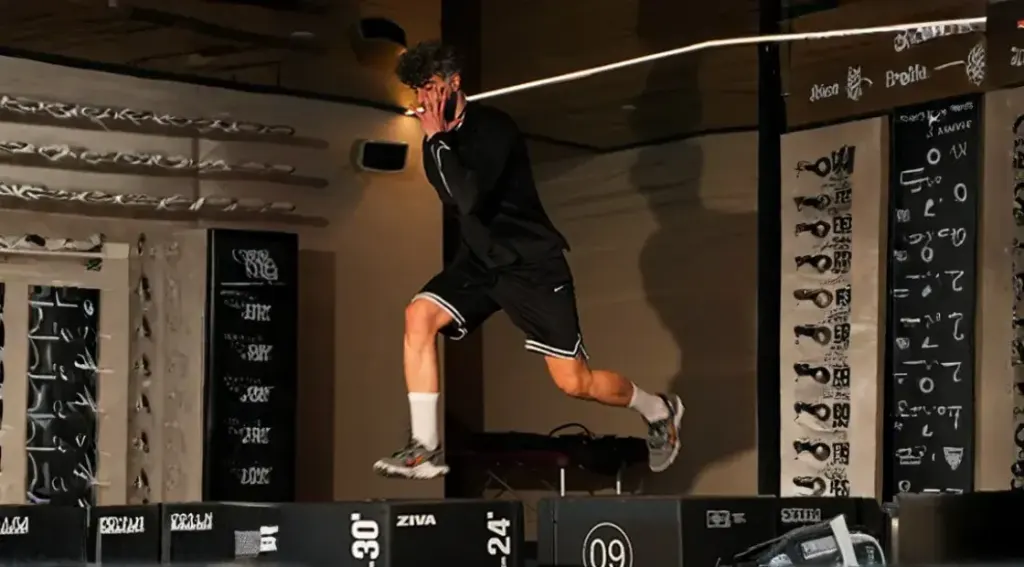
HYROX training in Beytepe: how to structure your preparation in Ankara
For those preparing in Ankara for HYROX, which combines running with functional stations, we cover the four components of preparation and an 8-week framework you can follow in Beytepe.
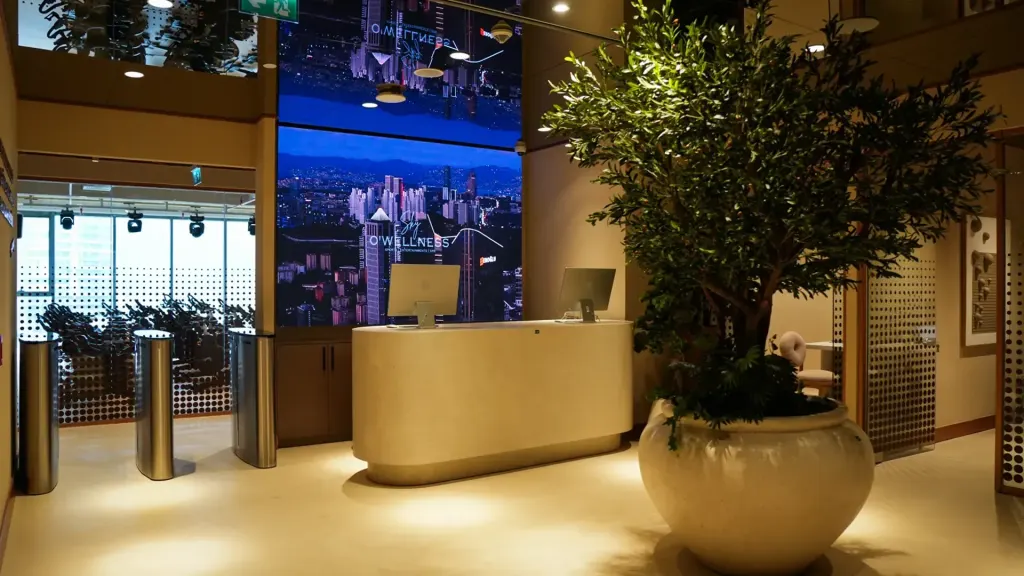
A Beytepe Guide for Newcomers: Sport, Health and Social Life
A practical, area-by-area living guide for newcomers to Beytepe and west Ankara, with tips on sport, health, social life and building a training routine in Yaka Beytepe.
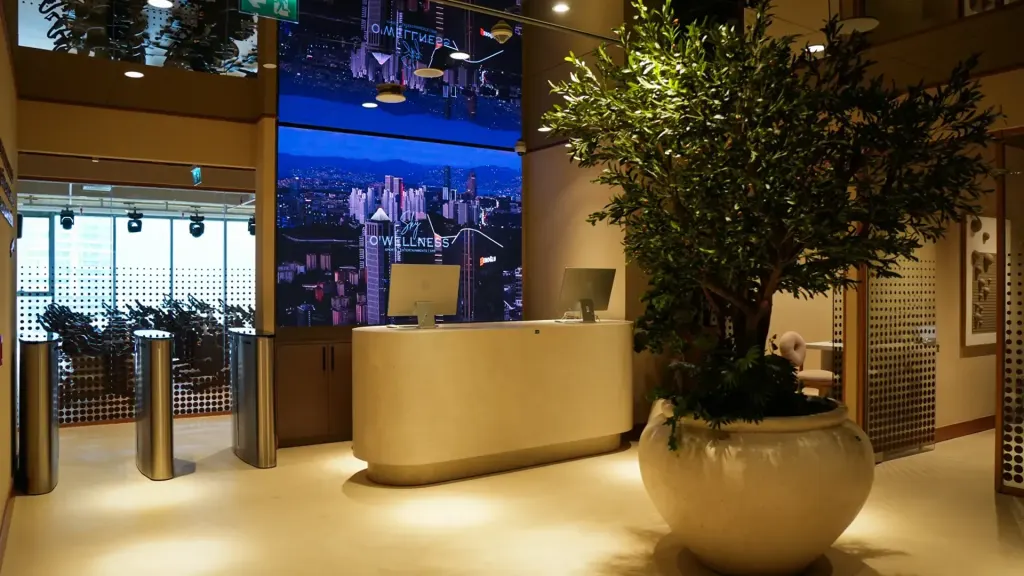
A Day in Yaka Beytepe: Fitness, Padel and Recovery
A flexible plan that combines fitness, reformer pilates, padel and recovery in one day at the Yaka Beytepe complex, with alternatives for different visitor profiles.
