
Recovery Guide: Faster Progress Through Sleep, Nutrition, Active Rest and Flexibility
Progress happens during recovery, not during training. From sleep to flexibility, physiotherapy to deload weeks, this is the recovery system we recommend at O'Wellness Beytepe.
Training is only a stimulus; real progress appears in the recovery period after the session ends. When sleep, nutrition and rest fall short, even the best-designed programme fails to pay off and instead brings injury, plateaus and burnout. In this guide we describe the recovery system we recommend to members at O'Wellness Beytepe: a list of tools ordered from the most strongly evidenced to the supportive ones, and a practical weekly plan.
Why is recovery as important as training?
Every strength or high-intensity session creates micro-damage in muscle fibres, empties glycogen stores and tires the nervous system. While repairing this damage, the body becomes better prepared for the next stimulus; this process is called supercompensation. If the time allowed for recovery is too short, fatigue piles up: performance drops, resting heart rate rises, sleep is disturbed and motivation fades. This picture, known as overtraining syndrome, can take weeks to resolve.
1. Sleep: the most powerful recovery tool
A large share of growth hormone is released during deep sleep, and muscle protein synthesis and memory consolidation also take place at night. When sleep drops below 6 hours, muscle gains shrink, appetite hormones such as ghrelin and leptin fall out of balance and injury risk rises. Aim for 7–9 hours: go to bed and wake up at the same time every day, put screens away 60 minutes before bed, keep the room cool and dark and avoid caffeine in the evening. If you train at 06:00 when the club opens on weekdays, try to be in bed by around 22:30 at the latest.
2. Nutrition: the raw material for repair
A meal containing 25–40 g of protein plus carbohydrate within 2 hours after training starts glycogen replenishment and muscle repair. Across the day, aim for 1.6–2.0 g of protein per kilogram of body weight. Performance drops once fluid loss exceeds 2 per cent of body weight; drink 500–750 ml of water per hour while training and add electrolytes on Ankara's hot, dry summer days. Antioxidants from fruit and vegetables and omega-3 fatty acids help keep inflammation in balance. For a personal plan you can meet our dietitian.
3. Active rest: recovering through movement
Staying completely still does not speed up recovery; it slows it down. Low-intensity movement increases blood flow, reduces muscle stiffness and calms the nervous system. The most effective active rest options at Beytepe are:
- Light cardio: 20–30 minutes of easy cycling or elliptical work in the cardio area; low joint load and full-body circulation. If you enjoy swimming, you can add it to your week by checking current information on indoor pool options in Ankara.
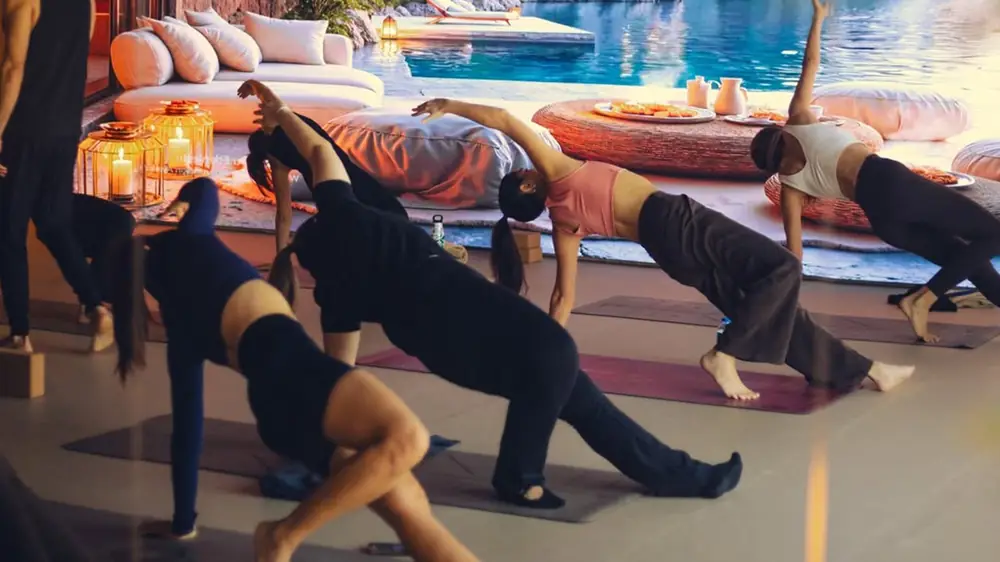
- Yoga and stretching: Deep Stretch Yoga, Mobility & Stretching or Balanced Yoga classes in the O'Soul studio.
- Walking: 40–60 minutes around Lake Eymir, in the METU forest or around the Hacettepe Beytepe campus.
- Light reformer: spinal articulation and hip mobility work on a low spring setting.
4. Sports physiotherapy and foam roller
During heavy training blocks, soft-tissue work with a foam roller reduces muscle tension, eases perceived soreness and also relaxes the mind. If you have persistent pain, recurring injuries or restricted movement, our sports physiotherapist will assess you and integrate mobility and strength work into your training plan.
5. Cold exposure and contrast shower
Cold water at 10–15°C for 5–10 minutes reduces perceived muscle soreness, but done right after strength training it can blunt the muscle growth signal. So avoid cold exposure on strength days and save it for after high-intensity cardio or races. A contrast shower (30 seconds hot, 30 seconds cold, 5 rounds) is a low-risk option that invigorates circulation.
6. Stress and the nervous system
Long-term work stress raises cortisol; high cortisol increases muscle breakdown and disrupts sleep. Breathing exercises such as 4-7-8 or box breathing, 10 minutes of meditation and a regular yoga practice activate the parasympathetic system. Smartwatches that measure heart rate variability (HRV) are a practical way to monitor your recovery objectively: keep the days when HRV is low light.
About muscle soreness (DOMS)
Muscle soreness felt 24–72 hours after a new movement or an increased load is normal; it is not proof of a good workout but a sign of adaptation. It passes with light movement, heat, sleep and protein. Pain that is sharp, one-sided, coming from inside a joint or lasting longer than 5 days is not DOMS; in that case, seek a physiotherapist's opinion.
Sample weekly recovery plan
| Day | Session | Recovery |
|---|---|---|
| Monday | Total Body | 10 min cool-down walk, protein meal |
| Tuesday | O'Ride Cycle | Contrast shower, early night |
| Wednesday | — | 20 min light cardio + Mobility & Stretching class |
| Thursday | Reformer Pilates | 15 min foam roller and stretching |
| Friday | O'Hiit | Foam roller, 10 min stretching |
| Saturday | Deep Stretch Yoga | Sports physiotherapist assessment (as needed) |
| Sunday | — | Walk at Eymir, 9-hour sleep target |
Early signs of overtraining
- Morning resting heart rate 5 or more beats above normal
- The same load feeling harder, no progress for two weeks
- Difficulty falling asleep or waking frequently at night
- Persistent muscle soreness, frequent colds
- Loss of desire to train, irritability
If you notice two or more of these signs, cut training volume by 40–50 per cent for one week (a deload) and get your sleep and nutrition back on track.
The physiology behind recovery
During training, muscle tissue is strained at a microscopic level and some fibres are temporarily damaged. When the body detects this damage, it directs repair cells called satellite cells to the area, speeds up protein synthesis and over time makes the muscle slightly stronger than before. This cycle of stimulus, damage, repair and adaptation is the foundation of recovery; skip the repair phase and adaptation stays incomplete. On the nervous system side, the central nervous system (brain and spinal cord) and the peripheral nerves that drive the muscles become fatigued after intense or coordination-heavy training. Independently of muscle soreness, this fatigue can temporarily lower reflex speed, balance and focus. Nervous system recovery usually takes longer than muscle repair, so feeling below par after consecutive days of heavy lifting or high-tempo classes is normal. Sleep sits at the centre of both processes: growth hormone release rises and tissue repair accelerates during deep sleep, while in REM sleep the nervous system reorganises itself and motor learning is consolidated. In short, recovery is not a single event but a process in which muscle, nervous system and hormonal balance are rebuilt simultaneously; neglect one of them and the whole system slows down.
Active or passive recovery?
Recovery is approached in two basic ways: passive recovery, meaning complete rest and inactivity, and active recovery, meaning rest supported by low-intensity movement. Both are valuable when used in the right place, but they should not be confused.
When is passive recovery right?
If there is a feverish illness, an acute injury, sharp joint pain or clear signs of overtraining syndrome, moving delays recovery. In such cases the priority is complete rest, with an assessment by a doctor or physiotherapist if needed. In a healthy person, however, weeks of total inactivity slow circulation, stiffen the muscles and make the return to training harder.
When is active recovery right?
If your muscle soreness is mild to moderate and you feel generally tired but have no acute injury, low-intensity movement increases blood flow, speeds the clearance of metabolic waste and maintains joint range of motion. Brisk walking, light cycling and low-load classes such as Deep Stretch Yoga or Mobility & Stretching fall into this group. A simple rule: if you feel better the more you move, it is time for active recovery; if pain increases as you move, it is time for passive recovery. When unsure, you can consult our sports physiotherapist.
Cool-down and contrast shower protocol
The sequence below is a general protocol and should be adapted to your personal health situation.
Step-by-step contrast therapy protocol
- After training, cool down for 5–10 minutes at an easy pace on the bike or walking; bring your heart rate down gradually and loosen the large muscle groups.
- Balance your body temperature with a lukewarm shower.
- Use warm water in the shower for 2–3 minutes; stop at once if you feel dizzy, nauseous or have strong palpitations.
- Complete the cycle with a 1–2 minute cool shower or a contrast shower (30 s hot / 30 s cold, 3–5 rounds).
- Drink plenty of water; at least 500 ml of fluid is recommended after sweating.
Applied 2–3 times a week on non-consecutive days, this cycle gives the most consistent results for circulation and relaxation.
Cold exposure and contrast shower compared
| Method | Temperature/conditions | Main effect | Best timing |
|---|---|---|---|
| Cold exposure | 10–15°C, 5–10 min | Less perceived soreness, livelier circulation | After cardio/races; not preferred on strength days |
| Contrast shower | Alternating hot/cold | Circulation boost, low risk | Can follow any session |
Who should avoid it and what to watch for
Cold exposure and contrast showers may not suit everyone. People with Raynaud's syndrome or circulatory disorders need a doctor's approval before starting cold exposure. If you have cardiovascular disease, uncontrolled high blood pressure, are pregnant or are prone to dizziness, always consult your doctor as well. If you have a chronic condition, speaking with your doctor before adopting a recovery protocol is the safest path.
Recovery through flexibility and mobility classes
Maintaining joint range of motion is as much a part of recovery as muscle repair. Stiff hip flexors, shoulders and back reduce movement quality in later sessions and increase injury risk. The flexibility-focused classes in the O'Soul studio at O'Wellness Beytepe close this gap:
- Deep Stretch Yoga: targets deep-tissue flexibility with long-held passive stretches; ideal after heavy strength weeks.
- Balanced Yoga: combines stretching with breathwork to calm the nervous system.
- Mobility & Stretching: develops joint range of motion and controlled mobility together; also useful as pre-training preparation.
- Mat Pilates: works the deep core muscles and spinal control under low load; a gentle option after demanding days.
- Vinyasa Yoga (at an easy pace): invigorates circulation with flowing transitions and relieves the back and shoulders.
Adding one of these classes to your recovery day once a week prevents loss of flexibility and makes subsequent sessions more productive. Check our group classes page for current times and our weekly schedule page for the full week.
8-week recovery periodisation by training intensity
Recovery needs do not stay fixed; as training volume and intensity rise, recovery tools should be used more often. The sample periodisation below follows the principle of progressive loading and should be adapted to your personal programme with our trainers.
| Week | Training intensity | Recovery emphasis |
|---|---|---|
| 1–2 | Moderate (basic adaptation) | Standard sleep target, light stretching |
| 3–4 | Medium-high | 2 contrast therapy sessions, 1 flexibility class per week |
| 5–6 | High (loading phase) | 2 flexibility classes per week, foam roller, sports physiotherapist assessment |
| 7 | Deload (volume 40–50% lower) | Mostly active rest; walking, light cardio and flexibility |
| 8 | Moderate (preparing for a new cycle) | Sleep and nutrition check, progress review |
You can also use this table in shorter four-week cycles; what matters is that every loading phase is followed by a deload week.
Common recovery mistakes
- Training at maximum intensity every day: the nervous system and connective tissue recover more slowly than muscle; constant high intensity leads to plateaus and injury.
- Treating recovery as passive rest only: staying completely inactive restores circulation and relaxation more slowly than light active recovery.
- Underestimating sleep debt: trying to pay off weekday sleep loss with long weekend lie-ins does not fully restore hormonal balance.
- Long static stretching before training: it can lower muscle tension and reduce strength output; leave long stretching for after training.
- Skipping the deload week: the idea that an easy week will set you back may seem logical short term, but accumulated fatigue costs more time in the long run.
- Training through pain with painkillers: masking pain can let the underlying problem grow; sharp or persistent pain needs assessment by a doctor or physiotherapist.
Practical ways to measure progress and recovery
Tracking your recovery lets you make far more reliable decisions than training by feel. No complex equipment is needed; the simple indicators below are enough:
- Morning resting heart rate: if the pulse you measure on waking is above normal for several days in a row, recovery is not yet complete.
- Sleep quality: falling asleep easily, waking rarely at night and getting up refreshed is a simple but reliable indicator.
- Training log: if the weight, reps or pace in the same session are slipping, fatigue has accumulated.
- Rate of perceived exertion (RPE): the same load feeling a little heavier each week is an early warning of insufficient recovery.
- Mood and motivation: reluctance to train, irritability or poor concentration are the mental reflection of physical fatigue.
If two or more of these indicators worsen at the same time, lightening your programme or restructuring it with personal training support is the right move.
Glossary
- Supercompensation: the body responding to training stress by adapting above its previous level.
- DOMS (delayed onset muscle soreness): muscle soreness appearing 24–72 hours after a new or intense stimulus, signalling adaptation.
- Deload: a planned light week that temporarily reduces training volume or intensity to speed up recovery.
- HRV (heart rate variability): the variability of the time intervals between successive heartbeats; an indirect indicator of nervous system recovery.
- Contrast therapy: a method of stimulating circulation by alternating hot and cold applications.
- Overtraining syndrome: a condition in which prolonged insufficient recovery causes lasting deterioration in performance, sleep and mood.
Facility and service details
To let you build your recovery routine within one complex, O'Wellness Beytepe brings together the strength and cardio area, the Reformer Pilates studio, the O'Soul and O'Rise studios and the functional training area. You can balance heavy strength days with the flexibility classes on the timetable and the sports physiotherapist service. The complex car park makes it easy to combine training and recovery in one visit. For membership options and the founding membership pre-registration, see our membership page.
Adapting recovery to age and level
Recovery needs change with age; this does not mean training less but choosing recovery tools more consciously. In your 20s and 30s the nervous system and connective tissue usually recover quickly, so consecutive hard days are tolerated relatively well. From 40 onwards, the repair rate of tendons and tissues around the joints may slow; increasing the share of flexibility classes and active rest days at this stage helps reduce injury risk. In beginners, muscle soreness can feel more pronounced than in experienced athletes; this is normal and fades over time. Even so, prioritising recovery tools such as light cardio, stretching and enough sleep in the first weeks makes long-term consistency easier. If you have a chronic condition, have had surgery or take regular medication, consulting your doctor before starting temperature-based methods such as cold exposure and contrast showers is the right step towards a safe, sustainable programme.
Building recovery and training together
Recovery tools should not be thought of separately from the training programme; the two form a single, complementary system. When planning your week, placing active rest or a flexibility class between strength and high-intensity days instead of stacking them back to back supports both performance and consistency. For example, choosing light cardio or Mobility & Stretching the day after a heavy Total Body session, rather than going straight into Tabata, lets you start the next hard day better prepared. If you would like to personalise your programme, you can talk to our trainers and follow the class timetable on our weekly schedule page. For general training structure see our strength training content, and for class variety see our group classes page.
Recovery during travel, breaks and time off
Breaks caused by holidays, a heavy workload or a minor injury are also periods that need to be managed in terms of recovery. Returning straight to your old intensity after a long break increases soreness and injury risk more than usual, because the body is no longer used to that load. After breaks of more than a week, spending the first 1–2 weeks back at roughly 60–70 per cent of your previous intensity gives the nervous system and connective tissue time to readapt. During this transition, light cardio, gently paced Vinyasa Yoga or flexibility classes are practical ways to maintain mobility without risking strength output. Disrupted sleep while travelling also affects recovery; keeping a fixed sleep-wake window even across time zones speeds up your return to training. After a long injury, following a gradual plan with our sports physiotherapist or a personal trainer, rather than rebuilding the programme on your own, reduces the risk of re-injury.
Looking at recovery tools together
Focusing too heavily on a single recovery tool and neglecting the others is a common mistake. An approach that stretches regularly but ignores sleep, or that watches nutrition closely but never practises active rest, breaks the integrity of the system. The table below summarises the main tools in this guide by recommended frequency and priority; it can guide how much room you give each one in your programme.
| Tool | Recommended frequency | Priority level |
|---|---|---|
| Sleep (7–9 hours) | Every day | Fundamental, never to be neglected |
| Post-training nutrition | After every session | Fundamental |
| Active rest (walking, light cardio, flexibility) | 2–4 times a week | High |
| Sports physiotherapy | Every 2–4 weeks, as needed | Supportive |
| Cold exposure / contrast shower | As needed, 0–2 times a week | Optional |
The order in the table is not a strict rule but a framework of priorities. If time is short, focus first on sleep and nutrition, then on active rest, and add supportive tools such as sports physiotherapy and cold exposure as time allows. At O'Wellness Beytepe, the training areas, group classes and sports physiotherapy, are all in the same Yaka Beytepe complex, so you can combine these tools in one visit without running between addresses. Being a few minutes from western-corridor neighbourhoods such as Çayyolu, Ümitköy, İncek, Konutkent and Bilkent, and from the Hacettepe Beytepe campus, makes it easier to fit a recovery routine into your weekly calendar.
Frequently asked questions
Can I train every day?
Yes, if you alternate intensity: progress as heavy day, light day, active rest day. Two consecutive high-intensity days should happen no more than once a week.
Does sweating a lot make you lose weight?
No; what you lose through sweat is fluid, and it comes back when you drink. Sweating is not a measure of fat burning; for lasting change, training, nutrition and sleep need to be addressed together.
Is there a pool at Beytepe?
No, O'Wellness Beytepe does not have a swimming pool. For recovery you can use the Mobility & Stretching and Deep Stretch Yoga classes. If you want to add swimming to your programme, check current information on indoor pool options in Ankara. For what membership includes, see our membership page.
Can I train and recover in a single visit at Beytepe?
Yes; after a group class or reformer session you can complete your routine with a Mobility & Stretching class, foam roller work or sports physiotherapist support at the same club. This makes it easier to build a recovery habit without travelling elsewhere.
Which class should I start with for recovery?
After a demanding week, starting with low-load, long-hold classes such as Deep Stretch Yoga or Mobility & Stretching is a good choice; ask our trainers for a recommendation suited to your situation.
Get in touch to build recovery into your programme; the O'Wellness Beytepe team is waiting to welcome you for a free facility tour and trial session.
Related posts
Water Quality in Indoor Pools: Chlorine, Hygiene and 9 Details You Should Know
A strong chlorine smell is a sign of organic load, not cleanliness. For regular swimmers in Ankara, we explain 9 practical details for understanding indoor pool water quality.
Screen time, sleep and recovery: how they connect
How does evening screen use affect sleep and training recovery? We look beyond blue light and suggest a practical evening routine.
Overtraining Syndrome: Symptoms and Prevention
If your performance is dropping, your sleep is disrupted and your motivation is fading, it may be overtraining syndrome. We cover the signs, risks and prevention.
