
Planning an Efficient Club Visit: The Flow of a Training Day from Arrival to Departure
Planning an efficient club visit gives you more benefit without adding training time. We walk through the flow from arrival and the locker room to the main workout and the shower.
Birçok üye kulüpte geçirdiği sürenin ne kadarının antrenmana, ne kadarının bekleme, karar verme ve dağınık hazırlıklara gittiğini fark etmez. Bir saatlik bir ziyaretin yalnızca yarısı etkin çalışmaya ayrılıyorsa, sorun çoğu zaman antrenman programında değil, ziyaretin akışındadır. Kulüp ziyaretini verimli planlamak, antrenmanı uzatmadan daha odaklı ve daha keyifli hale getirmenin yoludur. Bu yazıda bir antrenman gününü varıştan çıkışa kadar aşamalara ayırıyor ve her aşamada zaman ile enerjiyi nasıl daha iyi kullanabileceğinizi anlatıyoruz.
Before the visit: keep the plan in your pocket
An efficient visit begins before you reach the club. Knowing in advance what you will work on, which movements you will do in what order, and roughly how long it will take eliminates the minutes spent deciding in the gym. This plan does not have to be complicated; a note on your phone or a few lines in your training log is enough.
If you are attending a group class, it is important to make your booking in advance and set your arrival time according to the class start time. Being there a few minutes before the class begins lets you choose your spot comfortably and have a short conversation with the instructor.
Bag organization
Having an organized gym bag is a small but effective time saver. If your training clothes, towel, water bottle, shower items, and clean clothes always stay in the same place, preparation comes down to a few minutes. Having a separate bag for wet clothes after training also keeps the bag tidy.
Arrival and the locker room
The first few minutes after you arrive at the club set the pace for the rest of the day. Not lingering unnecessarily at the entrance and following a quick routine in the locker room protects the time you will devote to the main workout. Switching your phone to training mode while using your locker also keeps you from losing time getting caught up in messages.
The locker room is also one of the club's shared spaces. Using lockers and benches tidily lets other members feel comfortable too. Not spreading personal belongings around and not leaving wet towels out in the open are small but important parts of shared life.
Warm-up: short but purposeful
The warm-up is a stage that many people either skip completely or drag out and scatter. An effective warm-up begins with a few minutes of general activity and continues with specific movements that prepare you for the movements of the day.
- Genel ısınma: Birkaç dakika bisiklet, kürek ya da tempolu yürüyüş, nabzı ve vücut ısısını yükseltir.
- Mobility: O günkü ana hareketlerde kullanılacak eklemler için birkaç hedefli hareket.
- Aktivasyon: Kalça köprüsü ya da bant çekişi gibi, ana çalışmada kullanılacak kasları uyandıran kısa hareketler.
- Özel ısınma: Ana hareketin hafif setleri; ağırlık kademeli olarak artırılır.
Applying this sequence the same way on every visit turns the warm-up into a routine. A warm-up that has become routine both takes less time and prepares the mind for the transition into training.
The main workout: protect your priorities
The main workout is the most valuable part of the visit, and the movements that require the most energy should come at the start of it. Heavy strength movements or technique-demanding work are of higher quality when done before fatigue builds up. Accessory movements and short conditioning blocks can be left for the end.
At busy times, the equipment you want being in use can disrupt the plan. In that case, alternatives thought out in advance help. If the squat rack is taken, moving to accessory movements first, or if the bench is taken, doing a similar movement with dumbbells, lets you keep working without waiting. Letting other members work in between your sets when sharing equipment is also a natural part of club life.
Managing rest periods
Rest periods are the part of the visit that most often stretches out. Checking your phone or getting caught up in conversation can easily turn a one-minute break into five minutes. Roughly setting your rest times and using that time for light mobility or drinking water keeps the rhythm of the workout.
Cool-down and recovery
When the main workout is over, it is helpful to add a few minutes of cool-down instead of rushing straight to the shower. A light walk, a few stretches, and allowing the breath to settle smooth the body's transition from training mode to everyday mode.
- Walk at an easy pace for a few minutes to let your heart rate come down.
- Do a few stretches for the muscle groups you used most in the main workout.
- Calm the mind with a short breathing exercise.
- Add the day's notes to your training log.
The last item is especially important. Noting the weights you used, your rep counts, and how you felt right after finishing the workout makes it easier to plan your next visit. These few minutes provide the most valuable information for tracking your progress over the weeks.
Shower and departure
The last stage of the visit is the shower and the transition to the next part of the day. Having your shower items ready and clean clothes neatly in the bag speeds this stage up too. If you planned a post-workout snack, keeping it in your bag or eating it before you leave the club helps manage the hunger that comes on the way home.
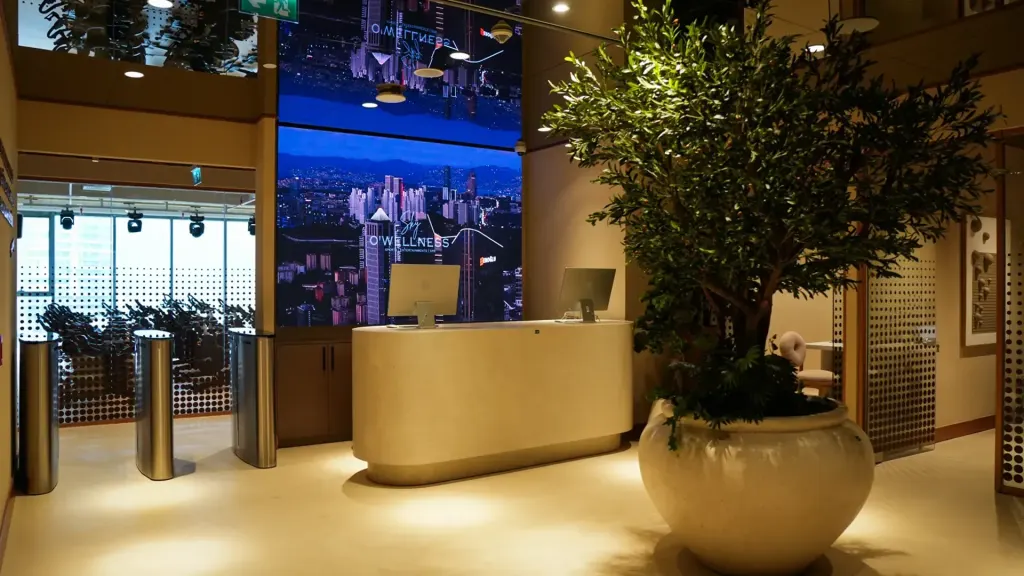
If you have time after training at O'Wellness Beytepe, rounding off your visit with the club's other spaces is also an option. For example, a short chat with a friend or a look at next week's class schedule makes the club visit not just a workout but an enjoyable part of the week.
Different flows for different kinds of visits
Not every visit has to have the same structure. A heavy strength day calls for a long warm-up and long rest periods, while a group class day starts with shorter preparation, because the warm-up is largely inside the class. On a recovery-focused day, mobility, light cardio, and stretching come to the fore instead of a main workout. Deciding the type of visit in advance clarifies how much time you will spend at the club and which areas you will use.
Turning these different flows into a few ready templates makes things easier. For example, you can prepare three simple templates, a strength day, a class day, and a light day, and keep them on your phone. Before going to the club, you only need to decide which template to use. That way, even on days when you feel tired or undecided, the visit has a structure and time does not slip away.
Coming with a friend
Coming to train with a friend is valuable for motivation, but it can stretch out the flow of the visit. Agreeing on a shared plan in advance, taking turns on the same movements, and saving conversation not for rest periods but for the cool-down preserve both the pleasure of being together and the efficiency of the workout. If you follow different programs, doing the warm-up and cool-down together and the main work separately is also a good middle ground.
Whichever structure you choose, asking yourself a short question at the end of the visit helps: where did most of my time go today? The answer shows you what to change on your next visit.
Frequently Asked Questions
How long should a club visit last?
This depends on your goal and your program. What matters is less the duration itself than how much of that time goes to active work. Arriving with a plan makes even short visits efficient.
How can I train efficiently at busy times?
Decide in advance on alternative movements you can use when equipment is taken. Choosing less crowded hours when possible also helps.
Is keeping a training log really necessary?
It is not mandatory, but it is the easiest way to see progress and plan the next visit. Even a few lines of notes build into a valuable record over time.
Related posts

15 Questions to Ask When Choosing a Fitness Membership
15 practical questions to ask reception or yourself when choosing a gym membership; a decision guide from location to membership terms for Beytepe and west Ankara.

Couple and Family Memberships: The Benefits of Training Together
What a family membership offers couples and families with children, the advantages of training together and practical ways to start as a family at O'Wellness Beytepe.
Why O’Wellness Beytepe? 10 privileges
Why choose O'Wellness Beytepe? Ten concrete advantages of the boutique wellness club at Yaka Beytepe, from studio variety to location.
