
Winter Motivation: The Advantage of Indoor Studio Classes and a Steady Routine
Why does workout motivation drop in winter and how can you keep it? How heated studios, group classes and a steady routine support consistent training through Ankara's winter.
If your motivation to exercise drops in winter, laziness is not the only explanation: shorter daylight, falling temperatures and dark mornings reduce the urge to move at both a hormonal and a behavioural level. In this article we look at why motivation falls in the winter months, how indoor facilities break this cycle, and practical strategies for keeping up regular training.
Why does motivation drop in winter?
Shorter daylight affects the body's circadian rhythm and melatonin release, which in some people shows up as a greater need for sleep and a general drop in energy. Cold weather reduces the desire to go outside and narrows outdoor training options. Short days, with the feeling of going home in the dark after work, reinforce the perception that the day is over and increase the tendency to postpone training. Some people may experience a noticeable dip in mood during the winter months (seasonal effects); if these symptoms seriously affect daily life, it is important to consult a physician.
The advantage of indoor facilities in winter
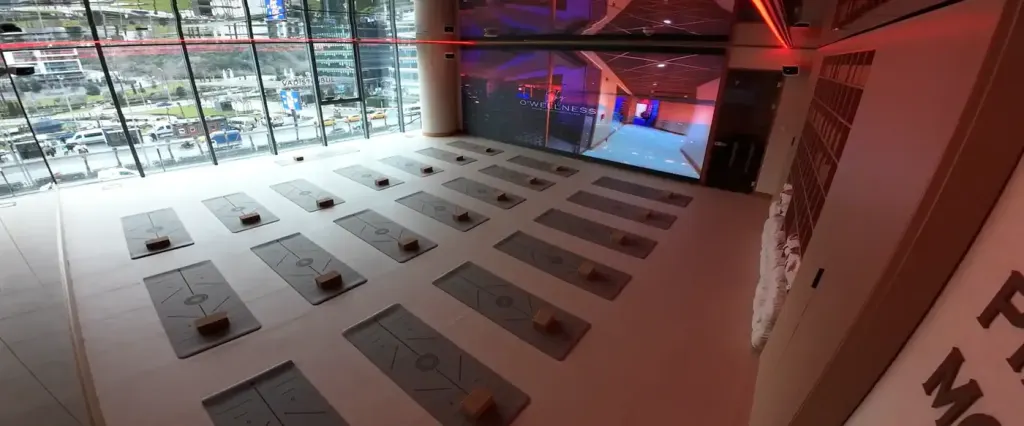
The biggest advantage in winter is having a training environment at a constant temperature, completely independent of the weather. In Ankara's cold and sometimes snowy winters, this difference becomes even more pronounced. At O'Wellness Beytepe, the O'Soul and O'Rise studios, the Reformer Pilates studio, the strength & cardio area and the functional area serve with the same comfort all year round; even if there is snow, frost or a biting wind outside, your training schedule is not disrupted. This predictability is one of the most practical ways to stay consistent in winter.
The winter post-workout recovery routine
While swimming or walking outdoors is appealing in summer, these options largely disappear in winter and many people stop moving regularly altogether. There is no pool at O'Wellness Beytepe; however, a Mobility & Stretching class or a short stretching session after training can become the most enjoyable part of your routine in winter. Coming in from the cold, finishing your training and then settling into some calm stretching creates a ritual that relaxes the body and gives you a concrete reason to come back for the next session. Those who want to keep swimming in winter can look into indoor pool options in Ankara; we recommend checking current hours and access details with the facilities concerned.
How group classes support motivation
When individual motivation fades in winter, group dynamics become an important source of support. Meeting a particular group at a set time makes the thought of skipping today much harder; a sense of social commitment feeds consistency. Some of the class formats that stand out in the winter months are:
- O'Ride Cycle: A high-energy cardio experience in an indoor setting with music; an ideal alternative to cycling outdoors in freezing weather.
- O'Hiit and Tabata: Formats that deliver high returns in a short time and save time on shorter days.
- Deep Stretch Yoga and Mobility & Stretching: Calming formats that reduce the tension and stiffness that build up in winter.
Practical strategies for staying motivated in winter
- Fix your training time early in the morning or after work; this reduces decision fatigue.
- Plan to go to a group class or with a training partner rather than alone.
- Set short-term, concrete goals (for example 10 classes this month); big annual goals can stop being motivating in winter.
- Set yourself a small reward after training: a hot shower or a drink you enjoy.
- Choose a facility that does not depend on the weather; do not let outside conditions dictate your schedule.
Comparing winter and summer training motivation
| Factor | Summer | Winter |
|---|---|---|
| Daylight | Long, energising | Short, can lower motivation |
| Outdoor options | Plenty (walking, running, outdoor pools) | Limited, weather-dependent |
| Indoor facility advantage | A cooling alternative | Heated, predictable environment |
| Social participation | High, naturally outdoors | Needs support from group classes |
Supporting motivation with nutrition and sleep in winter
In winter, some people crave more carbohydrates and their overall energy level may drop. Balanced meals, adequate protein and regular sleep times support both physical energy and training motivation. Vitamin D levels may fall in winter because of reduced sunlight; if you have any concerns about this, it is a good idea to consult your physician and have a blood test if necessary. For a personalised nutrition plan, you can make use of the dietitian support at our club.
Common mistakes
- Cancelling training altogether because of bad weather: Training at an indoor facility makes this decision unnecessary.
- Setting goals too high in winter: Realistic, short-term goals protect motivation better.
- Neglecting social support: Always trying to train alone can make consistency harder in winter; group classes fill this gap.
- Ignoring a seasonal dip in mood: If symptoms seriously affect daily life, you should consult a specialist.
Which class combinations are recommended in winter?
Rather than sticking to a single format all winter, combining energetic and calming classes in a balanced way is beneficial both physically and motivationally. For example, meeting your need for high energy with O'Hiit or O'Ride Cycle two days a week while adding core and posture work with Mat Pilates or Reformer Pilates on another day balances the tension caused by spending more time sitting in winter. If you are looking for a low-impact cardio option, the elliptical and bike equipment in the cardio area, followed by a short stretching session, can be added to this combination every week.
Training in Beytepe and Ankara in winter
Ankara's winter can bring early darkness, frosty mornings and occasional heavy snowfall, which often makes regular outdoor training difficult. O'Wellness Beytepe in the Yaka Beytepe complex makes it easy to reach the club in winter too, thanks to the complex car park. It can be reached quickly from Çayyolu, Ümitköy, İncek, Konutkent and Bilkent, and it is a few minutes from Hacettepe's Beytepe campus. If you plan to come by public transport, we recommend checking the latest information on the M2 metro line along the Eskişehir road and on bus options.
A 4-week winter adaptation plan
Rather than trying to eliminate the drop in motivation entirely, building a routine that lasts all winter is a more realistic goal. The four-week sample plan below aims to stabilise your training routine step by step as autumn turns to winter.
| Week | Focus | Example |
|---|---|---|
| Week 1 | Setting a fixed time | Attending a group class at the same time 3 days a week |
| Week 2 | Social support | Building the habit of coming to class with a training partner |
| Week 3 | Creating a reward routine | Rewarding yourself after class with a Mobility & Stretching class or a short stretching session |
| Week 4 | Adding variety | Breaking monotony by adding a new format such as Barre or Vinyasa Yoga |
A plan like this relies on building habits that remove the decision, rather than trying to bring motivation back all at once; by the end of the fourth week, going to training is no longer something you have to debate every day.
Common planning mistakes and how to fix them
- Relying on a single source of motivation: Purely goal-based motivation can weaken in winter; using a fixed time, social support and a reward routine together is more resilient.
- Changing your weekly schedule too often: Constantly trying different classes at different times makes habit formation harder; keeping the same routine for at least 3-4 weeks is more effective.
- Cancelling the whole week after missing one class: A single missed session should not affect the rest of the week; the all-or-nothing approach is the attitude that most disrupts consistency in winter.
Winter-specific ways to track progress
In winter it is more meaningful to measure progress by consistency rather than only by weight or performance. Recording your monthly class attendance lets you see in which weeks you struggled. When adapting the SMART goal approach to winter, setting short-term, measurable goals such as at least 10 classes this month instead of big annual goals keeps motivation at a realistic level. Keeping a training log also helps you see both your consistency and which classes motivate you most.
Who needs extra planning?
People who know they are more sensitive to seasonal mood changes should start building their routines before winter arrives, at the end of autumn; acquiring a new habit after motivation has completely dropped is much harder. If symptoms seriously affect daily functioning such as work, sleep and social life, this is not something exercise alone will solve, and a physician should be consulted.
Frequently asked questions
Is losing motivation in winter normal?
Shorter daylight and cold weather temporarily lower motivation for many people; if symptoms seriously affect daily life, it is important to consult a specialist.
Which classes are recommended in winter?
Energetic indoor classes such as O'Ride Cycle and O'Hiit, combined with calming classes such as Deep Stretch Yoga, create a good balance in the winter months.
Is there a pool at O'Wellness Beytepe?
No, there is no pool at our club. For relaxing after training in winter, you can make use of the Mobility & Stretching or Deep Stretch Yoga classes.
Is it hard to get to Yaka Beytepe in winter?
Thanks to the complex car park and its proximity to the Çayyolu-Ümitköy area, reaching the club is practical in winter too; for public transport, we recommend checking current route information.
Should I change my training frequency in winter?
Not necessarily; in an indoor, climate-controlled facility your training routine can stay the same all year. What matters is protecting consistency with social support.
To keep your motivation up through the winter in our indoor studios, contact us through our contact page and let's plan your free trial session together.
Related posts
Screen time, sleep and recovery: how they connect
How does evening screen use affect sleep and training recovery? We look beyond blue light and suggest a practical evening routine.
The First 2 Hours After Training: Cool-Down, Fluids, Meal and Relaxation
Recovery starts when training ends. We build an evidence-based routine by dividing the first two hours into five simple steps.
Swimming Equipment Guide: Paddles, Pull Buoy, Kickboard and Snorkel
What is swimming equipment for? How to use paddles, pull buoy, kickboard, snorkel and fins, how to choose, and what to watch for.
