
A Strength Routine for Academics After a Long Day at the Desk
A simple strength routine focused on the neck, shoulders and hips to help your body recover after hours of reading, writing and meetings.
Makale yazmak, ders hazırlamak, sınav kâğıdı okumak ve toplantılara girmek akademik hayatın büyük kısmını oturarak geçirmek demek. Böyle bir günün sonunda vücudunuzun nelere ihtiyaç duyduğunu bilmek, akademisyenler için kuvvet antrenmanı planlarken işinizi kolaylaştırır. Bu yazıda uzun oturma süresinden en çok etkilenen bölgelere odaklanan, sade bir rutin paylaşıyoruz.
How a desk-bound day affects the body
When you stay in one position for a long time, the hip flexors tend to shorten, while the glutes may feel weak from lack of use. A head that leans toward the screen and shoulders that roll forward can create tension in the neck and upper back. These are not diagnoses, just the general picture of common complaints; if you have persistent pain, consult your physician.
The solution is not to try to fix everything in one go at the end of the day. Strength training becomes far more meaningful when combined with short movement breaks spread through the day. The evening session then acts as the main piece that strengthens the structure.
- Do more pulling movements than pushing movements; strengthening the upper back supports posture.
- Prioritize the glutes: bridges, deadlift variations, step-ups.
- Move slowly and under control; the aim is not to get tired but to work the right muscles.
- Finish with a short stretch that opens the chest and the front of the hips.
A forty-five minute sample routine
Start with a five-minute warm-up: easy walking, arm circles, hip circles. Then perform the movements below in order. Choose weights so that the last two reps are challenging but can be finished without breaking form.
- Goblet squat: three sets of eight to ten reps. Keep the chest open and try to sit deep.
- One-arm dumbbell row: three sets of ten reps per arm. Keep the shoulder away from the ear.
- Glute bridge or hip thrust: three sets of twelve reps. Squeeze the glutes for a second at the top.
- Face pull with a cable or band: three sets of fifteen reps. Focus on the rear shoulder muscles.
- Romanian deadlift: three sets of eight to ten reps. Keep the back flat and start the movement from the hips.
- Side plank or Pallof press: thirty seconds in each direction, two to three sets.
The total time, including warm-up and stretching, comes to about forty-five minutes. If your time is limited, reduce each movement to two sets; you still end up with a useful session.
You do not need heavy exercises for the neck. Gentle stretches pulling the head forward and to the side, and small activation moves that draw the shoulder blade back and down, are often enough. You can do these during the day as well, for example between meetings.
If you feel impingement in the shoulders, reducing overhead lifting for a while and emphasizing pulling movements is a good start. If pain does not go away, however, do not push the movements and speak to a health professional.
Fitting it into your weekly schedule
The academic calendar can be irregular: teaching days, office hours, research days and meeting-heavy days demand different energy levels. Two full strength sessions a week, with a third light day as needed, form a sustainable base for most people.
It makes sense to cover busy teaching days with short mobility and walking, and place strength sessions on your more flexible days. If you work best in the mornings, leaving training for the evening unloads the mental burden and helps you prepare for sleep.
Putting it into practice around Beytepe
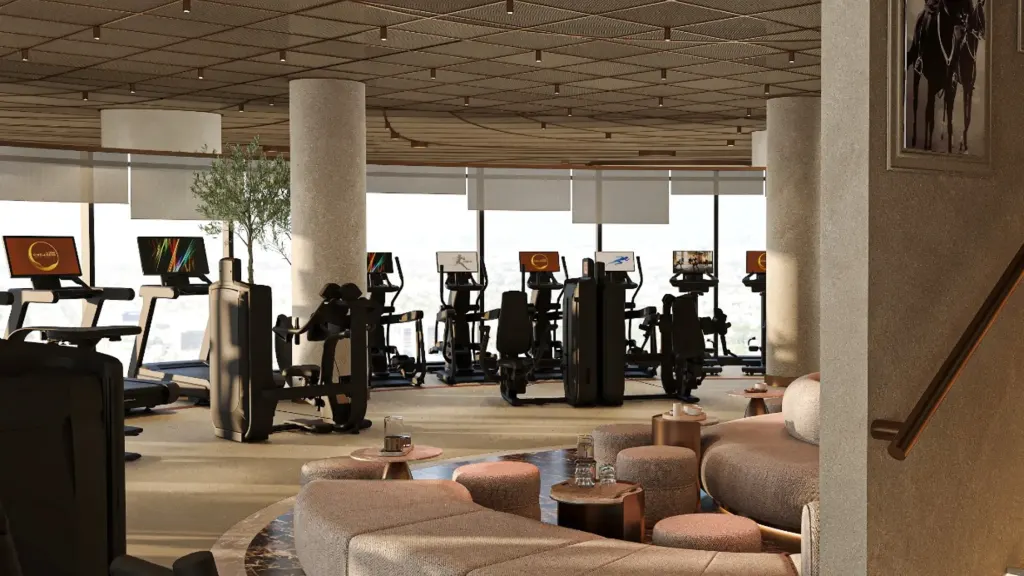
For someone living or working around campus, the travel time to training determines how sustainable the program is. At a nearby gym such as O'Wellness Beytepe, a variety of equipment lets you adjust the weights and machine options to your needs while following the routine above. Getting help from trainers on movement technique is also beneficial, especially at the beginning.
After a day spent at a desk the body is like a cold engine; going straight to weights can be both inefficient and uncomfortable. In a five-minute warm-up, prioritize movements that open the hip flexors and prepare the shoulder area: walking lunges, cat-camel, arm circles and a wall chest stretch. This short preparation can noticeably improve your range of motion in the main sets.
In the cool-down, focus on slowing your breathing. Spending around five minutes on calm movements such as child's pose, a chest opener and side neck stretches also helps you close the day mentally. On busy academic days this small ritual smooths the transition from work to training and from training to home.
Progression: when to add weight
When you can complete all sets of a movement at the top of the target rep range without breaking form, it is time to add a small amount of weight. For example, if you finish ten reps comfortably in all three sets of the goblet squat, move up to the next weight in the following session and drop the reps back to eight. This two-step progression is a simple way to avoid sudden jumps in load.
In intense periods such as exams, paper deadlines or conferences, deliberately pausing progression is acceptable too. Maintaining your current strength is a more realistic goal than chasing new records. When the calendar eases, you pick up progression where you left off.
Because you are used to keeping records in academic work, a training log can be a natural tool for you. Note the movement, weight, number of reps and, in a few words, how you felt at the end of the session. After a few weeks these notes show clearly which days are productive and which are tough for you, making it easier to personalize the program.
A backup plan for home and office
On some days getting to the gym is not possible: a meeting after class runs long, the weather is bad or fatigue wins out. Having a backup plan helps you keep the rhythm. With a resistance band, a light dumbbell and a mat you can build a fifteen to twenty minute session: band rows, wall sits, bridges, side planks and bird-dogs are enough for this purpose.
This home session does not replace the main program, but it secures continuity. Needing the backup plan once or twice a week is normal; the real goal is not to abandon the program entirely. Over time the backup plan also becomes a flexible part of your regular routine.
Remember that the best program is the one you can sustain. Instead of searching for a perfect plan in the uneven tempo of academic life, it is more valuable to build a simple framework you can follow every week. This routine can be seen as a small building block to place into that framework, and it can be adapted easily as your needs change.
When setting your weekly plan, mark the intense periods of the academic calendar in advance: exam weeks, end-of-term grade entry, project deadlines and conference preparation. In these periods halving strength sessions and continuing with only two main movements is often enough to maintain strength and does not add to your mental load.
While applying the program you can adapt the order and duration of the movements to your own preferences. What matters is keeping pulling, hip and trunk stability work in balance in the weekly pattern. Doing movements slowly, not forgetting breath and noticing how you feel at the end of each session is the easiest way to personalize the routine.
Frequently Asked Questions
How many days of strength training a week is enough?
For many people two days a week is a good start. Over time you can move to three days depending on how you recover. What matters is being consistent and progressing gradually.
Will lifting weights make me bulky?
For most people strength training brings a feeling of power and endurance rather than bulk. Muscle gain depends on many factors such as the program, nutrition and genetics; this routine is focused on functional strength, not directly on mass.
Can I do this routine if I have back pain?
The cause of pain can vary. For that reason it is recommended that you consult your physician or physiotherapist before starting. After getting approval, try the movements with light loads and under control.
Related posts

Full Body or Split Programme? A Decision Guide Based on Weekly Training Frequency
We compare full body and split programmes: a practical guide showing which structure works best for you depending on how many days a week you train.
How to Bench Press: Setup, Technique and Safety Guide
Setup, grip, elbow angle and safety planning for the bench press: a step-by-step way to learn the lift while staying kind to your shoulders.
Warm-Up and Cool-Down: 10-Minute Routines That Prevent Injury
Why should you warm up with dynamic movement instead of static stretching? A guide to lowering injury risk with 10-minute warm-up and cool-down routines.
