
Reformer Pilates over 50: bone density, balance and joint health
After fifty, Reformer Pilates offers controlled loading for bones, balance and joints. Here is how to build a safe start at O'Wellness Beytepe in Ankara.
For many people who want to return to exercise after fifty, the first question is which movements might hurt them. Those searching for Pilates over 50 usually land on the same point: is it possible to get stronger without straining the joints, to be balanced enough not to fear falling, and to protect the bones at the same time? In this article we look in detail at how Reformer Pilates contributes in these three areas, which movements stand out, and how a safe start can be planned step by step in Beytepe, Ankara.
What changes in the body after 50?
Loss of muscle mass (sarcopenia) begins quietly in the thirties and becomes more noticeable around fifty. In women, the drop in oestrogen with menopause can accelerate the decline in bone mineral density; in men the process is slower but still happens. In the same period the connective tissue around the joints loses some of its elasticity, proprioception (the ability to sense the body's position in space) weakens, and together these raise the risk of losing balance and falling. The good news is that all three, muscle, bone and balance loss, can be slowed and even partly reversed with regular, properly dosed exercise; with your doctor's approval and good programming, this can be supported safely.
Reformer Pilates suits this need because resistance is delivered gradually and with control through springs. Instead of meeting a fixed, sudden load as with free weights, the body works against a resistance curve that changes throughout the movement. This reduces sudden stress on the joints while still giving muscles and bones a meaningful stimulus.
Bone density and Reformer Pilates
Bone is living tissue that renews itself in response to the mechanical load placed on it. According to this principle, known in bone biology as Wolff's law, regular loading helps preserve bone density. Light activities such as walking are often not enough of a stimulus; to truly stimulate bone you need the pulling force (traction) that muscle contraction transmits to the bone and moderate to fairly high resistance.
On the Reformer, pushing against the footbar, arm pulls with the straps and standing balance series all transmit load to the bone through the muscles. This load is not as high as heavy free weights, but when repeated regularly it builds a cumulative effect. The hip and spine are the most critical areas for fracture risk, and Reformer footwork series and spinal extension movements target exactly these regions.
Important note: in people diagnosed with osteoporosis or known to have low bone density, it is debated whether movements involving forward bending (flexion) and twisting (rotation) may increase fracture risk. So if you have an osteoporosis or osteopenia diagnosis, always consult your doctor before starting and tell your instructor about it; exercise selection is adapted accordingly.
Improving balance and reducing fall risk
Falls are among the biggest threats to independence in later life, and most falls stem from loss of balance rather than muscle weakness. The Reformer's moving platform (the carriage) is very useful here: because it is not fixed, the body has to make small balancing corrections during every movement. This trains the nervous system's balance responses almost automatically, in a low-risk setting.
Key movements for balance
- Footwork series: lying on your back and pressing against the footbar; strengthens ankle and hip alignment.
- Single-leg work: movements that load one side under control mimic everyday asymmetric actions such as climbing stairs or bending down.
- Standing balance work on the platform: done at a later stage under instructor supervision, these movements directly challenge proprioception.
- Hip and core stabilisation: the hip abductors and gluteus medius keep the pelvis balanced while walking; the Reformer is well suited to working these muscles in isolation.
Members who attend regularly often describe personal improvements within a few months, such as feeling safer in daily life and hesitating less on stairs; these are individual experiences and may not happen at the same pace for everyone.
Joint health: why the Reformer is a low-impact option
High-impact activities such as running or jumping group classes put repeated impact on the knee, hip and lower back joints. On the Reformer, the feet or body are usually in contact with the platform or footbar; movement happens against the soft resistance of the springs and no impact is created. This can make the Reformer a suitable option for people with knee osteoarthritis, those who have completed rehabilitation after hip replacement, and those with chronic low back pain.
Because spring resistance can be adjusted at every stage of a movement, a painful joint angle can easily be left out. For example, a member with knee pain can keep working the same muscle group with a variation in which the knee never fully extends. This kind of flexibility is hard to find on fixed machines or with free weights.
Spinal health and posture
Thoracic kyphosis, the forward rounding of the upper back that becomes more pronounced with age, affects both breathing capacity and the body's centre of balance. Spinal articulation movements on the Reformer and exercises that strengthen the back extensors support upright posture and help the muscles around the spine work symmetrically.
A safe start: planning the first week and first month
When starting Reformer Pilates over fifty, the priority is not speed but establishing the right movement patterns. The table below summarises a typical starting progression.
| Period | Frequency | Focus | Note |
|---|---|---|---|
| Weeks 1–2 | 1 session per week (one-to-one recommended) | Breathing, basic alignment, getting to know the equipment | Health history and complaints are shared with the instructor |
| Weeks 3–4 | 1–2 sessions a week | Footwork, basic core, hip stabilisation | Painful movements are removed and alternatives given |
| Month 2 | 2 sessions a week | Balance work, single-leg movements | Moving to group classes can be considered |
| Month 3 onwards | 2–3 sessions a week | Broader repertoire, gradual spring increases | Progress is reviewed together with the instructor |
Choosing one-to-one work in the first sessions lets the instructor see your specific joint limitations and shape the programme accordingly. At O'Wellness Beytepe, private Reformer Pilates sessions and assessment by a sports physiotherapist are offered under the same roof as part of our special services; if you have a chronic condition, it is advisable to see the physiotherapist first.
Points to watch with chronic conditions
- Osteoporosis/osteopenia: forward bending and rotation movements are avoided; doctor's approval is essential.
- Knee or hip replacement: do not start before post-surgical recovery is complete; physiotherapist approval is required.
- Hypertension: upside-down and long static positions are avoided, with close attention to breath control.
- Balance disorder or history of vertigo: standing balance work is left for a later stage and supported variations are chosen.
This list is for information only and does not replace medical advice; if you have any chronic condition, always consult your doctor before starting to exercise.
Supporting Reformer Pilates with other activities
The Reformer alone may not be enough for bone and muscle health; a balanced weekly plan works better. For example, adding a Mobility & Stretching class one day alongside two Reformer sessions a week preserves joint range of motion, while a low-intensity O'Ride Cycle session supports heart and vascular health. Getting enough protein and calcium is fundamental to bone and muscle health; you can get support on this from the dietitian service at O'Wellness Beytepe. If you are curious about the differences between Reformer and mat Pilates, take a look at the Reformer Pilates guides on our blog.
Who might not start with Reformer Pilates?
For most people over fifty, Reformer Pilates is a safe starting point; even so, some situations call for a different assessment or another form of exercise first. If you have a recent acute back or joint injury, incomplete post-surgical recovery, an uncontrolled cardiovascular condition or severe dizziness and balance problems, you should always get an assessment from a doctor or sports physiotherapist before starting. In such cases the programme is fully individualised; sometimes a rehabilitation protocol with a more limited range of motion may be recommended instead of the Reformer at first. This is not medical advice; consult your doctor about your own situation.
Sample participant journey: from one-to-one to group class
To make this concrete, consider a sample progression. Imagine a 55-year-old who has never exercised regularly and has mild knee discomfort starting the programme. In the first session the instructor asks about their health history and the nature of the knee complaint, and a PAR-Q form is completed. The first two weeks are one-to-one, with footwork variations that do not strain the knee and basic core movements. In weeks three and four, hip stabilisation with light spring resistance is added and the pain-free range of motion becomes clear. In the second month balance work is gradually introduced, and the participant moves into a small group class with members at a similar level. From the third month a regular routine of two or three sessions a week settles in, and the programme is reviewed with the instructor at intervals. This is only an example; everyone's pace depends on their health and consistency.
Common misconceptions
- The idea that "Pilates is too slow to work at an older age": when spring resistance is increased step by step, the Reformer can deliver clear strength and balance gains later in life too; slowness is not a shortcoming but the path to safe progress.
- The worry that "balance training increases fall risk": balance work on the Reformer is done under supervision, with support and control; the aim is to reduce real fall risk in daily life.
- The expectation that "bone density rises quickly with exercise": bone tissue responds slowly; the benefit of exercise becomes clear over months and years when maintained, and should be evaluated with medical follow-up.
- The belief that "if there is pain, exercise should stop completely": in most cases modified exercise in a pain-free range is recommended rather than complete rest, but this decision must be made with a doctor's or physiotherapist's approval.
Practical information for members over 50 at O'Wellness Beytepe
At our club in the Yaka Beytepe complex, the Reformer Pilates studio is equipped with Balanced Body machines and group sessions have a maximum of 6–8 people, so the instructor can closely follow each participant's alignment. Before joining you can take a free facility tour and try a trial session to experience the equipment and studio without commitment. The complex car park and opening hours of 06:00–23:00 on weekdays and 08:00–23:00 at weekends also make regular attendance easier. The club is a few minutes from Hacettepe University's Beytepe campus and the Çayyolu–Ümitköy corridor, and is also convenient for members coming from İncek, Bilkent and Konutkent. See the weekly schedule for class times and our membership page for membership options.
Breathwork and its effect on the nervous system
Over fifty, the effect of exercise on the nervous system matters as much as its physical benefits. The lateral breathing technique at the heart of Reformer Pilates, in which the ribcage expands sideways, encourages the diaphragm to be used to its full capacity. With age, ribcage flexibility can decrease, which can lead to a habit of shallow, rapid breathing. Because every movement in a session is linked to a breathing rhythm, participants gradually relearn deeper, more controlled breathing. This is thought to have a positive effect on the autonomic nervous system, which regulates the stress response; however, it does not replace medication or medical follow-up.
The social side of group classes should not be underestimated either. Meeting people of a similar age at the same time every week is a factor that increases commitment and motivation. Keeping Reformer groups at O'Wellness Beytepe limited to 6–8 people makes both this social connection and individual attention from the instructor possible.
How should you track your progress?
In a programme for people over fifty, it is more meaningful to track progress with functional measures than with what you see in the mirror. The simple indicators below can help you see change over time:
- Single-leg standing time: every few weeks, measure how long you can stay balanced on one leg with your eyes open.
- Speed and control rising from a chair: being able to stand up from a chair without using your hands is a practical indicator of hip and leg strength.
- Breathlessness on stairs: climbing the same stairs more comfortably over time reflects improvements in cardiovascular and muscular endurance.
- Daily pain and stiffness: less stiffness when getting up in the morning may indicate improved joint mobility.
Sharing these indicators with your instructor lets you evaluate together whether the programme is heading in the right direction. If needed, spring resistance, repetitions or exercise choice are updated accordingly.
Nutrition and lifestyle factors
An exercise programme aimed at bone and muscle health is far more effective when combined with nutrition. Adequate protein matters for muscle repair, while calcium and vitamin D are important for bone metabolism. General lifestyle habits such as getting sunlight and avoiding smoking and excess alcohol also affect bone health. Consulting your doctor or a dietitian for a personalised approach strengthens the effect of exercise; you can also use the dietitian support at O'Wellness Beytepe for this.
Frequently asked questions
Can someone who has never exercised start Pilates after 50?
Yes. Thanks to spring resistance, Reformer Pilates adapts easily to beginners. Learning the basics in one-to-one sessions before moving to group classes is a safe route.
I have osteoporosis; can I do Reformer Pilates?
It is possible with your doctor's approval, but some movements involving flexion and rotation are removed from the programme. It is important to tell your instructor about your diagnosis and keep up your medical check-ups.
How long does it take to see results?
It varies from person to person. With regular attendance of two sessions a week, most members feel improvements in strength, balance and ease of daily movement within a few months. Measurable changes such as bone density require longer follow-up and medical evaluation.
Why choose O'Wellness Beytepe in Ankara if you are over 50?
At our club in Yaka Beytepe you will find small Reformer groups of 6–8 people together with sports physiotherapist and dietitian support under one roof. This environment suits both a safe start and a sustainable routine.
Should I choose group classes or one-to-one sessions?
If you have no chronic condition and know the basic movements, group classes are suitable. If you have health limitations or are starting for the first time, beginning with one-to-one sessions is recommended.
If you would like to plan a suitable start for yourself or a loved one, you can request a free facility tour and trial session through our contact page.
Related posts
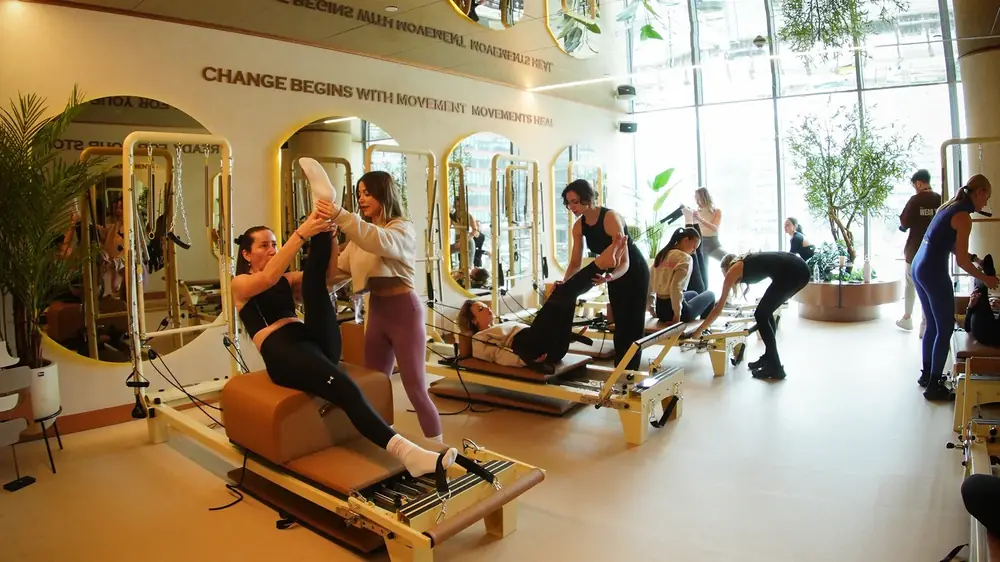
Reformer Pilates for Poor Posture: Movements for Kyphosis and Lordosis
We explain the reformer movements that target kyphosis and lordosis in a pilates approach to poor posture, a sample program and the points to be careful about.
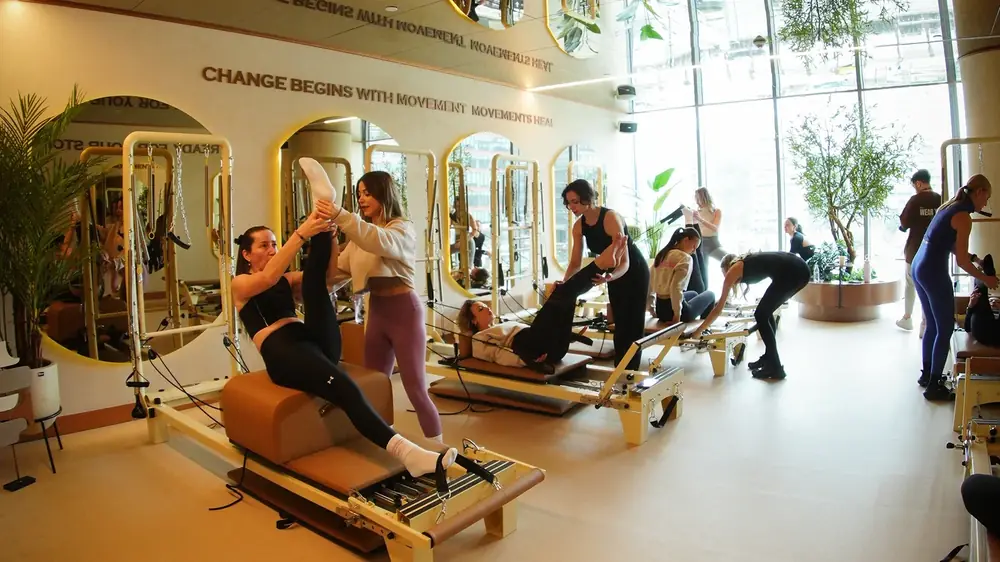
Reformer Pilates and the Shoulder Girdle: Reducing Neck Tension with Scapular Awareness
If your shoulders creep towards your ears, the issue is often scapular control. We explain how reformer pilates balances the shoulder girdle, with tips for use in class.
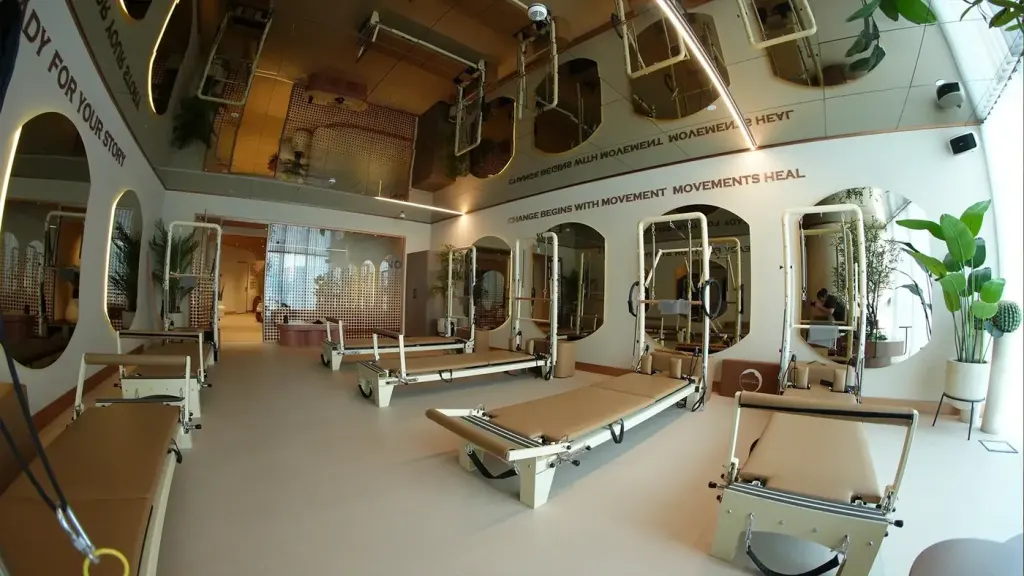
Does Reformer Pilates Help You Lose Weight? The Facts on Calories, Muscle and Body Composition
Does reformer pilates help you lose weight? A realistic answer covering calorie burn, muscle mass, metabolism and body composition, plus the right combinations for weight management.
