
Muscle Loss After 40 (Sarcopenia) and How to Prevent It with Strength Training
Why muscle loss accelerates after 40, what the symptoms of sarcopenia are and how strength training can slow the process: a practical age-specific guide from O'Wellness Beytepe.
A looseness in the mirror you did not notice last year, growing tiredness on the stairs, difficulty carrying shopping bags: the common cause of these is often not ageing itself but a preventable process called sarcopenia. Muscle loss after 40 advances stealthily because body weight usually stays the same; lost muscle is replaced by fat tissue and the scale is misleading. In this article we explain, step by step, why sarcopenia speeds up in your forties, how to spot it and how strength training can slow and even reverse it.
What exactly is sarcopenia?
Sarcopenia is the progressive decline in skeletal muscle mass, strength and function that comes with age. Muscle mass starts to fall slowly from the thirties; the loss becomes noticeable in the forties and gathers speed after 60. The process is not just about having less muscle: nerve connections between muscle fibres weaken and fast-twitch (type II) fibres are lost more than slow ones, which leads to loss of explosive power and balance. As a result, fall risk rises, daily tasks get harder and metabolism slows.
Sarcopenia is thought of as a classic disease of old age, but the preventive window opens much earlier. The forties are the period in which the most effective intervention against the loss can be made, because muscle tissue still responds strongly to training at this age.
Why does it speed up after 40?
Several physiological changes come into play at the same time:
- Hormonal change: A gradual decline in growth hormone, testosterone and oestrogen levels slows muscle protein synthesis.
- Reduced physical activity: As career and family demands grow, walking, sport and general movement decline; unused muscle weakens quickly.
- Anabolic resistance: With age, muscles respond less strongly to the same amount of protein, which raises protein needs in the diet.
- Chronic low-grade inflammation: Mild chronic inflammation linked to sleep quality, stress and inactivity promotes muscle breakdown.
Each of these factors has a small effect alone, but together they can cause the loss of a noticeable share of muscle mass within a decade. The good news is that most of this loss is lifestyle-related, which means it can be changed.
What are the early signs?
Sarcopenia usually advances silently. Watch for these signs:
- Needing to use your hands to get up from a chair.
- Getting tired faster than before when carrying shopping bags or a suitcase.
- Marked tiredness in the legs when climbing stairs.
- Weaker grip strength (difficulty opening a jar lid).
- A noticeable slowing of walking speed.
If you notice several of these signs, we recommend a medical assessment by a doctor followed by a structured strength programme.
Why is strength training the most effective solution?
Cardio exercise is valuable for cardiovascular health but is not enough on its own to maintain or build muscle mass. Muscle tissue receives a growth signal only when stimulated under resistance, that is, with loads such as lifting weights, bodyweight work or resistance bands. Regular strength training:
- Stimulates muscle protein synthesis, slowing the rate of loss and even increasing muscle mass.
- Specifically targets type II (fast-twitch) fibres to preserve explosive power, which is critical for fall-prevention reflexes.
- Supports bone density; muscle and bone health are closely linked.
- Improves insulin sensitivity, contributing to metabolic health.
To see these effects, a programme that works the major muscle groups at least two days a week is enough; an intense athlete's schedule is not needed.
A sample weekly strength programme for ages 40+
| Day | Focus | Example movements |
|---|---|---|
| 1 | Lower body + core | Goblet squat, Romanian deadlift, plank, calf raise |
| 2 | Rest / light movement | Walking, mobility work |
| 3 | Upper body | Seated row, chest press, overhead press, biceps-triceps |
| 4 | Rest / active recovery | Brisk walking, easy cycling |
| 5 | Full body + balance | Split squat, farmer's carry, single-leg stance exercises |
Each exercise should be done for 2-3 sets of 8-12 repetitions, with technique first. For beginners, learning the basic movement patterns correctly with a trainer during the first 4-6 weeks greatly reduces injury risk in the years ahead. At O'Wellness Beytepe you can follow this programme with Personal Training support, or on the strength floor alongside group classes such as Total Body.
Nutrition: why is protein more critical at this age?
After 40, the body responds less strongly to the same amount of protein than in youth, a state called anabolic resistance. That is why 1.2-1.6 grams of protein per kilogram of body weight per day, distributed evenly across meals, is recommended. Eating enough quality protein (eggs, yoghurt, chicken, fish, legumes) at each meal helps trigger muscle protein synthesis. If you want to align your nutrition plan with your strength programme, you can get support from our dietitian.
The role of sleep and recovery
Muscle repair happens largely during sleep. Insufficient sleep both reduces growth hormone release and disrupts appetite-regulating hormones, making fat gain easier. A Deep Stretch Yoga or Mobility & Stretching class once a week can reduce muscle tension and support recovery. If you have chronic sleep problems or constant fatigue, it is important to consult your doctor.
Monitoring sarcopenia: which measurements are meaningful?
The scale alone does not give enough information. These measurements give a more reliable picture:
- Body composition analysis: Shows muscle mass and body-fat percentage separately.
- Grip strength test: A simple indicator of overall muscle strength.
- Chair stand test: Measures how many times you can stand up and sit down in 30 seconds; shows lower-body strength.
- Walking speed: The time taken to walk a set distance reflects functional capacity.
By repeating these measurements every 8-12 weeks you can track your progress in concrete terms.
Common mistakes
The traps people often fall into when starting strength training after 40 are: focusing only on cardio and neglecting resistance work, never lifting weights for fear of injury, staying overly cautious and never increasing the load, and training hard without enough protein. In this age group the right approach is to start with low risk and raise the load gradually, not to avoid it altogether.
Differences by sex
In women, the drop in oestrogen during menopause can speed up muscle loss and the decline in bone density; during this period strength training becomes especially valuable for both muscle and bone health. In men, the decline in testosterone is more gradual but can still negatively affect muscle protein synthesis from the forties. For both sexes the basic principles are the same: regular resistance training, enough protein and quality sleep. Decisions about hormone therapy or supplements must be made under a doctor's supervision; this article is not a substitute for medical advice.
Joint-friendly variations
After 40, some people carry sensitivities from past years in areas such as the knee, shoulder or lower back. In that case, joint-friendly variations of classic movements can be preferred:
| Classic movement | Joint-friendly alternative | Why it is preferred |
|---|---|---|
| Back squat (barbell) | Goblet squat or leg press | Reduces axial load on the lower back |
| Barbell bench press | Dumbbell press or knee push-up | Allows a more natural range of motion for the shoulder joint |
| Conventional deadlift | Trap bar deadlift or dumbbell Romanian deadlift | Reduces load on the lower back by keeping the torso more upright |
| High-impact running/jumping | Cycling, elliptical, incline treadmill walking | Reduces impact on the knee and hip joints |
These variations need not be temporary and can be a permanent choice; what matters is that the movement works the right muscle group safely. If you have an existing joint condition, consult your doctor or our sports physiotherapist before starting the programme.
How should you measure progress?
After 40, tracking progress should not focus only on the weight lifted, as it did in youth. These indicators give a more holistic picture:
- Functional tests: Number of chair stands, single-leg balance time, stair-climbing speed.
- Strength indicators: Being able to do the same movement for more repetitions or with a slightly heavier load.
- Body composition: Change in muscle mass and body-fat percentage with measurements every 8-12 weeks.
- Quality of daily life: Less fatigue, better sleep quality, fewer joint aches.
Recording these indicators regularly not only protects motivation but also lets you see objectively whether the programme is really working.
Who needs extra care?
People diagnosed with osteoporosis, those with chronic joint conditions or a history of cardiovascular disease, and those who have lived sedentary lives for a long time must get a doctor's approval before starting strength training. In these groups the starting load should be kept lower and progression planned more gradually. At O'Wellness Beytepe, a Sports Physiotherapist assessment and personalised programme design are offered for such special situations.
Staying motivated: why you should not give up
The effects of strength training appear more slowly than with many health interventions but last longer. Progress in the first weeks is mostly nervous-system adaptation; visible change in muscle mass usually takes 8-12 weeks. Quitting because you see no results in this period is the most common mistake in preventing sarcopenia. Noting small but consistent gains (one more repetition, a few hundred grams more load) is an effective way to protect long-term motivation. Our trainers aim to keep members motivated with regular feedback and programme updates.
Practical information for members over 40 in Beytepe
O'Wellness Beytepe is located in the Yaka Beytepe complex on Kanuni Sultan Süleyman Boulevard, a few minutes from the Hacettepe Beytepe campus and the Çayyolu-Ümitköy corridor. This location lets busy professionals over 40 fit training easily into the day. Opening hours of 06:00-23:00 on weekdays and 08:00-23:00 on weekends allow flexible planning before work in the morning or after work in the evening. The strength and cardio floor and the functional zone suit strength work, while mobility classes in the O'Soul studio suit joint-friendly recovery.
Frequently asked questions
Is it really possible to build muscle after 40?
Yes. Muscle tissue responds to training at every age; meaningful gains in muscle mass and strength have been shown even in people who start in their forties or sixties. What matters is consistency and proper loading.
What should I do if I suspect sarcopenia?
We recommend first getting an assessment from a doctor. Starting a supervised strength training programme afterwards is the most effective step to slow the progression.
What support does O'Wellness Beytepe offer for this age group?
Personal Training, Sports Physiotherapist assessment and Dietitian services are offered together; the programme is personalised to age and current fitness.
Is Reformer Pilates enough against sarcopenia?
Reformer Pilates is valuable for muscle control, balance and core strength but does not fully replace higher-load strength training on its own; doing both together makes them complementary.
To start stopping muscle loss after 40 today, contact us about a free trial day at O'Wellness Beytepe.
Related posts
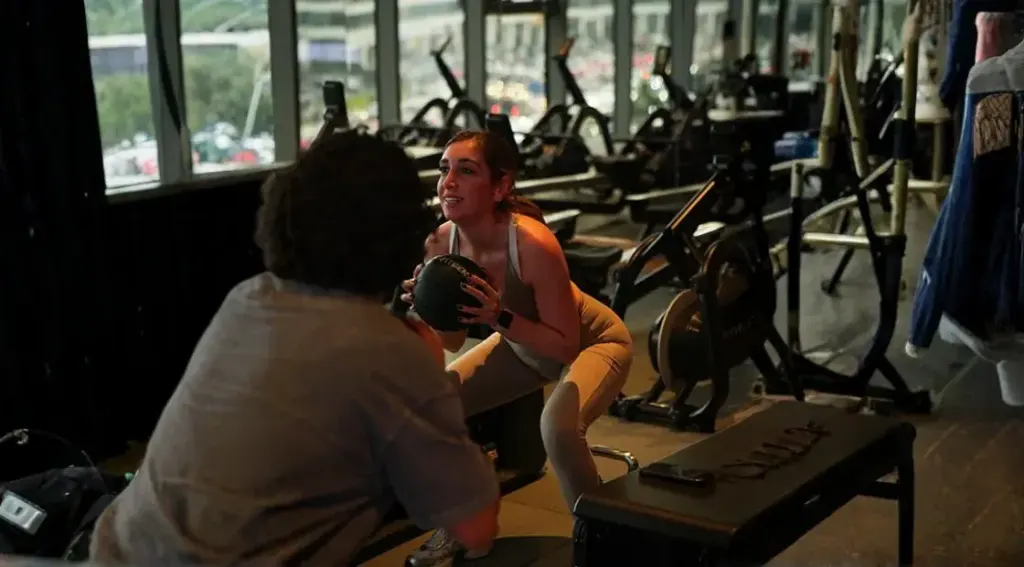
Body Composition Analysis: Body Fat, Muscle Mass and Measurement Methods
Why body composition analysis is more reliable than a scale, and which methods measure body fat and muscle mass: a guide to measuring and interpreting correctly from O'Wellness Beytepe.
How to Bench Press: Setup, Technique and Safety Guide
Setup, grip, elbow angle and safety planning for the bench press: a step-by-step way to learn the lift while staying kind to your shoulders.
How to Hip Thrust: Setup and Technique Guide for Glute Strength
The correct hip thrust setup, common mistakes, variations and programme placement: train the glutes with the glutes, not the lower back.
